Showing posts with label Jeremiah. Show all posts

31 August 2026

Wasting our Life for God

Twenty-Second Sunday in Ordinary Time

    Bishop Mengeling, God rest his soul, was the consummate story teller.  And his life had many, interesting stories.  One in particular I remember is his vocation story.  Bishop Mengeling’s father, Carl H. Mengeling, was Lutheran, while his mother, Augusta, was Catholic.  Both were German immigrants to the United States.  Young Carl Mengeling (the one who became the bishop of Lansing) attended public schools, but still heard God calling him to be a priest.  But to go to seminary, he needed his dad’s permission.  In the 1940s in the Mengeling household, Carl was mostly business.  He loved his family, but didn’t often show affection.  For that reason, young Carl was concerned about telling his Lutheran father that he wanted to be a Catholic priest and go to seminary.  But, somehow, he related, he found his nerve and one day, on the front porch, young Carl told his father, Carl, that he wanted to go to seminary and become a priest.  His father said, “Why would you want to waste your life like that?”  Young Carl, guided by the Holy Spirit, found the courage to say, “You wasted your life when you married mother, because you loved her and wanted to spend your entire life with her.”  Bishop Mengeling said he had never talked to his father that way.  But, as you know because he became our bishop, Carl the elder gave his blessing, and Carl the younger went to seminary, became a priest, welcomed his father into full communion with the Catholic Church, and then became our bishop in 1996.
    Are you willing to waste your life for God?  Christ says today that if we wish to save our life, we have to lose it.  Following Christ takes a commitment, and sometimes we may have commitment issues.  Society definitely is changing, and people are marrying at a younger age, but until recently, and still to an extent, many adults didn’t want to make the commitment to marry.  They wanted to have the perfect job first; the perfect house first (where, all too often they sinfully cohabited with their significant other).  Or, they had concerns that if they committed to one person, they might miss out on someone better or more compatible.  Or, they just wanted to sow their wild oats and live unchaste lives before committing to one person.  No matter the reason, people had commitment issues.
    And this fear of commitment can easily translate into our relationship with God.  The world promises us so many things–power, money, pleasure, fame–and we chase after it like a mirage in the desert.  We may even come so close, only to experience those fleeting things poof away or cascade through our fingers.  
    Even if we gained everything the world offered, this life is fleeting, and so Christ warns us not to gain the world but lose our soul.  And, in reality, we cannot serve two masters.  We can either commit to the world or to Christ.  But even a person who gains the entire world and lives to the age of 100 has a short time of pleasure, power, fame, and riches compared to the eternity of suffering when one rejects Christ for fleeting goals.  
    But, if we love God–Father, Son, and Holy Spirit–no sacrifice is too great.  Jeremiah, God’s suffering prophet, mentions how his love for God and speaking God’s word is like a fire in his heart which he cannot hold in.  He realizes that remaining faithful to God caused him suffering, but he couldn’t help but remain faithful because of his love for God.  Jeremiah experienced calumny, ostracizing, and even captivity in a muddy pit.  But God’s love enticed Jeremiah to stay faithful and proclaim God’s word, however unpopular that word proved to be.
    In the end, nothing else satisfies us other than God.  We return to the familiar quote from St. Augustine’s Confessions, “You have made us for yourself, O God, and our hearts are restless until they rest in you.”  That’s true on this side of eternity, but even more so after our death where our hearts are perfectly and eternally fulfilled in the presence of God, or are eternally restless in Hell, separated from our final end.  As King David said about God today in our psalm, “for you my flesh pines and my soul thirsts / like the earth, parched, lifeless and without water.”  
Statue of St. Peter from the Holy Land
    So are we willing to commit ourselves to God?  Peter, at the moment of the Gospel today, did not think Jesus should go through with what Jesus already knew was the will of God: to suffer and to die.  There was something else that Peter thought was more important than God’s will.  Later, he would change his heart, and even find himself willing to suffer for God, dying as a martyr while suffering crucifixion upside-down.  Maybe God won’t ask that of us, but God does us ask to give Him everything, to offer, as St. Paul said, our bodies to God as a living sacrifice, which really means offering all of who we are–body, mind, soul–to God, trusting that He is worth the price, and that He will not let our gift be offered in vain.  
    While Bishop Mengeling was not perfect and we should certainly continue to pray for the repose of his soul, I would dare say that he wasted his life for God.  Certainly, Bishop Mengeling loved God, and so no price was too much to pay, even when it meant giving up his own family as a priest, and even when it meant giving up his life to serve the Diocese of Lansing as our bishop.  In whatever vocation God calls you, are you willing to waste your life to serve God?

20 July 2026

Sons and Brides

Eighth Sunday after Pentecost
    In the name of the Father, and of the Son, and of the Holy Spirit.  Amen.  Today St. Paul reminds us that we are the sons of God and joint heirs with Christ.  While we often speak about the moral life and the requirements of following Christ as His disciples, there is something that comes before morality, and if we miss this, we often see the demands of a relationship with Christ as merely laws imposed on us from without.  What comes before morality is identity.  Or, to put it another way, being precedes doing.  You have to exist before you can act, and any action you take or can take flows from what and who you are.
    Now, we might think that St. Paul should have said that we are sons and daughters of God.  Certainly in the age we live in, we can demonstrate more inclusivity and not simply reference masculine identity.  But the Apostle to the Gentiles carefully chose his words, words that God Himself inspired.  So how can we disciples, both males and females, understand what St. Paul meant when he called us all sons?  

    Our identity, ever since baptism, connects to Christ.  At Holy Baptism, we receive a new identity, and that is of Christ.  In Holy Baptism, the Holy Spirit mystically joins us to the Body of Christ, so that we are members of Him.  And in that sense, all of us are sons.  Or, to put it another way, we can speak of ourselves as sons and daughters in the Son of God.  This identity cannot be overstated.  When God looks at us, He doesn’t ignore who we are.  He created us as males and females, different, and yet complimentary.  Even our bodies tell us something about ourselves that is not accidental (this is where those who promote gender dysphoria get it wrong; having a male body or a female body tells us something about ourselves, even if it doesn’t exhaust our identity).  And yet, as soon as we die with Christ in the waters of baptism, the Holy Spirit configures us to Christ so that, already and yet in potential, it is no longer I who live but Christ who lives in me, as St. Paul also says.  When God sees us He sees us as individuals, but also sees us as members of the Mystical Body of Christ, as His Beloved Son.
    And because God joins us to His Son, we can also call ourselves heirs of God “and joint heirs with Christ.”  All the riches that God has for His Son belong to us to, not by nature, but by adoption.  In human adoption, the child has no claim to anything from a parent not his own until that parent chooses the child, which opens up the claim to support from the parents to the adopted child.  So with us, as adopted sons and daughters in the Son of God, everything that God has for Christ, God offers to us as well.  As God Himself says in the second psalm: “‘You are my son; today I have begotten you.  Ask it of me, and I will give you the nations as your inheritance, and, as your possession, the ends of the earth.’”  God withholds nothings good from us, including eternal life and a seat at His right hand, provided we stay in God’s family and remain connected to Christ.  What good thing could God withhold from Christ?  He will not withhold it from us, either, because we are in His Son and part of Him through Holy Baptism.  Eternal life?  Ours.  Power?  Ours.  Grace to resist all temptations and never commit mortal sin?  Ours.  As St. Paul says in his first epistle to the Corinthians, chapter 3: “all belong to you, and you to Christ, and Christ to God.”
    So often we think only of what we have to do, but we ought to first think of to whom we belong and our identity.  When I know I belong to God, Catholicism no longer consists of rules to follow from without, but a means of fully living according to how God has made me and how He has configured me to Christ, so that I can be ready to receive my full inheritance as a son of God, rather than spending it elsewhere like the prodigal son.
My sister and brother-in-law at the their wedding reception
    But, lest you ladies feel like the struggle is only yours in thinking of yourselves as sons, we, all of us, are also brides.  This is where men have to struggle.  Throughout the Old and New Testament, God uses bridal imagery to describe His People.  In the Book of Hosea, Israel is compared to a wife, though an unfaithful one.  The Prophets Isaiah and Jeremiah speak about God as our husband.  And the Song of Songs allegorizes the Chosen People to a bride and God as the husband.  Likewise, in the New Testament, our Lord speaks of Himself as the Bridegroom for whom the virgins must keep watch.  In St. Paul’s epistle to the Ephesians, marriage is a mystery which refers back to Christ and the Church.  And in the Book of Revelation, the Apocalypse of St. John the Apostle, he describes heaven as a wedding feast of the Lamb of God, and the New Jerusalem is a bride adorned for her husband.
    Saints have long described the soul as a bride of Christ.  Not just the souls of women, but the souls of men.  Why?  Because there is meant to be a certain subordination of the wife to the husband, always out of love, and trusting in the husband laying down his life for the wife.  So we, the Church, Christ’s bride, should receive Christ’s law of love and obedience as a wife receives her husband.  That is why the Church has no authority to change the teachings of Christ, as so many of our Protestant brothers and sisters have tried to do, because we are not the masters of revelation, but simply the recipients and stewards of it.  The Church can develop those teachings and understand them more deeply through the centuries, but we cannot reject the ones we don’t like or find uncomfortable or inconvenient.  This is our challenge as men, who like to take charge and be in control: to give control over to the husband of our souls and submit to His rule, rather than to our own.
    Being precedes doing.  Before we do anything, we are sons of God and the Bride of Christ.  Starting with our identity makes actions much more intelligible.  The moral life no longer seems like barriers to our freedom, but ways to fully live out who and whose we are.  God wants to give us every good thing as our inheritance.  But to receive that great gift, we first must recognize that we are sons and daughters in the Son of God and our souls are the Bride of Christ, who with the Father and the Holy Spirit is God, for ever and ever.  

11 November 2024

Sunday after Pentecost or Epiphany?

Resumed 5th Sunday after Epiphany
    In the name of the Father, and of the Son, and of the Holy Spirit.  Amen.  These Sundays after Christ the King can be a bit confusing.  The Introit (what is sung while I begin the prayers at the foot of the altar), the Gradual, the Offertory Chant, and the Communion Chant are all from the 23rd Sunday after Pentecost.  However, the epistle and the Gospel come from the fifth Sunday after the Epiphany.  This all happens because the number of Sundays after Christ the King can vary, depending on when Advent starts, which can vary based upon what day of the Christmas falls.  It was probably this complicated formula that led those tasked with revising the liturgy after the Second Vatican Council to move Christ the King to what we would call the last Sunday after Pentecost, and to adjust the variable number of Sundays based upon where Lent begins.
    Truth be told, I think that calculating time after major feast days makes more sense.  Ordinary Time gets a bad rap because of its ambivalent name.  It would probably be better to call it “Ordered Time,” or even to use the more literal translation of per annum as of or through the year.  But there must have been some good to continue to use the way that the 1962 Missal uses the twenty-third Sunday after Pentecost for much of the Mass, and the resumed Sundays after Epiphany for the readings.  

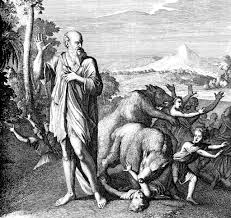
The Prophet Jeremiah
    First, we hear Jeremiah’s prophecy from chapter 29 repeatedly.  And in this prophecy Jeremiah speaks for the Lord saying that the Lord has a desire for peace for us, not affliction.  And when we return to the Lord, He will end our captivity.  As we come to the end of this liturgical year, we focus more and more on the end of time and prepare for the return of the Lord (which Advent highlights in particular).  And one could approach the end in two ways: in fear, as a day of wrath, or as the consummation of a life-long courtship with God.  The Lord tells us, Sunday after Sunday, that He prefers the latter, not the former.  He wants to redeem us from this vale of tears, this land of our captivity where we struggle under the burden of sin.  So as we consider the end and our judgement, we do well to remember what the Lord desires for us, and how we can receive that gift of eternal bliss.
    The Gradual continues the same theme.  God has delivered us from all that afflicts us.  We will glory in God all the day and praise His name forever.  Again, this is what heaven is: the deliverance from sin.  While we are on earth, we can still fall into temptation.  While our salvation is the goal, given to us as a downpayment in Holy Baptism, we can reject that gift and choose to walk away from God.  Our fallen desires and the suggestions of the evil one can try to convince us to give up our inheritance which is eternal life with the saints in light.  Once we have died, temptation can no longer affect us.  We will receive the results of what we chose in life: Heaven, Hell, or Purgatory, none of which allow for a change in our final destination due to rejecting or accepting sin (Purgatory can only lead to Heaven, so even there we cannot alter our destination).  And, if we accept that gift of salvation, then we will praise God for all eternity, in the day that knows no end in heaven.  
    Having recognized what God wants for us, we turn to the Offertory Chant, from Psalm 129, called the De Profundis.  We cry out to the Lord because we recognize that we have not always accepted the graces of Holy Baptism, Confirmation, and the Holy Eucharist.  This prayer is also said at the beginning of the Requiem Mass in the Extraordinary Form, as we plead for the deceased.  And while we don’t hear beyond the first couple of verses, Psalm 129 goes on to say, “If you, O Lord, should mark iniquities, Lord, who could stand?  But with you is found forgiveness; for this we revere you.”  We acknowledge that no one can earn salvation, because we are all sinners.  But God’s mercy can save us, and this gives us reason to worship Him.  Having recognized what God wants for us, we cry out that we might be open to that gift of eternal salvation, which is only possible due to the Lord’s mercy.  
    Lastly, in the Communion Chant, we hear our Lord’s words from the Gospel of Mark: “Amen I say to you, whatever you ask for in prayer, believe that you shall receive it, and it shall be done to you.”  Having worthily received the Body of the Lord, He commends us to trust that our prayers for salvation will be answered.  Now, this doesn’t mean that we can commit mortal sin, be unrepentant, and still hope for heaven.  But what it means is that when we ask for mercy and the eternal salvation that God desires for us, God will not withhold that from us.  God isn’t some despot who holds good things out to us but then does not grant them or hoards them for Himself.  No, He is our loving Father, who gives us all good gifts, even better than our earthly fathers do when we ask for something good.  Without presuming on God’s mercy, we can have confidence in His mercy and that God will do whatever lies within His power to save us.  The only thing not in His saving power?  Our willingness to accept it on God’s terms, not ours.  That is to say, there is no such thing as cheap grace where we receive God’s mercy but fail to repent with at least contrition.  
    So while you might have to turn a few extra pages to follow in the missal.  And while we repeat the same chants Sunday after Sunday after Christ the King, there is good reason for how the Church had set up these chants.  And they will help us to prepare for our end, and the return of Christ the King at the end of time, who lives and reigns with the Father and the Holy Spirit, God for ever and ever.  Amen.  

26 December 2023

The Shepherds

Nativity of the Lord: Mass at Night
    Merry Christmas!  As we assemble tonight to celebrate the birth of our God and Savior, Jesus Christ, we do so at the same, or at least a similar time, as the shepherds just outside of Bethlehem.  Luke records that the shepherds were “keeping the night watch over their flock.”  And yet, in the midst of the darkness, “the glory of the Lord shone around them” as they witnessed angels and heard one of the first proclamations of the beginning of the Gospel, that, “‘today in the city of David a savior has been born for you who is Christ and Lord.’”

Painting of the shepherds from Shepherds' Field in Bethlehem
    I started a tradition when I became a priest to add, each year of my priesthood, to a Fontanini nativity set.  In the first year I had to buy the basics, and besides Mary, Joseph, baby Jesus, and the angel, the only other figure who was included was a shepherd and two sheep.  There’s something about the shepherds that belongs at the heart of the nativity, just slightly behind the necessary figures of the Holy Family themselves.
    Perhaps part of their importance connects to how many times in the Old Testament God refers to shepherds.  Psalm 80 states, “O Shepherd of Israel, lend an ear, you who guide Joseph like a flock!  Seated upon the cherubim, shine forth.”  Probably one of the currently most popular psalms, 23, states, “The Lord is my shepherd; there is nothing I lack.”  God appoints Joshua, son of Nun, “that the Lord’s community may not be like sheep without a shepherd.”  God likewise calls David as the king to shepherd God’s people by ruling over them. 
    God also condemns bad shepherds.  In Jeremiah he states, “Woe to the shepherds who destroy and scatter the flock of my pasture…I myself will gather the remnant from my flock…and bring them back to their folds.”  Through Ezekiel God says:
 

Woe to the shepherds of Israel who have been pasturing themselves!  […] I myself will search for my sheep and…I will bring them back to their own country and pasture them….In good pastures I will pasture them….I myself will pasture my sheep; I myself will give them rest…The lost I will search out, the strays I will bring back, the injured I will bind up, and the sick I will heal.

Shepherds hold an important place in the Old Testament, both as an image of God who cares for His people, and as a warning for those who have authority but do not exercise it well.
    Many have also noted that shepherds were poor.  They did not, beyond their flock, have much to their names.  They recognized their dependance on God, and relied on Him to provide for their livelihood.  And so it is the poor, those who not only lack material goods, but also who recognize their need for God, who first hear the message of the Gospel, and are drawn to worship the newborn king, “‘wrapped in swaddling clothes and lying in a manger.’”
    Tonight the Lord invites us to come before Him like the shepherds, no matter what our adjusted gross income.  We come in our poverty of spirit, our recognition that we need God, and bow before the Shepherd of Israel, the one who leads us to good pastures, who rules over us, who seeks us out when we are lost, and places us upon His shoulders when we are injured.  As Psalm 100 states, “we are his people, the flock he shepherds.” 

Door of Humility
    Poverty in spirit is an exercise in humility.  At the Basilica of the Nativity in Bethlehem, there is a door, which was added in the sixteenth century, that was built purposefully with small dimensions.  Practically, it kept people from bringing horses and cattle in the church.  But that was quickly theologized and the door was called the “Door of Humility,” because each person, no matter how rich or how poor, how powerful or how insignificant, had to bow down to be able to enter.  As we come before the Lord, we bow down in the presence of our God and King.  While not required, kneeling when we receive Holy Communion, is a beautiful expression of our humility and poverty in spirit as we receive the same Jesus who was born in Bethlehem in the Most Holy Sacrament of the Eucharist.  And during the Creed, we usually make a profound bow from the waist when we mention the Incarnation, but tonight, the day we came to know it happened, we genuflect, lowering our very bodies in each case which is meant to remind us to humble our souls as well. 
    Lastly, while not part of tonight’s Gospel passage or pericope, verse seventeen of this same chapter states, “When [the shepherds] saw [the infant lying in the manger], they made known the message that had been told them about this child.  All who heard it were amazed by what had been told them by the shepherds.”  This great celebration is not something that the shepherds could keep to themselves, nor should we be able to keep this great celebration to ourselves.  When we appreciate God as our shepherd; when we recognize the great humility that God first showed us by taking on our human flesh, with all its limitations and weakness, we should share that news with others.  So many celebrate Christmas, but they have forgotten what it means, beyond presents and big meals with family and friends.  Christmas, at its heart, is about the Lord, our Shepherd, seeking us out, and taking us upon His shoulders so that He can carry us to the verdant pastures of repose in heaven.  God did not have to do this.  God would not have lost anything in Himself if He had let us pay the price for our disobedience in Adam.  But so much did He love us, that He got rid of the bad shepherds who only cared for themselves, and shepherded us rightly, taking us to Himself in love and truth. 

    Tonight, may the lights of this great temple shine like the angels in the heavens.  May our celestial hymn of “Glory to God in the highest,” not only ring out in the ceilings of this church, but re-echo outside and in the witness of our lives, so that others may also come to adore our newborn King, and find the life that God desires for all His sheep.  

26 June 2023

No Karma for Catholics

Twelfth Sunday in Ordinary Time/Fourth Sunday after Pentecost
    [In the name of the Father, and of the Son, and of the Holy Spirit.  Amen.]. Over the past few years people of all and no faiths have started to buy into this idea of karma.  Whether what is shared is actually the Hindu view of karma or not, I’m not sure, but the basic statement is that if someone does good, then good things will happen to that person.  More often than not, it’s invoked when someone does something bad to a person, and that person hopes something bad will happen back to the other. 

Prophet Jeremiah
   Catholics do not believe in karma.  Nor should we espouse it so blithely.  In our/the Ordinary Form first reading, we hear the prophet Jeremiah talk about his former friends trying to trap him and cause his problems.  Jeremiah does call out to God for retribution, and has confidence that God will take care of things.  But bad things did happen to Jeremiah.  He was thrown into a partly-dry well, and no one listened to him.  What had Jeremiah done to deserve such horrible treatment?  What horrendous things must he have committed in order for “karma” to treat him so poorly?  Jeremiah spoke God’s word.  He did nothing wrong (beyond the daily small sins of any person).  The word God sent Jeremiah to preach was not a popular word, because it was the word of judgement on a people who had rejected God.  But if karma is true, then Jeremiah should have experienced nothing but good things, since he was doing good.  But that’s not what happened.
    Or take St. Paul.  In Romans, chapter 8, [the pericope we heard today], St. Paul says that the sufferings of this time are as nothing compared to the glory that is to be revealed.  St. Paul had done some bad stuff (he had persecuted Christians and consented to the martyrdom of St. Stephen).  But by the time he’s writing this epistle, he’s been doing God’s work for a while, preaching the Gospel, working miracles, and encouraging young communities to follow the Lord.  According to karma, everything should be enjoyable; there shouldn’t be sufferings.  But, of course, there were.  In fact, St. Paul continues that all creation is groaning as it awaits for the fullness of redemption in Christ. 
    Christ, of course, is the nail in the coffin when it comes to the idea of karma.  Christ was sinless.  He did no wrong.  And yet He suffered immense pain and agony.  So, hopefully we can put to rest this idea of karma, and that good things happen to those who do good, while bad things happen to those who do bad.  Those who follow God’s will often have to suffer, and sometimes there is no immediate justice for those who do wrong.  There are many who lie, cheat, sleep around, and have no real practice of religion, and they seem to get richer and richer, not have any problems, and continue to thrive while those who try their best to follow God’s law of freedom have to struggle daily to make ends meet, and have problems with sometimes even the basic realities of life.
    So what do we do?  We stay faithful, even when it’s hard.  We follow the law of the Gospel and the teachings of the Church, even when they seem unpopular, and even when we are persecuted, because, as our Lord says in the Gospel according to St. Matthew [that we heard today], God cares even for the sparrows, and we are worth much more than many sparrows. 
    When Christ invites us to live a certain way or to follow Him somewhere, our best response is to follow His lead and do what He says.  It may sometimes seem counterintuitive, like when Christ asked Peter to put out into the deep waters to make a catch of fish, even though Peter had been fishing the entire night before and had caught nothing.  But when we respond with the obedience of faith, Christ can do things beyond our imagining.  The miracle where St. Peter caught all those fish was not about the fish: it was about God not being outdone when we follow Him.  Sometimes it happens immediately, like with St. Peter.  Sometimes it takes longer.  Sometimes we may not even see the results on this side of eternity.  But God rewards faithfulness, and especially when it is tough.
    And it’s tough for Catholics now, and probably will get tougher in the future.  Last week the LA Dodgers honored a group of anti-Catholic cross-dressers who openly mock the beautiful lives and work of religious sisters.  Those who remain faithful to the Church’s teaching that homosexual acts are gravely sinful and contrary to God’s plan for human sexuality are called bigots and homophobes.  Our own Michigan Supreme Court wants to make a rule that says that a person is to be identified by whatever terminology that person decides, regardless of reality, and our governor openly brags about how easy it is to murder innocent children in the womb and says that people should move to Michigan because of that ease of access to infanticide.  These aren’t so much political issues as they are moral.  We now find ourselves in a culture that is more pagan than the height of the Roman Empire. 
    God calls us to be Jeremiahs, those who speak His word, no matter what those who called themselves friends do to us, no matter what privileges and popularity society grabs from us, no matter what names and epithets others give to us.  We do this, not because of karma, not because bad people will get bad things in their lifetime, but because God’s word is life and truth, and living according to the truth brings happiness, while living according to lies, no matter how popular, brings sorrow.  God gives us the Eucharist to strengthen us so that we have the courage and energy to remain faithful to Him. 
    That is why it is so important to go to Mass each Sunday and holyday: without the Eucharist, the devil can more easily persuade us with his lies to dive into the culture of death.  The Eucharist is our lembas bread (Elvish bread from Lord of the Rings which sustained those who ate it much longer than it looked like it could) which fills our soul to press on, no matter how hard the journey. 

    Whether we like it or not, bad things do not always happen to bad people; good things do not always happen to good people.  Sometimes staying faithful to God means losing friends, power, and prestige.  But, we cannot imagine the good things that God has in store for us if we remain faithful to Him: the Father, and the Son, and the Holy Spirit.  Amen.  

27 March 2023

The Old Rejoicing in the New

Passion Sunday
    In the name of the Father, and of the Son, and of the Holy Spirit.  Amen.  When it comes to the Bible, I think sometimes we have this sense that the New Testament is all we need to read.  And certainly, it is often a bit easier.  The Gospels and the Acts of the Apostles are pretty straight forward.  The writings of St. Paul, while including some long sentences with very complex structure, are instructive, as are the other epistles from St. Peter, St. Jude, and St. John.  Yeah, Revelation or the Apocalypse of St. John can be a bit confusing and/or scary, and easily misunderstood and misinterpreted, but generally, the New Testament seems like the place to focus.  To use an analogy, the New Testament seems like nice, sunny pastures with rolling hills, while the Old Testament, even with some of the familiar stories that we enjoy, seems much more like a forest with thick growth, and a narrow trail through it.
    But we cannot truly understand Christ without understanding what He Himself revealed before the Incarnation.  We cannot be like the gnostic heretics who claimed that the God of the Old Testament was a different God than Jesus Christ.  When read properly, the Old Testament points to and is fulfilled in Christ.  That is one of the points of the Gospel today.  Our Lord says, “‘Abraham rejoiced to see my day.’”  Abraham rejoiced because in Christ, God’s covenant would be opened up to all nations, a covenant made with a true son of Abraham through Isaac, Jacob, and Joseph.
    The evangelists and apostles were great at seeing how Christ was revealed throughout the Old Testament.  The Letter to the Hebrews, our epistle today, in another place talks about Melchizedek as a type of Christ, since he was king of Jerusalem and a priest of God Most High, and because he had no lineage given (unlike almost everyone else in Genesis), and because He blessed Abram, noting that only a greater blesses a lesser.  The author of the Letter to the Hebrews also quotes Psalm 2 when he asks, “to which of the angels did God ever say: ‘You are my son; this day I have begotten you’?”  And he also quotes other verses to shows Christ’s superiority to the angels.  St. John the Apostle and Evangelist loves to quote earlier Scriptures as he saw them fulfilled by the Savior.  When the soldiers cast lots for the robe at the crucifixion, he quotes Psalm 21:18; when the soldier pierces the dead body of Christ with a lance rather than breaking the legs, he quotes Psalm 33:21 and Zechariah 12:10. 
    The Church Fathers also saw Christ prefigured in Old Testament figures who had their proper importance in their own right.  Christ is the New Adam, the new head of humanity, who, rather than disobeying God and dooming all of humanity, is obedient to God, even to the point of death, and so graces all humanity and opens for all the children of Adam and Eve the possibility of eternal life in heaven. 
    Christ is prefigured in Abraham.  Abraham left his home at the direction of God, and was promised descendants numerous as the stars in the heaven.  Christ “journeys” to earth to fulfill the will of the Father, and joins both Jew and Gentile to God, so that the number of the elect comes from every corner of the earth.

    Isaac, too, represents Christ.  Isaac is the beloved son of Abraham and Sarah.  Abraham, his father, asks Isaac to carry wood for the sacrifice up Mount Moriah, the mountain, according to tradition, on which the City of Zion and Temple were later built.  Isaac is a young man, and yet allows Abraham to bind him to the wood for the sacrifice of his own free will.  So Christ carries the wood of the cross up Calvary, and willingly lays down His life, trusting in His eternal Father.  Abraham’s hand was stayed by the angel, stopping the sacrifice, but no angel stopped the sacrifice of Christ.
    Christ is prefigured in Jeremiah the Prophet.  Jeremiah preached tough messages to the people of Judah.  He condemned trusting in a building, even the Temple of the Lord, and called the people to be faithful to God.  For preaching God’s message, Jeremiah was opposed and oppressed by the king and leaders of Judah, even though his words came true.  Christ preached the Word of God, and foretold the destruction of the new temple built by Herod, built after the temple that Jeremiah saw had been destroyed by the Babylonians.  He was opposed and oppressed by the leaders and many of the chief priests, Pharisees, and scribes of His own day.  Christ called all to fidelity to God and a return to Him.
    This could go on and on (maybe you feel like it has already!).  But the point is that the entire Old Testament points to Christ and is fulfilled in Him.  Beyond the people, all the sacrifices of the Old Testament are fulfilled and perfected in the one, perfect sacrifice of Christ on the Cross, which we will celebrate in a particular way on Good Friday.  So if we wish to truly appreciate who Christ is and what He did for us, we need to be well-versed in the what came before Him.  Yes, it can sometimes seem strange, and needs to be unpacked, and should be done with the assistance of the Magisterium, the official teaching office of the Church.  But rather than avoiding it because it can be confusing, let’s take the safe path of how the Church has read the Old Testament, so that we can arrive at the one fountain of life that forms the hinge between the Old and the New Testaments, Jesus Christ, who with the Father and the Holy Spirit, lives and reigns for ever and ever.  Amen.  

03 January 2023

Cut It Out

 VIII Day of the Octave of Christmas & Feast of the Circumcision of our Lord
    In the name of the Father, and of the Son, and of the Holy Spirit.  Amen.  God, in calling Abram out of Ur in modern-day Iraq, said many amazing things to him.  We hear at the beginning of Genesis, chapter 12, that God tells Abram, “Go forth from your land, your relatives, and from your father’s house to a land that I will show you.”  That, in itself, took a giant leap of faith.  Abram was being asked to leave the fertile crescent, the birth-place of civilization, as scholars call it, for an unknown land inhabited by unknown, and possibly hostile, people.  It’s hard enough for us to pack up our entire life and move to a different place.  Imagine doing it without having a home to which you were going, not knowing exactly where God was going to settle you (and whom you might have to dislodge to stay there), and doing it at the age of 75 years old.

    God also promised Abram, “I will make of you a great nation, and I will bless you; I will make your name great, so that you will be a blessing.”  Abram and Sarai (later Abraham and Sarah) were well past the childbearing years.  They had no children.  And yet God promised that he would make of them a great nation.  This must have seemed odd to them.  And yet Abram trusted in God to do the impossible.  This makes Abraham’s almost sacrifice of Isaac much later even more incredible.  God had finally given Abraham and Sarah a son, Isaac, and so perhaps they thought that becoming a great nation could actually happen.  But then God asks Abraham to sacrifice that son, that fulfillment of the promise, that promise of hope for the elderly couple.  And yet, Abraham is willing to do it (though God stays his hand at the last minute).
    Before that, in chapter 17, God appears to ninety-nine year-old Abram (who had conceived Ishmael with his slave, Hagar, but was still childless with Sarai), and says:
 

I am God the Almighty.  Walk in my presence and be blameless.  Between you and me I will establish a covenant, and I will multiple you exceedingly.  […] You are to become the father of a multitude of nations.  […] I will make you exceedingly fertile; I will make nations of you; kings will stem from you.  […] I will give to you and to your descendants after you the land in which you are now residing as aliens, the whole land of Canaan, as a permanent possession; and I will be their God.  […] This is the covenant between me and you and your descendants after you that you must keep: every male among you shall be circumcised.  Circumcise the flesh of your foreskin.  That will be the sign of the covenant between me and you.

Luckily, Abraham was open to God’s will.  Because, put in his place, I think most men would have said, “You want me to do what?  To my what?”  
    And yet this was the sign of those who believed in and followed God.  And this sign of the covenant endured even to the time of our Lord, who, though He was the Lord of the covenant, was still joined to Israel by His Mother, the Blessed Virgin Mary, and His foster-father, St. Joseph, in a powerful way that united Christ to Israel as the People who belonged to God, the sons and daughters of Abraham.  Even for those who needed to be joined to Israel, this was a difficult sign.  Indeed, when the Bible talks about God-fearers, it speaks about those who wanted to become Jewish, but who had some issue preventing them from joining.  One can imagine that the thought of circumcision kept any number of adult men converts from becoming fully Jewish and part of the covenant.  God our Savior, who had no need to become part of the covenant, still underwent this sign.
    But the sign had a spiritual meaning in addition to the physical act.  The prophet Jeremiah prophesies: “Be circumcised for the Lord, remove the foreskins of your hearts, people of Judah and inhabitants of Jerusalem; Or else my anger will break out like fire, and burn so that no one can quench it, because of your evil deeds.”  Circumcision was a physical cutting away.  But God also intended it to be a spiritual cutting away of all that was fallen and of disobedience to God.  The covenant was not only to be part of one’s flesh, but also part of one’s heart, spirit, and soul.  
    Christ Himself, while He was subjected to the covenant as an infant, Himself established a new covenant in His Precious Blood, and a new sign of the covenant was given that had both a physical and a spiritual aspect.  That new sign was baptism.  The water washed one clean of original sin, but it also meant a washing away of all that is fallen from that point on.  It made men and women part of the new Israel, the Church, gathered from all the nations, as a people who belong to the Lord.  
    But think of the humility that Christ underwent in being circumcised!  He who is Lord of the Sabbath is certainly also Lord of the Covenant, and so is not bound to it.  But He allows the cutting of His flesh in anticipation of giving His flesh for the life of the world in His Passion.  He subjects Himself to the Law, though He is the Lawgiver.  And He does the same in His baptism in the Jordan, as John baptizes Christ, though John asks to be baptized by Christ.  
    This is a great model for us when it comes to humility.  How often do we bristle when we have to do something that we don’t think we should have to do?  How quick do we make known our importance, and how we think things should go?  But this is not the example of our Savior.  Like Abraham, Christ, the Son of Abraham, trusted in His heavenly Father, and went where the Father told Him to go, did what the Father told Him to do, and said what the Father told Him to say.  “Like a lamb,” Isaiah prophesied, “he was led to the slaughter, and he opened not his mouth.”  Yet, if we bear one unrighteous punishment, how quickly do we open our mouths to protest our own innocence?
    God does not call us to be doormats, but on the other hand, sometimes He allows the just to suffer unjustly for their own sanctity, their own growth in holiness.  The day after Christmas we celebrated St. Stephen, who was martyred though his only crime was to witness to the fact that Christ was the long-awaited Messiah.  The day after that we celebrated St. John, who, while not a martyr, was exiled to Patmos as a Roman punishment for following Christ; the day after that we celebrated the Holy Innocents, who could not even confess Christ with their lips, though they took His place with their deaths; the day after that we commemorated St. Thomas Beckett, who died at the hands of King Henry II for standing up for the rights of the Church.  These past days of the Octave haven been filled with witnesses who suffered unjustly.  Their witness should spur us on when we have to undergo sufferings much lighter than theirs.  

    I would also add Pope Benedict XVI to those who suffered unjustly, but utilized it for his own holiness.  He was often attacked in the media, was called “God’s Rottweiler,” despite his gentle and humble disposition, and suffered other attacks, simply for holding true to the unchanging teachings of the Church.  Yet I never remember him complaining once about those slings and arrows.
    God promised Abraham that he would become the father of kings and many nations.  Abraham remained faithful to God, even in hard times, even when the sign of that covenant meant the stripping away of flesh.  Christ subjected Himself to the Law, and paid the penalty for our sins, though He Himself was the Lawgiver and free from all sin.  What witness will we give through the new circumcision of the heart, holy baptism, by which we become united to God: the Father, and the Son, and the Holy Spirit.  Amen. 

09 May 2022

Planning and God's Will

 Third Sunday of Easter
    I am a planner.  I like lining my ducks up in a row, and planning for what is ahead.  As an Eagle Scout, I took to heart the Boy Scout motto of “Be Prepared.”  Part of my vocation story is that, at the ripe old age of 13, I wanted to know what I wanted to be as an adult, so I could go to a good college for that profession, which means that I needed to know which college was good for that profession, and to get in to that college I needed to do well in high school, especially in the subjects that would get me admitted to the right college.  After hearing that part of my vocation story, one person commented that I was a Type AA personality (not just type A).
    Planning like that helps me a lot in some ways.  Generally, I’m well-prepared for anything I’m going to do.  I send in RSVPs to parties.  I usually get cheaper airfare for my trips because I buy the tickets far out in advance.  
    But in other ways, it does not help me be a good disciple of Christ.  It is very easy for me to plan things out, but not always to check to see what God’s plan is.  And being open to God’s plan is very important, both in the big decisions in life (like whether to become a priest, get married, or become a consecrated man or woman), and also in the small decisions of life (like what the Lord wants me to accomplish on a particular day).  
    In our first reading, we hear about St. Peter being brought before the Sanhedrin.  They had been ordered to stop proclaiming the Gospel, that Jesus was raised from the dead.  The old Peter, the Peter who did not often work with the Holy Spirit, would have probably found some practical way to appease both the Sanhedrin and also his fellow Apostles.  But the new Peter, filled with the Holy Spirit, knew that God wanted him to share the Gospel, and help others to believe in Christ, no matter what the cost.  
    How did Peter know this?  Jesus had called Peter; not just the original call on the Sea of Galilee, when Jesus told Peter to go out into the deep and fish, even though Peter had fished all night and caught nothing.  This time, on the same body of water (the Sea of Galilee was also know as the Sea of Tiberias, or Lake Tiberias), Peter cannot catch anything until Jesus shows up.  And then, having brought in the miraculous catch, Peter gets some alone time with Jesus.  Jesus asks Peter to renew his love for the Lord (to make up for Peter’s threefold denial of the Lord on Good Friday), and then sends Peter to tend the sheep of the Lord’s flock.  Jesus even tells Peter that spreading the Gospel will lead him to have another dress him and lead him where he does not want to go.  Likely, as Peter was led by the Temple guards before the Sanhedrin, he was thinking about how the Lord’s prophecy was being fulfilled, as he was led somewhere he didn’t want to go.  It would ring even more true as he was led by Roman guards to an upside cross at Vatican Hill in Rome.

A depiction of the crucifixion of St. Peter outside Rome
    So how often do you invite God to be a part of your planning?  How often do you ask God what His plans are?  Sometimes God’s plans are made known through others (e.g., the bishop assigning a priest to a particular parish, or a wife sitting down to dinner and saying, “Honey, we’re pregnant).  Other times God can speak directly, especially in the silence of our hearts (which is why it’s so important to plan for silent time with God when we can reasonably do so).  Other times, God doesn’t so much have a message for us, but wants to be consulted before we decide to do anything, rather than just hoping that He’s going to go along with what we choose.  
    And the best place to put our ideas before God is here at Mass.  It may not look like it, but as we come to Mass we are before the throne of God, with the angels joining in our prayer, as well as the saints in countless number.  We give honor and glory to God, who sits on the throne.  Maybe you’re wondering about your job, or about your family size.  Maybe you’re wondering what to have for dinner later this week, or if you’ll even have time to cook dinner this week due to a busy schedule.  Maybe you know of someone who needs prayers and/or maybe some nice conversation, but you’re not sure what to say.  Bring all those things to God, and listen for what He has to say.  He may not answer how or when you want, but God always answers.
    To our first communicants, too, you are getting a new way to be close to God, who desires good things for you.  God loves you so much, and wants to guide you in your life.  And now that Jesus will be entering into you in a new way through Holy Communion, you’ll have a new, special access to God.  I know that we put a lot of emphasis on receiving Jesus, which is good, but it’s also important, in these minutes after you receive Holy Communion, to pray silently.  There are special graces for prayers said after Holy Communion, and both after you receive as you get back to your pew, and immediately after Mass, I encourage you to kneel down and pray in silence, listening carefully for what God wants to say you.  Don’t just run out to get donuts, or run to see your best friend who also came to church.  Take one minute to tell Jesus you love Him, to thank Him for being so close to you, and then be silent and listen for what God wants to tell you.  That’s the best time to hear God say something to you.
    So for all of us, children and adults alike, don’t just make your own plans, and then loop God in as an afterthought, or when things aren’t going the way you planned.  Go to God; listen for His voice and His plans.  And recognize that, whatever God’s plans are, as God says through the Prophet Jeremiah:
 

For I know well the plans I have in mind for you…plans for your welfare and not for woe, so as to give you a future of hope.  When you call me, and come and pray to me, I will listen to you.  When you look for me, you will find me.  Yes, when you seek me with all your heart, I will let you find me.

04 February 2019

Disciples are Made for Greatness, Not Comfort

Fourth Sunday in Ordinary Time
There’s a temptation that can creep into any believer’s life, that if we just do the right things, then everything in our life is going to go well.  Maybe it comes from a desire for justice, for everyone getting what is owed them, but we can easily think that if we follow God, if we live our life according to what the Church teaches, then life should be easy for us.  We should be rewarded for good behavior, just like bad behavior should be punished.  There are even those who claim to preach the Gospel (they are really just perverting it) who say that if we follow God’s laws and if we give 10% to the Church, then God is going to make us rich and give us every earthly pleasure that is holy that we could desire.  We call that the Gospel of Prosperity (note that it’s not the Gospel of Jesus Christ).  
This perhaps also betrays a certain tendency in our human nature to want comfort, which is especially prevalent today among the young.  We want the good life, where we don’t have to struggle, don’t have to put forth effort, but we still get the rewards that would come from struggle and effort.  In one sense, we might say that this is built in to us because we were created for prelapsarian life, the life before the Fall in the Garden of Eden.  But we are living in postlapsarian times, the time after the Fall, where we earn our living by the sweat of our brow.  Furthermore, as Pope Benedict XVI reminded us, “The world promises you comfort, but you were not made for comfort.  You were made for greatness.”  Greatness takes work.  Works means struggle.  Struggle means pain.  And it even applies for those who follow God.

Take Jeremiah in our first reading.  God appointed him a prophet.  In fact, God says that He appointed Jeremiah a prophet even while Jeremiah was in his mother’s womb.  And yet, Jeremiah has a tough life, so much so, that God says, “gird your loins; […] Be not crushed on their account.”  Jeremiah is the prophet who immediately prophesies the destruction of Jerusalem and the exile of God’s people to Babylon.  As you might imagine, no one liked hearing this dire message.  But even as God tells Jeremiah that he will undergo a lot, he also promises that he has “made you a fortified city, a pillar of iron, a wall of brass…They will fight against you but not prevail over you, for I am with you to deliver you, says the Lord.”  
But besides the fact that God does not promise that those who follow Him and speak for Him will have it easy, Jesus also reminds us that sometimes those who don’t follow God get blessings.  The widow in Zarephath to whom Elijah was sent was not a Jew, and yet God took care of her.  Naaman the Syrian was a foreign general, a general of an army that was constantly threatening to destroy the Jews, and yet God, through the Prophet Elisha, cured him of leprosy.  Those who don’t follow God can still receive His blessings and healing.
And, if we look at Jesus, the co-eternal Son of God, He was perfect.  He never sinned, never did anything wrong.  He followed God’s will perfectly, and extended healing to many, both Jew and Gentile alike.  And what did Jesus get for perfectly doing the will of God and healing those who were ill?  He was led to the cross do die for our sins.  He suffered the most painful and embarrassing way to die as nails pierced his hands and feet and he hung naked outside the walls of Jerusalem.
But just in case you thought that being a disciple of Jesus means that life is going to be quite painful and horrible, that’s not the truth either.  Yes, our life on earth, in the vale of tears, may have a lot of suffering, but faithfulness to God always leads to eternal life in heaven.  Jesus shows us that in the most perfect way in His Resurrection.  Yes, following God’s will led Jesus to the cross, but the cross led to the Resurrection.  Yes, Jeremiah was treated poorly for speaking a difficult word from God, but he was received into heaven when Christ opened the gates of Paradise.  We long for the ease of Eden, but God promises, after our trials and tribulations on earth, a paradise and a comfort that exceeds anything that earth can offer to an infinite degree.  To tweak Pope Benedict’s words slightly, we were not made for comfort on this earth, but we were made for eternal joy in heaven.  
And what guides us amid the joys and sorrows of life?  Love.  True love, which means the type of love that is patient, kind, not jealous, not pompous, not rude, not quick-tempered, not brooding, rejoicing in the truth.  Love guides us to our eternal joy because perfect love is eternal joy in heaven, where God, who is Love itself, shows us himself face to face.  

It would be nice if everything came to us without effort; if following Jesus did not require sacrifice and struggle.  But because we are fallen, following Jesus does not mean that we will get everything we want and life will not always be easy.  But, if we stay faithful to Christ, especially when it requires sacrifice and struggle, we know that we have a treasure, not made by hands, eternal in heaven, waiting for us, and fulfilling beyond measure the desire we have on earth for true joy.

09 July 2018

Domesticated Prophets

Fourteenth Sunday in Ordinary Time
According to the most scholarly of sources, Wikipedia, dogs were domesticated sometime around 14,700 years ago, based on a dog being buried near a human grave.  Since then, we have many different varieties of domestic dogs that are called, because of their long association with humans, man’s best friend.
What our early ancestors did with dogs, we have done with Biblical prophets: we have domesticated them.  We have taken out, or chosen to ignore, many of the wild traits, in order to make it more comfortable to live with them.  But prophets have always been quite eccentric people that were not, at first blush, the best spokesmen for God.  Moses, the first great prophet, was slow of speech and tongue, according to his own words.  And he, by the power of God, changed a staff into a snake, caused the Nile to turn to blood, and brought a number of plagues upon Egypt.  Samuel, the great prophet who anointed the first kings of Israel, Saul and David, killed the Amalekite King Agag because Saul, was ordered by God to kill King Agag, but refused to do so.  Elisha was jeered at by some small
boys, who said, “‘Go up, baldhead!” and he cursed them, and two she-bears came out of the woods and tore them to pieces.  In chapter 20 of the Book of the Prophet Isaiah, God tells Isaiah, “Go and take off the sackcloth from your waist, and remove the sandals from your feet.  This he did, walking naked and barefoot.”  And it says in the next verse that this happened for 3 years.  Jeremiah told the king that Jerusalem, the place of the great Temple of the Lord, was going to be destroyed, and no one believed him.  And St. John the Baptist, the last and greatest of prophets, wore a camel-hair tunic and ate locusts and honey.  None of these seem to be people that civilized folk would want to be around.
And perhaps that is part of the reason they were never accepted in their home towns, as Jesus said in the Gospel today.  We tend to think of the prophets as nice guys who were able to tell the future.  We make them pretty well-dressed, white-bearded men.  But they railed against the injustices of their day and often became very unpopular in the process (walking around naked for 3 years can tend to make a person unpopular).  In many cases, they spoke out against the king, because he was the leader of the people.  But no matter whether they spoke out against a person or a situation, they always spoke the words that God gave them to say.
It’s cliché, but as prophets, God calls us to give comfort to the afflicted and affliction to the comfortable.  Jesus, as the source of prophecy and the Prophet about whom Moses spoke, to whom the Chosen People needed to listen, lived this out in a most perfect way.  To the Pharisees and scribes, those who were assured about their own righteousness, Jesus did not have great words to say, calling them “broods of vipers” and “white-washed sepulchers.”  But to the sinners, those who were often excluded from the daily life of Israel, Jesus preached love and acceptance, even while calling them, too, to conversion.  The woman caught in adultery is not stoned for her sin, but is told to go and sin no more.  The Samaritan woman at the well was convicted by Jesus about her many husbands, but she is also encouraged to drink the living water that comes from Jesus so that she can have eternal life.
There are parts of our life that God calls others to confront in us, and parts of our life that need the comfort of God.  When a person does not realize the conversion that needs to take place, God calls us to issue strong, dramatic words to help that person realize his or her need for God and a change in life.  When a person is beat up by the world, and despairing of any chance of redemption, God calls us to issue tender, loving words to help that person realize how much value he or she has.  We are not called to be nice, to say, “but that’s none of my business,” when we see sin and its effects in others.  But we are called to be prophets, by virtue of our baptism, who afflict the comfortable and comfort the afflicted.  
I’m not suggesting that we should walk around naked, not even for a day.  I’m not saying that we should curse people who make fun of us and send she-bears after them to tear them to pieces.  I’m not saying that we should threaten the destruction of a church.  But we also have to be careful about only saying things that people want to hear, things that do not make demands on life or call for conversion, things that do not challenge.  

God has called us to be prophets, and that in itself is a radical demand.  God calls us to speak His Word in our daily lives so that others can either turn from the evil they’re doing and live, and/or know just how much God loves them and wants the best for them.  Do not take the wild nature out of our prophetic call!  God save us from domesticated prophets!!

05 September 2017

You're Killing Me, Smalls!

Twenty-second Sunday in Ordinary Time
Sometimes there are quotes from different things that we have read or seen that stick with us and come to mind.  In the move “The Sandlot,” there’s a line that often gets used among people of my age: “You’re killing me, Smalls!”  Or a series of books that I read called the Wheel of Time series by Robert Jordan includes a line from the protagonist that has stuck with me: “duty is heavier than a mountain; death lighter than a feather.”  When Alan Rickman, who played Severus Snape in the “Harry Potter” series died, his one word response to Dumbledore, “Always,” becomes an oft-mentioned word.  And, on a lighter note, anyone who has seen “The Lion King,” is sure to say, at least once in a while, “Hakuna Matata.”
Scripture is also a great place to find quotes that can and should stick with us.  Bishops, and popes often have mottos for their ministry.  Bishop Mengeling’s phrase was “He Must Increase,” which is from St. John the Baptist in the Gospel according to John, when John says, “He must increase; I must decrease” in reference to Jesus.  Bishop Boyea’s motto is “In manus tuas,” which is Latin for “Into your hands.”  This comes from Psalm 31, and says, “Into you hands, Lord, I commend my spirit.”  It was also the words that Jesus said as He was dying on the cross, and is part of a response that consecrated men and women, and those in holy orders say before they go to bed each night.  In seminary, we had a classmate who was joking about becoming a bishop.  We said that his motto should be, “And Jesus wept.”

Today in our readings, we have four Scripture passages that might stick with us.  From our first reading: “You duped me, O Lord, and I let myself be duped”; from the responsorial psalm: “My soul is thirsting for you, O Lord my God”; from our second reading we have two options: “offer your bodies as a living sacrifice, holy and pleasing to God, your spiritual worship” and “Do not conform yourselves to this age, but be transformed by the renewal of your mind”; and from our Gospel: “Get behind me, Satan!”
Each of these has its own context.  In the first reading, Jeremiah is fed up with God, because all Jeremiah has done is tell the people what God told him, and yet everyone hates him.  Jeremiah suffered greatly, because the people didn’t want to hear that they needed to change, or else they would be exiled by the Babylonians.  Jeremiah feels compelled to say what God wants him to say, because Jeremiah loves God, but that love of God leads to suffering, and Jeremiah feels like he was tricked, but he can’t stop speaking for God.
In our Psalm, the author talks about how he wants God, desires God, like parched earth for water, so he looks toward the sanctuary to see the power and glory of God.  This is a psalm that is said on every special celebration in the Church’s life by those in religious communities and holy orders, so it’s one that comes to my mind often.
Our second reading with its two passages are from St. Paul, who is urging the early Roman Christians to be faithful to Jesus Christ.  St. Paul encourages the Romans to not simply let Catholicism be a religion of the mind, where we think about holy things and quietly commune with God in our souls, but even to offer our bodies to God, as a form of worship, as a way of giving God praise, so that what we do with our bodies and our souls may both be acceptable to God, whom we worship.  The second phrase, though, guards the Romans against becoming to comfortable in a pagan society, and being modeled on the outside world.  Instead, St. Paul says that they should be transformed by the conversion of what they think is good, so that they might do what is good and pleasing and perfect to God.
Lastly, our Gospel, which sounds like a good admonition to get rid of temptations, is spoken to St. Peter.  This passage follows after the one we heard last week, where Jesus calls Peter blessed and the rock upon which Jesus will build His Church.  This week, after Peter says that Jesus should not suffer, die, and be raised, Jesus says to Peter, “‘Get behind me, Satan!  You are an obstacle to me.  You are thinking not as God does, but as human beings do.’”  Jesus insists to Peter and the other apostles that suffering is part of the plan of God for the redemption of humanity, because suffering is part of the human condition, and Jesus must take it all upon Himself in order to redeem the entire human condition.

There are other passages in Scripture that we can use.  Memorizing little bits of Scripture can help us as we go throughout our day, in good times and bad, to praise the Lord or ask for His help.  When we feel like nothing’s going right even though we try to do God’s will, we might say, “You duped me, O Lord, and I let myself be duped.”  When we feel like we need God to be present to us, we might say, “My soul is thirsting for you, O Lord my God.”  When we need to remember that being Catholic is not simply about the prayers we say in quiet, or the thoughts in our head, or that we should not let ourselves become like our fallen, hedonist culture, we might say, “offer your bodies as a living sacrifice, holy and pleasing to God, your spiritual worship” or “Do not conform yourselves to this age, but be transformed by the renewal of your mind.”  When we are tempted by Satan in any way, or when we are afraid to follow God’s plan because it’s not the one that we want, we should say, “Get behind me, Satan!”  The Word of God can help us in any situation.  Let’s be familiar with it so that we can turn to Jesus, the Word of God, when we want to thank God and ask for His help, in times of sorrow and times of joy.

02 February 2016

But That's None of My Business

Fourth Sunday in Ordinary Time
Having spent four years working with high school students, I learned some interesting phrases and words, some that I can even say in church, but which will all sound rediculous, I’m sure, coming from my mouth: you don’t even know (sometimes abbreviated UOENO); but that’s none of my business (usually on a meme with Kermit the Frog sipping from a cup with Lipton tea); fo sho (which means for sure); bae (slang for a significant other; allegedly the abbreviation for before anyone else, as in, she comes before anyone else); and you don’t know me (which is usually used as a response when a person a being accused of something).  If Scripture was translated into slang of the new millennium (which I don’t advise), perhaps Jesus’ response to his neighbors asking, “‘Isn’t this the son of Joseph?’” would be “You don’t know me!”  Or maybe, after talking about how Elijah went to a foreigner, a Gentile, to provide bread during the famine, or how Elisha cured Naaman, who was not Jewish, of leprosy, Jesus would have said, “But that’s none of my business.”  Maybe He wouldn’t have.  
But the point is the same.  Last week we heard about how Jesus went back to His home town and read from the scroll of Isaiah about the Messiah, and said that the Scripture was fulfilled in the hearing of his neighbors.  This week, we hear their reaction, their disbelief.  And Jesus gets upset at their lack of faith, because they think they know who this guy is.  He’s just the neighbor boy from down the road, who was poor and seemed to be special in no way whatsoever.      So He needs to prove that He is special by doing some miracles, by putting on a show for His neighbors, so that they can believe.  But of course, we know human nature all too well, and Jesus knew it even better: even if he would have done a miracle, they would have found some excuse to not believe, because their minds were already made up that He was no one special.  And all of this, because He spoke God’s Word.
It can be tough to speak God’s Word, especially around the people we know.  That’s what it means to be a prophet, and we were all called to be prophets, to speak for God, when we were baptized.  But people know us.  They know our faults.  They know where we came from.  All too often they will not listen.  That is why God tells Jeremiah in the first reading, that he will have to gird his loins, a phrase which literally means, “make sure your underwear’s tight so you’re ready for combat or strenuous activity,” but which we could also say means “be prepared.”  God warns Jeremiah that the people to whom God is sending Jeremiah (the Chosen People) will try to crush him, and that Jeremiah will need to be “a fortified city, a pillar of iron, a wall of brass.”  He will have to be strong because his own people will reject what he says as he speaks on God’s behalf.
We have to be strong if we’re going to speak for God.  To speak out against the dirty joke or internet site that our friends are telling or viewing; to encourage a family member back into the Catholic faith who has been away for a while; to defend the Catholic faith when someone is mocking one of our beliefs; these are all difficult things to do, and we need to be strong like Jeremiah and especially like Jesus.  Neither of them backed off when others challenged them speaking for God.  In fact, they reiterated their message.
But, as St. Paul reminds us in the beautiful hymn of love in our second reading, we have to speak God’s Word with love.  “If I speak in human and angelic tongues, but do not have love, I am a resounding gong or a clashing cymbal.  And if I have the gift of prophecy, and comprehend all mysteries and knowledge; if I have all faith so as to move mountains, but do not have love, I am nothing.”  If one temptation is to shrink back from speaking God’s word, the other temptation is to speak God’s Word in a sanctimonious and overbearing way.  Neither of these are the right approaches.  The virtuous middle is to speak God’s Word, but to do so out of love for the other.  
How do you know if you’re speaking with love?  Are you impatient in your speech?  Are you rude?  Are you seeking your own interests, quick-tempered, or brooding over an injury?  If so, St. Paul tells us that we’re not speaking with love.  Love, rather, “does not rejoice over wrongdoing, but rejoices with the truth.  It bears all things, believes all things, hopes all things, endures all things.”  

It is challenging to be a prophet, to speak God’s message.  If it were easy, everyone would do it.  But the Lord calls us to be strong and speak His message, His Word, to those we know and those we meet.  He calls us to spread His word, even when it calls for conversion and change of life, with love.  We don’t have to be perfect to speak for God.  Jeremiah wasn’t.  But if we are followers of Jesus, then we, too, are called “‘to bring glad tidings to the poor…to proclaim liberty to captives and recovery of sight to the blind, to let the oppressed go free, and to proclaim a year acceptable to the Lord.’”  That is fo sho what we are called to do.