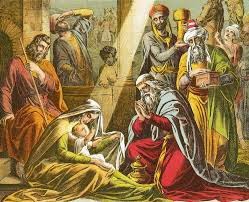
Solemnity of Pentecost
Welcome back to Mass (albeit, in smaller numbers than usual and celebrated a little differently than usual)! It’s providential that at our first weekend back we celebrate the Solemnity of Pentecost. Remember that the disciples were in the Upper Room, and had been waiting there since the Ascension, when Jesus told them to wait for the promised gift of the Spirit. That would have been nine days earlier. They probably weren’t keeping social distancing, but maybe they didn’t have anyone to cut their hair, either. But they used that extended period of waiting to pray for the gift of the Holy Spirit, even as they were sad at not being able to be close to the physical presence of Jesus. I know many of you, and I hope all of you, have used this time away from the Mass to grow closer to Jesus through personal prayer, or watching the Mass on TV or online. You’ve been waiting to return to that closeness with the glorified Body of Jesus in the Eucharist. Have you been praying the Rosary more, or reading Scripture more? What ways have you exercised new spiritual muscles during this 2+ month period of fasting from attending Mass?
What also makes this providential is that at Pentecost, having prayed for the Spirit, and then having received it, the disciples went out and proclaimed the Good News that Jesus was risen from the dead, and that He has given new life to all those who follow Him: a new way of life on this earth, and eternal life in heaven. They spoke, as we hear in the Acts of the Apostles, in different languages so that everyone could understand them. And I hope that the same thing will happen to you as you leave this “Upper Room.” Has you have received the Holy Spirit in baptism and confirmation, and as you will soon be nourished with the Body and Blood of Jesus in the Eucharist, you will have everything you need to be like the disciples and tell others about Jesus.
This is the point where Catholics get a little nervous, I know. Some may feel like they’re ill-equipped to evangelize, to spread the Gospel. And certainly, as St. Paul says in his first Letter to the Corinthians, there are different gifts. We are not all given the same gifts for building up the Church. But at the same time, as St. Paul says in the Letter to the Romans, the Holy Spirit “comes to the aid of our weakness.” We did not receive a Spirit of fear, but of power from the Lord, to accomplish the work He wants us to.
But you might still feel like you don’t know what to do. Is the Holy Spirit going to make you talk in different languages? Perhaps He will, like He did for the disciples at the first Pentecost. But, perhaps for you speaking in different languages is speaking in a way that another person understands, even if you’re both speaking in English. At the core of spreading the Gospel is telling people why Jesus makes a difference in your life. Of course, this presumes that He does. Maybe a honest reflection means that we’re in need of more convincing of this in our own life. But, we probably all have stories about how Jesus helped us in life, or got us through a rough patch, or changed the way we interacted with people, used our money, or engaged in our work. If you don’t have a short story of how Jesus has impacted your life, then today go home and think about it.
The story may be a powerful one, like this one: When my sister, Amanda, was hit in a bad car accident, she later told me that while she was waiting for the ambulance to arrive, as the van was pinned on her right arm, but still conscious, she was praying Hail Marys to try and keep her calm. That’s definitely a witness to the different Jesus and Mary can make in life. Amanda still had scarring, and had a number of surgeries and a long rehab, but her faith helped her to pull through.
The story may be an everyday account. The other day, when returning from a death notification with the State Police, I decided to try out Smoothie King. It was only Tuesday, and the week had already been difficult, for reasons that don’t really matter here. In any case, I ordered a small, but then when I got to the window, I was offered a medium that, with my coupon, was about the same price as the small. I said ok, and they asked me to pull ahead while they made my order. A few minutes later they came out with two smoothies. They told me that they had made both the small and the medium, and figured they would give me both. That was a sign, albeit small, of Jesus’ love, something I really needed at that point in my day.
Evangelization is partly telling the story of Jesus, and I bet you know the highlights better than you think, and partly telling the story of Jesus in our life, which only you can tell. Sometimes the Spirit drives us to be a priest, to serve the people of God, in different towns across a diocese, or maybe even as a missionary in a far-off land. Sometimes the Spirit gives us the gift to be a spouse and a parent, and to tell our story to other family members, or co-workers, or maybe even people we don’t know in our communities. But we’ve had 10 Sundays to pray and prepare for being here today. Let’s not waste the Body and Blood of Christ and the gift of the Holy Spirit that we received in Baptism and Confirmation, that same Spirit that was given at Pentecost, but rather use these great vehicles of grace to tell the world about Jesus: that He is alive, that is the key to our happiness, and the difference He has made in our life.
A blog to communicate the fruits of my own contemplation of Scripture for most of the Sundays and Holy Days of the Liturgical Year. By this blog I hope that you can draw closer to the Triune God and see how the Word of God continues to be living and effective in your own lives.
Showing posts with label Jesus. Show all posts
01 June 2020
10 April 2020
Plethoras of Alleluias!
Easter Sunday of the Resurrection of the Lord
One of the great comedic movies of the 1980s is “Three Amigos” with Steve Martin, Chevy Chase, and Martin Short. If you’re not familiar with the movie, it’s about three actors in the early twentieth century, who think they’re going to a film shoot in Mexico, only to learn that the locals think that they’re real heroes, and have sought their help to conquer the villain, El Guapo. There are too many good lines to quote here, and you can probably watch it online somewhere (it’s rated PG, but parents should screen it first to make sure it’s appropriate for their children).
But, in one exchange between El Guapo, and his chief henchman, Jefe, as they are planning his birthday party, El Guapo asks, “Would you say I have a plethora of piƱatas?” Jefe responds, “A what?” El Guapo repeats, “A plethora.” Jefe responds, “Oh yes, you have a plethora.” El Guapo then asks, “Jefe, what is a plethora?” Jefe asks back, “Why, El Guapo?” El Guapo responds, “Well, you told me I have a plethora. And I just would like to know if you know what a plethora is. I would not like to think that a person would tell someone he has a plethora, and then find out that that person has no idea what it means to have a plethora.”
We have a word that we use, especially during the Easter season, but do we know what it means? What is that word? It’s not plethora. It’s Alleluia! We sing it so often during Easter, and we put it away during Lent, but do we know that Alleluia means? It’s one of the few Hebrew words that the church retains untranslated, it means “God be praised,” and it’s a response of joy. It comes from the Hallel psalms in the Bible, psalms 113-118, and many Jews still pray these psalms especially on the most important Jewish feast days. So, as those who follow the fulfillment of Judaism, it is right that we say, on our most important feast days, Hallelujah or Alleluia.
But what do we have to praise God for this year? As we’re stuck in our homes, watching Mass on TV or on the Internet, as so many businesses are closed, and we probably can’t gather with the usual family members for the usual Easter dinner, why would we sing Alleluia? Can we praise God in the midst of COVID-19?
We can, and we should, because Easter still celebrates what it has always celebrated, which is worthy of the greatest Alleluia! Perhaps in years past we have muddled the meaning of Easter because we do have family to visit, hams to cook, Easter bonnets to wear. But Easter, like every Sunday, is about one thing: the Resurrection. Jesus Christ has been raised from the dead, God be praised! Jesus Christ has conquered sin and death, God be praised! We, too, who have died with Jesus Christ in the waters of baptism can rise with Him to new life, God be praised! This is truly the reason for the celebration. All the other stuff is good, too, but it’s not even a pale comparison to the joy we should have from Jesus rising from the dead.
We should sing with the Psalmist today, “This is the day the Lord has made; let us rejoice and be glad.” We heard even in the Sequence sung today that Christ has reconciled us to the Father. “Death and life have contended in that combat stupendous: the Prince of life, who died, reigns immortal….Christ indeed from death is risen, our new life obtaining.” In the midst of all that is going on, and that is not as it usually is, all that is not as it should be because of COVID-19, Jesus is still risen, we still have the great gift of new and enteral life offered to us.
And Jesus’ Resurrection means that the world is, little by little, being remade. It starts as a small seed, that died in the ground but then rose to new life in Jesus, but the tree has started to spread all over the world, granting its fruit of new life to those who partake of it. Unlike in Eden where our first parents ate of the fruit and brought death to the world, our Lord, on a tree, conquered Satan, the ancient foe, and through that tree, new and eternal life is available for all.
It can be easy, like Peter and John, to see the empty tomb, but not believe in the Resurrection, because it is not fully before our eyes. Because the world is being remade in the light of the risen Christ slowly, we miss the reason for joy. We focus on the doubt and the darkness, and don’t see the hope and light.
But Jesus is still victorious, and the light is still there. Jesus conquered sin, He conquered death, and yes, Jesus has even conquered COVID-19. We need only stay faithful to Jesus so that we can share in the full victory that was won when Jesus rose from the dead.
So today, and every Sunday, which the church calls a little Easter, rejoice in the Resurrection! Sing with the psalmist, “This is the day the Lord has made; let us rejoice and be glad.” Join with the words that Nehemiah spoke, foreshadowing the joy of the Resurrection, even in the Old Testament: “‘Today is holy to the Lord your God. Do not lament, do not weep! […] Do not be saddened this day, for rejoicing in the Lord is your strength!’” Alleluia! God be praised!!
One of the great comedic movies of the 1980s is “Three Amigos” with Steve Martin, Chevy Chase, and Martin Short. If you’re not familiar with the movie, it’s about three actors in the early twentieth century, who think they’re going to a film shoot in Mexico, only to learn that the locals think that they’re real heroes, and have sought their help to conquer the villain, El Guapo. There are too many good lines to quote here, and you can probably watch it online somewhere (it’s rated PG, but parents should screen it first to make sure it’s appropriate for their children).
But, in one exchange between El Guapo, and his chief henchman, Jefe, as they are planning his birthday party, El Guapo asks, “Would you say I have a plethora of piƱatas?” Jefe responds, “A what?” El Guapo repeats, “A plethora.” Jefe responds, “Oh yes, you have a plethora.” El Guapo then asks, “Jefe, what is a plethora?” Jefe asks back, “Why, El Guapo?” El Guapo responds, “Well, you told me I have a plethora. And I just would like to know if you know what a plethora is. I would not like to think that a person would tell someone he has a plethora, and then find out that that person has no idea what it means to have a plethora.”
We have a word that we use, especially during the Easter season, but do we know what it means? What is that word? It’s not plethora. It’s Alleluia! We sing it so often during Easter, and we put it away during Lent, but do we know that Alleluia means? It’s one of the few Hebrew words that the church retains untranslated, it means “God be praised,” and it’s a response of joy. It comes from the Hallel psalms in the Bible, psalms 113-118, and many Jews still pray these psalms especially on the most important Jewish feast days. So, as those who follow the fulfillment of Judaism, it is right that we say, on our most important feast days, Hallelujah or Alleluia.
But what do we have to praise God for this year? As we’re stuck in our homes, watching Mass on TV or on the Internet, as so many businesses are closed, and we probably can’t gather with the usual family members for the usual Easter dinner, why would we sing Alleluia? Can we praise God in the midst of COVID-19?
We can, and we should, because Easter still celebrates what it has always celebrated, which is worthy of the greatest Alleluia! Perhaps in years past we have muddled the meaning of Easter because we do have family to visit, hams to cook, Easter bonnets to wear. But Easter, like every Sunday, is about one thing: the Resurrection. Jesus Christ has been raised from the dead, God be praised! Jesus Christ has conquered sin and death, God be praised! We, too, who have died with Jesus Christ in the waters of baptism can rise with Him to new life, God be praised! This is truly the reason for the celebration. All the other stuff is good, too, but it’s not even a pale comparison to the joy we should have from Jesus rising from the dead.
We should sing with the Psalmist today, “This is the day the Lord has made; let us rejoice and be glad.” We heard even in the Sequence sung today that Christ has reconciled us to the Father. “Death and life have contended in that combat stupendous: the Prince of life, who died, reigns immortal….Christ indeed from death is risen, our new life obtaining.” In the midst of all that is going on, and that is not as it usually is, all that is not as it should be because of COVID-19, Jesus is still risen, we still have the great gift of new and enteral life offered to us.
And Jesus’ Resurrection means that the world is, little by little, being remade. It starts as a small seed, that died in the ground but then rose to new life in Jesus, but the tree has started to spread all over the world, granting its fruit of new life to those who partake of it. Unlike in Eden where our first parents ate of the fruit and brought death to the world, our Lord, on a tree, conquered Satan, the ancient foe, and through that tree, new and eternal life is available for all.
It can be easy, like Peter and John, to see the empty tomb, but not believe in the Resurrection, because it is not fully before our eyes. Because the world is being remade in the light of the risen Christ slowly, we miss the reason for joy. We focus on the doubt and the darkness, and don’t see the hope and light.
But Jesus is still victorious, and the light is still there. Jesus conquered sin, He conquered death, and yes, Jesus has even conquered COVID-19. We need only stay faithful to Jesus so that we can share in the full victory that was won when Jesus rose from the dead.
So today, and every Sunday, which the church calls a little Easter, rejoice in the Resurrection! Sing with the psalmist, “This is the day the Lord has made; let us rejoice and be glad.” Join with the words that Nehemiah spoke, foreshadowing the joy of the Resurrection, even in the Old Testament: “‘Today is holy to the Lord your God. Do not lament, do not weep! […] Do not be saddened this day, for rejoicing in the Lord is your strength!’” Alleluia! God be praised!!
![]() |
| The entrance to the place where Jesus rose from the dead in the Church of the Holy Sepulchre |
Labels:
"Three Amigos",
Alleluia,
COVID-19,
Easter,
empty tomb,
God be praised,
Hallel,
Jesus,
John 20,
Nehemiah,
Ps. 118
30 March 2020
Waiting in the Tomb
Fifth Sunday of Lent
The summer after my first year in college seminary, I worked at St. Thomas Aquinas in East Lansing as a custodian. And on a sunny, hot day on 2 July, I was working with my supervisor–a gruff older man named Grady–on trimming the bushes around the school. Some of the work wasn’t bad; we were using gas-powered hedge trimmers. But some of the bushes were big, taller than any of us, and we needed to trim the top. Grady was convinced that the best way to trim the tops was to put me in the bucket of a tractor, and lift me up so I could reach the branches. I hated the idea, but didn’t want to say no to my supervisor.
So I started to get in the bucket, my mind racing with the hundreds of ways that this could end with a lost limb or fatality. But, before the bucket could be raised, the secretary radioed for me to come to the office. Somehow, I knew something wasn’t right, so while my first few steps were at a regular pace, I quickly sped up and ended up running to the office. It was there that the secretary told me that my sister, Amanda, had been in a bad car accident, and I needed to get to Sparrow Hospital in Lansing quickly so that I could ride in the ambulance down to Ann Arbor with my other family members as my sister was air-lifted to U of M Hospital. Fr. Dave, the pastor, drove me to the hospital in Lansing, where my sister ended up having surgery, rather than going to U of M.
I knew something was wrong, so I ran, and I’m willing to bet that Fr. Dave drove faster than the posted speed limit to get me to the hospital. And yet, when Jesus gets word that his friend, Lazarus, is ill, St. John says, “[Jesus] remained for two days in the place where he was.” What was Jesus doing?
Jesus knew exactly what He was doing, and what He was going to do. We heard Jesus say, “‘Our friend Lazarus is asleep, but I am going to awaken him.’” This may seem cold, Jesus waiting for Lazarus to die, and then raise Him from the dead. But it was part of the Father’s plan, for the good of Lazarus, for the good of Martha and Mary, for the good of the apostles and disciples, and even for Jesus’ good.
It didn’t seem that way for Martha. She said to Jesus, “‘Lord, if you had been here, my brother would not have died.’” But, even in the midst of her grief and confusion, Martha trusts in Jesus, and the power of God to do anything, even raise someone from the dead. Mary, too, when she comes to see Jesus, repeats the refrain of Martha, “‘Lord, if you had been here, my brother would not have died.’” Mary, who had sat at the feet of Jesus to hear Him, while Martha worried about being hospitable, is now wondering what Jesus was doing, and why Lazarus had to die.
But Jesus is not callused to the death, either. When Jesus came to the tomb, He cries. This is the shortest verse in the entire New Testament: “And Jesus wept.” Faced with the loss of His friend, Jesus cries. He even took on our sorrow in the face of the death of a friend. As Jesus goes to raise Lazarus, the crowd does not believe. Even Martha says, “‘Lord, by now there will be a stench; he has been dead for four days.’”
And then, after this long, drawn-out episode of Lazarus getting ill, Jesus waiting, Jesus greeting Martha, and then Mary, and then going to the tomb, it all changes. “‘Lazarus, come out!’” Jesus says loudly. And Lazarus does. And the Jews began to believe in Jesus.
We’re in week two of no public Masses. Now we have a Stay At Home order from Governor Whitmer. School is still out. We’re trying to prevent deaths from COVID-19 by our social distancing, but it almost feels like the world is dead. It seems like there has been no life. Many people aren’t even leaving their houses, or doing so very sparingly. With so many people staying inside their homes, by now, there will be a stench!
And yet, the Lord is doing something. Somehow, according to the will of the Father, this is for our good. It seems like Jesus is waiting too long. Things are dire! We need a cure now! We need this to end now! But He’s still waiting. So what is on the other side of this pandemic? We don’t know, other than it’s new life. And somehow, God will be glorified, and others will have the opportunity to believe in Jesus.
I know we want to rush this, and get this over as soon as possible. Believe me, as much as I am grateful to Tommy for Facebook live broadcasting me to you, I’d rather have you here! I’d rather celebrate the holiest week of the year with you. But, for now, we wait in the tomb with Lazarus. For now, we wait for the Lord to act. And while we wait, we reaffirm our trust, that when the Lord Jesus does act, it will mean new life for each of us. So let us wait with joyful hope to hear those words of our Lord: Come out! And we will be unbound, and able to live in the freedom of the resurrection.
The summer after my first year in college seminary, I worked at St. Thomas Aquinas in East Lansing as a custodian. And on a sunny, hot day on 2 July, I was working with my supervisor–a gruff older man named Grady–on trimming the bushes around the school. Some of the work wasn’t bad; we were using gas-powered hedge trimmers. But some of the bushes were big, taller than any of us, and we needed to trim the top. Grady was convinced that the best way to trim the tops was to put me in the bucket of a tractor, and lift me up so I could reach the branches. I hated the idea, but didn’t want to say no to my supervisor.
So I started to get in the bucket, my mind racing with the hundreds of ways that this could end with a lost limb or fatality. But, before the bucket could be raised, the secretary radioed for me to come to the office. Somehow, I knew something wasn’t right, so while my first few steps were at a regular pace, I quickly sped up and ended up running to the office. It was there that the secretary told me that my sister, Amanda, had been in a bad car accident, and I needed to get to Sparrow Hospital in Lansing quickly so that I could ride in the ambulance down to Ann Arbor with my other family members as my sister was air-lifted to U of M Hospital. Fr. Dave, the pastor, drove me to the hospital in Lansing, where my sister ended up having surgery, rather than going to U of M.
I knew something was wrong, so I ran, and I’m willing to bet that Fr. Dave drove faster than the posted speed limit to get me to the hospital. And yet, when Jesus gets word that his friend, Lazarus, is ill, St. John says, “[Jesus] remained for two days in the place where he was.” What was Jesus doing?
Jesus knew exactly what He was doing, and what He was going to do. We heard Jesus say, “‘Our friend Lazarus is asleep, but I am going to awaken him.’” This may seem cold, Jesus waiting for Lazarus to die, and then raise Him from the dead. But it was part of the Father’s plan, for the good of Lazarus, for the good of Martha and Mary, for the good of the apostles and disciples, and even for Jesus’ good.
It didn’t seem that way for Martha. She said to Jesus, “‘Lord, if you had been here, my brother would not have died.’” But, even in the midst of her grief and confusion, Martha trusts in Jesus, and the power of God to do anything, even raise someone from the dead. Mary, too, when she comes to see Jesus, repeats the refrain of Martha, “‘Lord, if you had been here, my brother would not have died.’” Mary, who had sat at the feet of Jesus to hear Him, while Martha worried about being hospitable, is now wondering what Jesus was doing, and why Lazarus had to die.
But Jesus is not callused to the death, either. When Jesus came to the tomb, He cries. This is the shortest verse in the entire New Testament: “And Jesus wept.” Faced with the loss of His friend, Jesus cries. He even took on our sorrow in the face of the death of a friend. As Jesus goes to raise Lazarus, the crowd does not believe. Even Martha says, “‘Lord, by now there will be a stench; he has been dead for four days.’”
And then, after this long, drawn-out episode of Lazarus getting ill, Jesus waiting, Jesus greeting Martha, and then Mary, and then going to the tomb, it all changes. “‘Lazarus, come out!’” Jesus says loudly. And Lazarus does. And the Jews began to believe in Jesus.
We’re in week two of no public Masses. Now we have a Stay At Home order from Governor Whitmer. School is still out. We’re trying to prevent deaths from COVID-19 by our social distancing, but it almost feels like the world is dead. It seems like there has been no life. Many people aren’t even leaving their houses, or doing so very sparingly. With so many people staying inside their homes, by now, there will be a stench!
And yet, the Lord is doing something. Somehow, according to the will of the Father, this is for our good. It seems like Jesus is waiting too long. Things are dire! We need a cure now! We need this to end now! But He’s still waiting. So what is on the other side of this pandemic? We don’t know, other than it’s new life. And somehow, God will be glorified, and others will have the opportunity to believe in Jesus.
I know we want to rush this, and get this over as soon as possible. Believe me, as much as I am grateful to Tommy for Facebook live broadcasting me to you, I’d rather have you here! I’d rather celebrate the holiest week of the year with you. But, for now, we wait in the tomb with Lazarus. For now, we wait for the Lord to act. And while we wait, we reaffirm our trust, that when the Lord Jesus does act, it will mean new life for each of us. So let us wait with joyful hope to hear those words of our Lord: Come out! And we will be unbound, and able to live in the freedom of the resurrection.
02 March 2020
Into the Lenten Desert
First Sunday of Lent
St. Anthony of the Desert, also known as St. Anthony of Egypt, is considered the Father of Monks. According to St. Athanasius, who wrote his biography, St. Anthony, while twenty years old, heard the Gospel of the rich young man, that, in order to be happy, he had to sell his riches and follow Christ. So he got rid of most of his possessions and land, gave his sister into the care of some local Christian virgins (no one knows how she took his decision), and eventually went into the wilderness of Egypt, and lived to the ripe old age of 105 (a blessing in addition to having the name Anthony).
Why does St. Anthony go into the desert? Why does Jesus go into the desert after His baptism, as heard in the Gospel today? What’s the big deal with deserts?
To begin with, it was the opposite of where man was supposed to be. We heard in Genesis how God put Adam and Eve into a garden in Eden. The garden had everything they needed for food and sustenance, and apparently it was warm enough where walking around without clothes wasn’t a problem, so certainly, the garden was not in Michigan! But the point is that gardens are places of life, whereas deserts are places of death.
For the Israelites, the desert was also the place of great testing after the Exodus from Egypt. Recall that the desert was where the Israelites wandered for 40 years, after they doubted that God could take care of the giants who were occupying the land of Canaan, where God had promised to settle the Chosen People.
Last, but not least, just as the garden was seen as the property of God, the source of life, so the desert was seen as the property of the devil, the source of death. At the Day of Atonement, the priests would send the goat, who had previously received the sins of the nation on it, into the desert to be handed over to the demon Azazel.
So Jesus, and St. Anthony in imitation of Him, goes into the desert, and there He is tempted. Both Jesus and St. Anthony went there to battle Satan. St. Matthew writes in his account of the Gospel that Jesus battled Satan verbally (Jesus, of course, won). St. Athanasius records that St. Anthony was tempted in the desert with all sorts of temptations, and St. Anthony did not give in to those temptations; he won his contest.
For us, then, Lent is going into the desert. The desert isn’t a fun place, but it’s a necessary place for us to grow in our relationship with God. It’s a place of battle, and that means we have to fight. But it’s the only way to get back to the garden. In Lent we fight against our fallen earthly desires in order that our desire for heaven can be strengthened. In Lent we fight against our temptations to sin, to be disobedient to God and obedient to Satan. In Lent, we fight against hiding from God because of our shame, and we run to God to ask Him to heal the wounds the sin has created and clothe us with His holiness.
Lent is a privileged time to grow in holiness. Jesus didn’t grow in holiness when He went into the desert, because He is holiness Himself. But He gave us an example so that we could grow in holiness. St. Anthony grew in holiness when he went into the desert, and gave us an example of how fasting, extra prayer, and concentrating on our relationship with God transform us by the power of God’s grace into the man or woman that God wants us to be.
Entering the desert for us can be more time for silence. Not only for the young, but especially for the young, silence can feel like death! To a society so used to having access to the internet all the time on the phone, or music all the time, or some sort of stimulus for our ears and eyes, silence can seem as barren as a sea of sand. But it’s also a great way to become more accustomed to hearing the Word of God, which often is only audible in silence.
Entering the desert for us can be making more time for prayer: speaking with and listening to God. It seems like every year we get more and more things to do, and prayer often gets shoved out of the way, even before we ditch exercise! And yet, without prayer, we can’t thrive as God wants us to thrive. Again, it may feel deadly to set aside even another 5 minutes each day to tell God what’s on our hearts, and to listen to hear what God’s heart wants to say to us. But it’s also a great way to know if we are following God’s will or our own will.
As we enter this Lenten season, this Lenten desert, let’s follow the example of Jesus, and the example of St. Anthony. Let’s go into the desert to fight our temptations and to do battle with Satan, a battle that we can assuredly win if we’re connected to Christ, as St. Anthony was. Don’t be afraid of the dryness of the desert; don’t be afraid that it’s too difficult. Enter the desert with Christ and St. Anthony, as a way to enter the Garden when we come to Easter.
![]() |
| St. Anthony being attacked by demons |
St. Anthony of the Desert, also known as St. Anthony of Egypt, is considered the Father of Monks. According to St. Athanasius, who wrote his biography, St. Anthony, while twenty years old, heard the Gospel of the rich young man, that, in order to be happy, he had to sell his riches and follow Christ. So he got rid of most of his possessions and land, gave his sister into the care of some local Christian virgins (no one knows how she took his decision), and eventually went into the wilderness of Egypt, and lived to the ripe old age of 105 (a blessing in addition to having the name Anthony).
Why does St. Anthony go into the desert? Why does Jesus go into the desert after His baptism, as heard in the Gospel today? What’s the big deal with deserts?
To begin with, it was the opposite of where man was supposed to be. We heard in Genesis how God put Adam and Eve into a garden in Eden. The garden had everything they needed for food and sustenance, and apparently it was warm enough where walking around without clothes wasn’t a problem, so certainly, the garden was not in Michigan! But the point is that gardens are places of life, whereas deserts are places of death.
For the Israelites, the desert was also the place of great testing after the Exodus from Egypt. Recall that the desert was where the Israelites wandered for 40 years, after they doubted that God could take care of the giants who were occupying the land of Canaan, where God had promised to settle the Chosen People.
Last, but not least, just as the garden was seen as the property of God, the source of life, so the desert was seen as the property of the devil, the source of death. At the Day of Atonement, the priests would send the goat, who had previously received the sins of the nation on it, into the desert to be handed over to the demon Azazel.
So Jesus, and St. Anthony in imitation of Him, goes into the desert, and there He is tempted. Both Jesus and St. Anthony went there to battle Satan. St. Matthew writes in his account of the Gospel that Jesus battled Satan verbally (Jesus, of course, won). St. Athanasius records that St. Anthony was tempted in the desert with all sorts of temptations, and St. Anthony did not give in to those temptations; he won his contest.
For us, then, Lent is going into the desert. The desert isn’t a fun place, but it’s a necessary place for us to grow in our relationship with God. It’s a place of battle, and that means we have to fight. But it’s the only way to get back to the garden. In Lent we fight against our fallen earthly desires in order that our desire for heaven can be strengthened. In Lent we fight against our temptations to sin, to be disobedient to God and obedient to Satan. In Lent, we fight against hiding from God because of our shame, and we run to God to ask Him to heal the wounds the sin has created and clothe us with His holiness.
Lent is a privileged time to grow in holiness. Jesus didn’t grow in holiness when He went into the desert, because He is holiness Himself. But He gave us an example so that we could grow in holiness. St. Anthony grew in holiness when he went into the desert, and gave us an example of how fasting, extra prayer, and concentrating on our relationship with God transform us by the power of God’s grace into the man or woman that God wants us to be.
Entering the desert for us can be more time for silence. Not only for the young, but especially for the young, silence can feel like death! To a society so used to having access to the internet all the time on the phone, or music all the time, or some sort of stimulus for our ears and eyes, silence can seem as barren as a sea of sand. But it’s also a great way to become more accustomed to hearing the Word of God, which often is only audible in silence.
Entering the desert for us can be making more time for prayer: speaking with and listening to God. It seems like every year we get more and more things to do, and prayer often gets shoved out of the way, even before we ditch exercise! And yet, without prayer, we can’t thrive as God wants us to thrive. Again, it may feel deadly to set aside even another 5 minutes each day to tell God what’s on our hearts, and to listen to hear what God’s heart wants to say to us. But it’s also a great way to know if we are following God’s will or our own will.
As we enter this Lenten season, this Lenten desert, let’s follow the example of Jesus, and the example of St. Anthony. Let’s go into the desert to fight our temptations and to do battle with Satan, a battle that we can assuredly win if we’re connected to Christ, as St. Anthony was. Don’t be afraid of the dryness of the desert; don’t be afraid that it’s too difficult. Enter the desert with Christ and St. Anthony, as a way to enter the Garden when we come to Easter.
03 January 2020
Jesus, Mary, and Judaism
Solemnity of the Blessed Virgin Mary, the Mother of God
In the past year, there have been more and more attacks on Jewish people, both around the country and around the world. Just this past Saturday night, a suspect stabbed five people during a Hanukkah celebration in their rabbi’s home. Any attack on an innocent person is horribly evil, but that evil is compounded when the motivating factor is a person’s religion and/or race.
Why bring this up? Why talk about anti-Semitic violence on the Solemnity of the Blessed Virgin Mary, the Mother of God? All three readings for today’s celebration point us towards the religion of Mary and the religion of Jesus: Judaism. The first reading is the Aaronic priestly blessing, by which the Chosen people were to be blessed. The Church includes this reading as a way to begin the new year, as a people blessed by the Lord with a blessing the Lord Himself gave to His People, Israel.
The second reading reminds us that Jesus was born of Mary, “born under the law, to ransom those under the law, so that we might receive adoption as sons.” Perhaps this doesn’t sound so friendly to Judaism. And many will twist St. Paul and select only certain passages to make it sound like St. Paul himself was against the Jewish people, though, St. Paul, or Saul as he was called among the Jews, was himself Jewish, and a most ardent practitioner of Judaism before He began to follow Jesus. But St. Paul saw Jesus as the Jewish Messiah, who fulfilled the promises God made to Abraham and David. And God, through Jesus, fulfilled the law and raised us merely from followers of the Law to the freedom of God’s children.
And at the end of our Gospel, we heard about the circumcision of Jesus, the sign that He was part of the Chosen People, and a recipient of the covenant between God and Abraham. Jesus, yes, is the founder and Head of the Catholic Church. But the Church herself is a sister, as it were, to Judaism, and truly the fulfillment of all that God revealed of Himself to the Chosen People throughout the Tanakh, the Hebrew Scriptures, what we call the Old Testament.
To understand Jesus fully, and to understand Mary fully, we have to understand Judaism. So often we gloss over things that would have been so important to the first Christians, most of whom were Jews. In our first reading, we heard this phrase over and over again: “The Lord…” In Hebrew, the language in which the Book of Numbers was written, this would have been said Adonai, though the letters spelled out the sacred Name of God, which we are not allowed to say in the Mass. In Greek, it was translated into š° š«ššššš which we translate into English as “The Lord…” in all caps. If you’re ever reading your Old Testament, and wondered why that was in caps, that signifies that the word is the Sacred Name of God. And when St. Paul proclaims that “Jesus is Lord,” he is saying, “šŖššššš š° š«ššššš” which means that Jesus is the same God as the God of Israel, the Lord.
Which brings us back to Mary, whom we celebrate and honor today. Because if Jesus is the Lord, God who revealed Himself to Abraham and entered into a covenant with the Chosen People, and Mary is the mother of Jesus, then she is also rightfully called the Mother of God, the š³ššššš šš, as was solemnly defined at the Ecumenical Council of Ephesus in 431. She is not simply a woman who gave birth to a male child, but she gave birth to the creator of the entire universe, who saves us from sin and death by His own Death and Resurrection. And because of that unique role in salvation history, we honor her (not worship her) above all the saints. We love her as our mother, given to us by her Divine Son, Jesus at the foot of the cross, and we take every opportunity we can to shower our affection on her, as spiritual children and joint heirs with her Son Jesus. So, as the deacon in the Divine Liturgy of St. John Chrysostom chants, “Commemorating our most holy, most pure, most blessed and glorious Lady, the Theotokos and Ever-Virgin Mary with all the saints, let us commit ourselves and one another and our whole life to Christ our God.”
In the past year, there have been more and more attacks on Jewish people, both around the country and around the world. Just this past Saturday night, a suspect stabbed five people during a Hanukkah celebration in their rabbi’s home. Any attack on an innocent person is horribly evil, but that evil is compounded when the motivating factor is a person’s religion and/or race.
Why bring this up? Why talk about anti-Semitic violence on the Solemnity of the Blessed Virgin Mary, the Mother of God? All three readings for today’s celebration point us towards the religion of Mary and the religion of Jesus: Judaism. The first reading is the Aaronic priestly blessing, by which the Chosen people were to be blessed. The Church includes this reading as a way to begin the new year, as a people blessed by the Lord with a blessing the Lord Himself gave to His People, Israel.
The second reading reminds us that Jesus was born of Mary, “born under the law, to ransom those under the law, so that we might receive adoption as sons.” Perhaps this doesn’t sound so friendly to Judaism. And many will twist St. Paul and select only certain passages to make it sound like St. Paul himself was against the Jewish people, though, St. Paul, or Saul as he was called among the Jews, was himself Jewish, and a most ardent practitioner of Judaism before He began to follow Jesus. But St. Paul saw Jesus as the Jewish Messiah, who fulfilled the promises God made to Abraham and David. And God, through Jesus, fulfilled the law and raised us merely from followers of the Law to the freedom of God’s children.
And at the end of our Gospel, we heard about the circumcision of Jesus, the sign that He was part of the Chosen People, and a recipient of the covenant between God and Abraham. Jesus, yes, is the founder and Head of the Catholic Church. But the Church herself is a sister, as it were, to Judaism, and truly the fulfillment of all that God revealed of Himself to the Chosen People throughout the Tanakh, the Hebrew Scriptures, what we call the Old Testament.
To understand Jesus fully, and to understand Mary fully, we have to understand Judaism. So often we gloss over things that would have been so important to the first Christians, most of whom were Jews. In our first reading, we heard this phrase over and over again: “The Lord…” In Hebrew, the language in which the Book of Numbers was written, this would have been said Adonai, though the letters spelled out the sacred Name of God, which we are not allowed to say in the Mass. In Greek, it was translated into š° š«ššššš which we translate into English as “The Lord…” in all caps. If you’re ever reading your Old Testament, and wondered why that was in caps, that signifies that the word is the Sacred Name of God. And when St. Paul proclaims that “Jesus is Lord,” he is saying, “šŖššššš š° š«ššššš” which means that Jesus is the same God as the God of Israel, the Lord.
Which brings us back to Mary, whom we celebrate and honor today. Because if Jesus is the Lord, God who revealed Himself to Abraham and entered into a covenant with the Chosen People, and Mary is the mother of Jesus, then she is also rightfully called the Mother of God, the š³ššššš šš, as was solemnly defined at the Ecumenical Council of Ephesus in 431. She is not simply a woman who gave birth to a male child, but she gave birth to the creator of the entire universe, who saves us from sin and death by His own Death and Resurrection. And because of that unique role in salvation history, we honor her (not worship her) above all the saints. We love her as our mother, given to us by her Divine Son, Jesus at the foot of the cross, and we take every opportunity we can to shower our affection on her, as spiritual children and joint heirs with her Son Jesus. So, as the deacon in the Divine Liturgy of St. John Chrysostom chants, “Commemorating our most holy, most pure, most blessed and glorious Lady, the Theotokos and Ever-Virgin Mary with all the saints, let us commit ourselves and one another and our whole life to Christ our God.”
30 December 2019
Family Issues A Long Time Ago in a Galaxy Far, Far Away
Feast of the Holy Family of Jesus, Mary, and Joseph
There’s a new Star Wars movie out, and I saw it opening night a little over a week ago. I won’t give anything away, but it seemed familiar to the original three Star Wars movies. In all the Star Wars movies there are certainly some family problems going on. In the original three episodes (numbers 4-6), Luke is being raised by his uncle and aunt, who are murdered, and it’s later discovered that Darth Vader is Luke’s father, whom he hates as working for the Empire, but also wants to save, as the Emperor wants Luke to take over for his father. The next three episodes (number 1-3; it is a little confusing) is about young Darth Vader, or Anakin, as he was then known, who also has family issues, as he has no father (he was conceived by the Force), and ends up really messing his life up by taking vengeance on those who hurt his mother. He also falls in love with a princess, and even though, as a Jedi, he’s supposed to be celibate, marries her, and they conceive twins (Luke and Leia). While I won’t go into detail, even the new movies (numbers 7-9) continue the family drama storyline. But what is common to all the episodes is that the family drama has to do with power and abuses of it.
I bring that up because, as we heard our second reading, our minds probably went immediately to power. Maybe they didn’t go there at first, but as soon as we heard, “Wives, be subordinate to your husbands,” I’m sure we all probably bristled a little bit, for one reason or another. Maybe some felt like that shouldn’t even be a part of Scripture anymore, since, so some think, we’ve moved beyond the “backward” culture in which it was written. Maybe some of us were trying hard how to understand it, since it is a part of Scripture, which is the infallible Word of God. But all of us likely heard that passage in the same context of power on which all the Star Wars interfamilial drama is based.
If this feast of the Holy Family teaches us anything, it’s that the family is not about a power struggle. It’s not about who has the most power, or who is the boss. Instead, the Holy Family was all about obedience to God and protecting one another.
If the Holy Family was about power, then Jesus would have come out of the womb telling Mary and Joseph what to do. After all, Jesus is the co-eternal Son of God. Jesus is God, who created all things out of nothing. He even created, with the help of their parents, Mary and Joseph. No human could ever be God’s equal, and so, if family life was about power, Jesus would have been the one in charge. But Jesus came as an infant, with no power, totally reliant and dependent on the love of his mother, Mary, and his foster-father, Joseph.
After Jesus, Mary comes next in the power hierarchy, as a woman who never sinned. She was conceived without original sin, and always said yes to God. So with Jesus as an infant, not able to talk or care for Himself, if the choice was for Mary or Joseph to be in charge, to have all the power, it certainly would have fallen to Mary, based upon her holiness alone. But, the first time that Mary really issues a command in the Gospel is after Joseph is dead, at the wedding at Cana, when she tells the servants to do whatever Jesus tells them.
Poor Joseph. In the midst of the Holy Family, he’s the only one who could be at fault. His foster-Son is the Son of God, and his wife is sinless. If anything goes wrong in the household, everyone knows whose fault it is. Joseph is just, but he wasn’t perfect, and in the midst of such holiness, his sins must have stood out like a sore thumb. And yet, to whom do the dreams come, where God advises how to proceed? To Joseph! In today’s Gospel, the angel appears to Joseph twice, once to tell him to leave for Egypt, and then to tell Joseph it’s safe to return to Israel. This is backwards from how it should be, if power were the motivating factor in the family. But that should tell us something: power is not the motivating factor.
So as we read the passage from our second reading, we have to read it in the light of the model of holiness demonstrated by the Holy Family. Their concern was not power, but about obedience to the will of God, as it was known to them, and protecting each other. Sometimes the will of God will have wives obeying their husband; sometimes the will of God will have husbands obeying their wives (many wives will tell you that their greatest skill is letting the husband think that he is being obeyed, when it’s really her decision). But it’s not about any human will that is being expressed, but what is in the will of God. And as long as the family is seeking to be obedient to that will, then that family is well on the way to holiness.
If Star Wars teaches us anything, it’s that viewing the family through the lens of power and control is a recipe for disaster. And that message, whether intended or not, is based upon the Word of God, which reminds us that, for a family to be holy, it need not be concerned with who has power over whom, but how all the members of the family can be obedient to the will of God.
There’s a new Star Wars movie out, and I saw it opening night a little over a week ago. I won’t give anything away, but it seemed familiar to the original three Star Wars movies. In all the Star Wars movies there are certainly some family problems going on. In the original three episodes (numbers 4-6), Luke is being raised by his uncle and aunt, who are murdered, and it’s later discovered that Darth Vader is Luke’s father, whom he hates as working for the Empire, but also wants to save, as the Emperor wants Luke to take over for his father. The next three episodes (number 1-3; it is a little confusing) is about young Darth Vader, or Anakin, as he was then known, who also has family issues, as he has no father (he was conceived by the Force), and ends up really messing his life up by taking vengeance on those who hurt his mother. He also falls in love with a princess, and even though, as a Jedi, he’s supposed to be celibate, marries her, and they conceive twins (Luke and Leia). While I won’t go into detail, even the new movies (numbers 7-9) continue the family drama storyline. But what is common to all the episodes is that the family drama has to do with power and abuses of it.
I bring that up because, as we heard our second reading, our minds probably went immediately to power. Maybe they didn’t go there at first, but as soon as we heard, “Wives, be subordinate to your husbands,” I’m sure we all probably bristled a little bit, for one reason or another. Maybe some felt like that shouldn’t even be a part of Scripture anymore, since, so some think, we’ve moved beyond the “backward” culture in which it was written. Maybe some of us were trying hard how to understand it, since it is a part of Scripture, which is the infallible Word of God. But all of us likely heard that passage in the same context of power on which all the Star Wars interfamilial drama is based.
If this feast of the Holy Family teaches us anything, it’s that the family is not about a power struggle. It’s not about who has the most power, or who is the boss. Instead, the Holy Family was all about obedience to God and protecting one another.
If the Holy Family was about power, then Jesus would have come out of the womb telling Mary and Joseph what to do. After all, Jesus is the co-eternal Son of God. Jesus is God, who created all things out of nothing. He even created, with the help of their parents, Mary and Joseph. No human could ever be God’s equal, and so, if family life was about power, Jesus would have been the one in charge. But Jesus came as an infant, with no power, totally reliant and dependent on the love of his mother, Mary, and his foster-father, Joseph.
After Jesus, Mary comes next in the power hierarchy, as a woman who never sinned. She was conceived without original sin, and always said yes to God. So with Jesus as an infant, not able to talk or care for Himself, if the choice was for Mary or Joseph to be in charge, to have all the power, it certainly would have fallen to Mary, based upon her holiness alone. But, the first time that Mary really issues a command in the Gospel is after Joseph is dead, at the wedding at Cana, when she tells the servants to do whatever Jesus tells them.
Poor Joseph. In the midst of the Holy Family, he’s the only one who could be at fault. His foster-Son is the Son of God, and his wife is sinless. If anything goes wrong in the household, everyone knows whose fault it is. Joseph is just, but he wasn’t perfect, and in the midst of such holiness, his sins must have stood out like a sore thumb. And yet, to whom do the dreams come, where God advises how to proceed? To Joseph! In today’s Gospel, the angel appears to Joseph twice, once to tell him to leave for Egypt, and then to tell Joseph it’s safe to return to Israel. This is backwards from how it should be, if power were the motivating factor in the family. But that should tell us something: power is not the motivating factor.
So as we read the passage from our second reading, we have to read it in the light of the model of holiness demonstrated by the Holy Family. Their concern was not power, but about obedience to the will of God, as it was known to them, and protecting each other. Sometimes the will of God will have wives obeying their husband; sometimes the will of God will have husbands obeying their wives (many wives will tell you that their greatest skill is letting the husband think that he is being obeyed, when it’s really her decision). But it’s not about any human will that is being expressed, but what is in the will of God. And as long as the family is seeking to be obedient to that will, then that family is well on the way to holiness.
If Star Wars teaches us anything, it’s that viewing the family through the lens of power and control is a recipe for disaster. And that message, whether intended or not, is based upon the Word of God, which reminds us that, for a family to be holy, it need not be concerned with who has power over whom, but how all the members of the family can be obedient to the will of God.
| Statues of the Holy Family fleeing to Egypt at the Milk Grotto |
21 December 2019
St. Joseph: Our Model
Fourth Sunday of Advent
In my nine years as a priest I have come to have a deeper devotion to St. Joseph. While he’s quite popular with those selling houses, and certainly I knew about him while I was growing up, he was not on my original list of top saints. The Blessed Mother was always a focus, as was St. Anthony (for obvious reasons), but St. Joseph always seemed to fade into the background, and was never very noticeable.
The Scriptures do not record any words from St. Joseph (perhaps wives would suggest this silence to their husbands!), but he does play an important role in caring for the Blessed Virgin Mary and the child Jesus. We hear about St. Joseph for the first time today in the Gospel according to St. Matthew: Joseph is a righteous man, and is visited by angels. He, like Joseph in the Old Testament, is given the gift of powerful dreams, by which God directs St. Joseph.
But I think it’s important to look, once more, or perhaps for some of us, for the first time, at St. Joseph and his circumstances. St. Joseph is engaged (betrothed) to the Blessed Virgin Mary. He is planning on marrying her. And then he finds out (I would guess Mary told him) that his fiancĆ©e is with child. Can you imagine, gentleman, your fiancĆ©e sitting you down, and maybe the conversation goes something like this: “Honey, we need to talk” (never a good phrase to hear if you’re in a relationship). “Dear, I need to let you know that I’m pregnant. But don’t worry! I wasn’t unfaithful to you. An angel appeared to me and told me that I am going to be God’s Mother, that the Holy Spirit will make me conceive and the child will fulfill the promises made to our father David so many years ago.” Can you imagine how you would have felt in such a circumstance?
Understandably, Joseph is a bit shaken up, and decides to divorce Mary, but, knowing that if she is found to be with child without being married, she could be stoned to death for being an adulteress, he decides that things are going to be done quietly so as not to shame her. This is part of the evidence of the fact that he was a righteous man. He must have cared for Mary, but couldn’t see past this new situation in her life.
And then, to make matters even more confusing, an angel appears to him in a dream, and tells him to take Mary as his wife, because the child truly was conceived by the Holy Spirit. And furthermore, Joseph is to name the child Jesus, Yeshua, which means in Hebrew, “God saves,” because Jesus will save the people from their sins. After this dream, Joseph obeys God, and we know the rest of the story.
It would have been easy for St. Joseph to walk away. In modern terms, we could say that all that happened was “too much.” FiancĆ©es aren’t supposed to get pregnant before marriage. Children aren’t supposed to be conceived by the Holy Spirit. And most people don’t get dreams that come directly from God. And yet St. Joseph doesn’t walk away. He is obedient to God even in very difficult circumstances, which will become even more difficult, as Joseph and Mary have to leave Nazareth for Bethlehem, and then within two years they need to flee to Egypt, and then return to Bethlehem, and then Jesus stays behind on the family annual pilgrimage to Jerusalem.
Following God is not always easy. There can be times where you want to walk away because things are not going the way we want them to go. But St. Joseph is our model, for men and women, to follow the will of God.
Of course, just because the will of God is difficult, does not mean that it’s self-contradictory. Sometimes people think that they are doing the will of God, when they’re really only following their own will or desires. How do we know if it’s our will or our desire or the will of God? Look to the Scriptures. In the first reading, the Prophet Isaiah spoke for the Lord, saying that “the virgin shall conceive, and bear a son.” So when Mary conceived without having relations with Joseph, it wasn’t the normal way to conceive, but it also wasn’t contrary to the will of God, since God himself had foretold it through Isaiah.
But, if what we think God is asking us is in accord with the Scriptures and the teachings of the Church, then God will help us through, no matter how difficult things can be. It can even be that way with the Church. Over the past few years we have had some difficult times: new scandals, including even a former cardinal; misuse of donations by some bishops; even some bishops and priests teaching contrary to the teachings of the Church. We might be tempted to walk away, but St. Joseph encourages us to seek God’s will even in the midst of difficulties.
As we finish out these last days of Advent, may St. Joseph guide us to be faithful to God, no matter how difficult or how confusing. And may we, like St. Joseph, have the courage to care for Jesus in our daily lives by being obedient to God’s will.
In my nine years as a priest I have come to have a deeper devotion to St. Joseph. While he’s quite popular with those selling houses, and certainly I knew about him while I was growing up, he was not on my original list of top saints. The Blessed Mother was always a focus, as was St. Anthony (for obvious reasons), but St. Joseph always seemed to fade into the background, and was never very noticeable.
The Scriptures do not record any words from St. Joseph (perhaps wives would suggest this silence to their husbands!), but he does play an important role in caring for the Blessed Virgin Mary and the child Jesus. We hear about St. Joseph for the first time today in the Gospel according to St. Matthew: Joseph is a righteous man, and is visited by angels. He, like Joseph in the Old Testament, is given the gift of powerful dreams, by which God directs St. Joseph.
But I think it’s important to look, once more, or perhaps for some of us, for the first time, at St. Joseph and his circumstances. St. Joseph is engaged (betrothed) to the Blessed Virgin Mary. He is planning on marrying her. And then he finds out (I would guess Mary told him) that his fiancĆ©e is with child. Can you imagine, gentleman, your fiancĆ©e sitting you down, and maybe the conversation goes something like this: “Honey, we need to talk” (never a good phrase to hear if you’re in a relationship). “Dear, I need to let you know that I’m pregnant. But don’t worry! I wasn’t unfaithful to you. An angel appeared to me and told me that I am going to be God’s Mother, that the Holy Spirit will make me conceive and the child will fulfill the promises made to our father David so many years ago.” Can you imagine how you would have felt in such a circumstance?
Understandably, Joseph is a bit shaken up, and decides to divorce Mary, but, knowing that if she is found to be with child without being married, she could be stoned to death for being an adulteress, he decides that things are going to be done quietly so as not to shame her. This is part of the evidence of the fact that he was a righteous man. He must have cared for Mary, but couldn’t see past this new situation in her life.
And then, to make matters even more confusing, an angel appears to him in a dream, and tells him to take Mary as his wife, because the child truly was conceived by the Holy Spirit. And furthermore, Joseph is to name the child Jesus, Yeshua, which means in Hebrew, “God saves,” because Jesus will save the people from their sins. After this dream, Joseph obeys God, and we know the rest of the story.
It would have been easy for St. Joseph to walk away. In modern terms, we could say that all that happened was “too much.” FiancĆ©es aren’t supposed to get pregnant before marriage. Children aren’t supposed to be conceived by the Holy Spirit. And most people don’t get dreams that come directly from God. And yet St. Joseph doesn’t walk away. He is obedient to God even in very difficult circumstances, which will become even more difficult, as Joseph and Mary have to leave Nazareth for Bethlehem, and then within two years they need to flee to Egypt, and then return to Bethlehem, and then Jesus stays behind on the family annual pilgrimage to Jerusalem.
Following God is not always easy. There can be times where you want to walk away because things are not going the way we want them to go. But St. Joseph is our model, for men and women, to follow the will of God.
Of course, just because the will of God is difficult, does not mean that it’s self-contradictory. Sometimes people think that they are doing the will of God, when they’re really only following their own will or desires. How do we know if it’s our will or our desire or the will of God? Look to the Scriptures. In the first reading, the Prophet Isaiah spoke for the Lord, saying that “the virgin shall conceive, and bear a son.” So when Mary conceived without having relations with Joseph, it wasn’t the normal way to conceive, but it also wasn’t contrary to the will of God, since God himself had foretold it through Isaiah.
But, if what we think God is asking us is in accord with the Scriptures and the teachings of the Church, then God will help us through, no matter how difficult things can be. It can even be that way with the Church. Over the past few years we have had some difficult times: new scandals, including even a former cardinal; misuse of donations by some bishops; even some bishops and priests teaching contrary to the teachings of the Church. We might be tempted to walk away, but St. Joseph encourages us to seek God’s will even in the midst of difficulties.
As we finish out these last days of Advent, may St. Joseph guide us to be faithful to God, no matter how difficult or how confusing. And may we, like St. Joseph, have the courage to care for Jesus in our daily lives by being obedient to God’s will.
26 August 2019
Currahee!
Twenty-first Sunday in Ordinary TimeWhy such difficulty to enter heaven? Jesus says that the way to heaven is narrow, and many are not strong enough to enter. Certainly, the easy answer is that our fallen human nature tends towards things that it should not want. We call this concupiscence. But I think that there’s a larger point that Jesus was making, and it didn’t really occur to me until around midday this/Saturday morning.
For those of you who don’t know, I had been training to run the Crim, and had signed up to do the full 10-mile race. I had never run 10 miles in my life (and this may be the only time I do so). I knew I had to train, and in May asked one of the Powers graduates who ran cross country, Ethan Hamilton, for advice. He suggested that I try to run 5 miles 3-4 times per week, and 7.5 miles once per week. Because of my parish and State Police responsibilities, and especially never knowing when I would be needed for an emergency, I ran around the edge of the parking lot. So you’re aware, the edge of our parking lot is about four-tenths of a mile, so I was running a little bit more than 12 laps for 5 miles, and around 18 laps for 7.5. It was not the most entertaining path to run. I trained pretty well in May, really well in June, and then in July things started to taper off a bit as my resolve wavered, and in the past few weeks, I did not run as much as I should, and I had only done one 7.5 mile run in probably 2 months.
So, I trained, and yesterday morning, I ran the CRIM. I was nervous (I don't know why; it’s only running and I didn’t have a goal for time, I simply wanted to finish and try not to walk any of it). One of our parish families helped me navigate getting to parking and getting around before the race began. And then the race started. My parents had come (they have both run marathons, including Boston) to support me, as well. As I ran the race, there were people lining the streets, cheering everyone on. But what I noticed is that, when I saw parishioners, or when I saw Troops from our Flint Post who were working traffic, I got an extra boost.
I had been warned about the dreaded Bradley Hills, the steep inclines on Bradley Street that occur around miles 5-6. Honestly, and I don’t say this to brag, but they weren’t that bad for me. And part of the reason was a word that I said when running up them (and all the hills): Currahee. I learned the word from watching “Band of Brothers,” an HBO miniseries on Easy Company of the 2nd Battalion of the 506th Parachute Infantry Regiment of the 101st Airborne Division of the Army in World War II. Currahee was the name of a hill they had to run up and down at Camp Toccoa for training. And the word Currahee is a Cherokee word which means, “We stand alone.” That word connected me to the heroes who worked hard to be prepared so that, when they landed behind enemy lines the night of D-Day; when they were surrounded and short of ammo in the snowy forest of Bastogne in the Battle of the Bulge; as they ran up Eagle’s Nest in some of the last holdouts of Nazi Germany; they could conquer any force that came their way. I mention the CRIM because I realized that I was able to accomplish what I did because of others. If I would have tried the CRIM alone, and had no support from parishioners and Troopers, I hope I would have finished, but maybe I would have walked, and maybe it wouldn’t have happened at all.
Salvation is hard, getting to heaven is hard, because we so often try to go it alone. If Abraham, Isaac, and Jacob couldn’t get to heaven on their own; if Moses and Elijah couldn’t get to heaven on their own, then we probably don’t have much of a chance either. Heaven is only possible when we support each other.
The most important support in salvation is, of course, Jesus, without whom salvation is impossible. Without Jesus, we can do nothing that will get us to heaven, no matter how many “good deeds” we do. But how often do we try to make it on our own good deeds and best behavior? And how often do we not even live up the weak standards we set for our behavior?
It’s also important to work with each other to get to heaven. Again, without Jesus, no matter how many supporters we have, we can’t get there. But maybe we need to focus more on helping each other get to heaven. It’s the reason the Church exists: as a band of brothers (and sisters) who help each other get to heaven. Coming for Mass is the chance to root each other on, as well as to partner up again with Jesus through worthy reception of Holy Communion. Confession is saying sorry for the ways that we tried to make it on our own, and weren’t successful. But we need each other. It’s not simply me and Jesus. Jesus has a Mystical Body, and that Mystical Body is the Church, where we are assembled to help each other on the way to salvation. That’s my mission as your pastor: to help you get to heaven. I hope your mission as parishioners is to help me get to heaven.
St. Paul compares life to a race. He says in his second letter to St. Timothy: “I have competed well; I have finished the race…From now on the crown of righteousness awaits me.” In the CRIM today I was given strength by the parishioners and Troops who waved and cheered as I passed them by. I was able to finish (my official time was 1:34:58; not bad for a first-timer) my race because of others. Heaven is not necessarily hard because of the moral demands that Jesus makes on each one of us. It’s hard, and many fail to enter, because they try without Jesus, and without their brothers and sisters in the Church. Don’t run alone; you’ll never make it. Run with Jesus; don’t simply focus on yourself; help others get to heaven. It will make the race much easier.
28 January 2019
Not Them vs. Us
Third Sunday in Ordinary Time
Shortly after the first video was released, a second video was released with more context, showing that the students were being yelled at by an African-American group that was protesting. That group of people were yelling hateful things towards the students, so, to drown out the hate, they started doing school chants. At that point, the elder Native American and his group walked towards the students, and the Native American elder stood very close to the smiling student. That student explained that he was smiling to try to diffuse a very tense situation, and did what he thought was best to keep other students from the school from becoming verbally or physically abusive in retaliation. Some apologies and retractions were issued about those who pounced on the first video, and these students were put forward as good examples of our youth not being baited into a fight, while others were excoriated for jumping to conclusions and reporting those conclusions before all the facts were available.
I’m not here to dissect all the blame in this situation, and who is right and who is wrong. I’m here to preach the Gospel, and our Gospel today bears upon this situation. Jesus in the Gospel says, quoting the Prophet Isaiah, that he has come “‘to proclaim liberty to captives…[and] to let the oppressed go free.’” When we hear those words, we probably associate them with those who are incarcerated or held by strong forces (captives) and those who are downtrodden (the oppressed). Maybe we think about it in social terms or government terms, or maybe even military or law enforcement terms (probably, some of those hearing it understood Jesus to mean that He was going to free them from Roman rule).
But we are today captivated, that is to say, held by, and oppressed by more things than just foreign powers or strong worldly forces. We are, I would suggested, held captive and oppressed by a mentality, from which Jesus came to free us. That mentality, which captivates and oppresses us is a mentality which divides the world into “them” and “us.” Jesus does not see people as “others,” but rather, as “His,” because all things have been handed over to Him by His Father, by our heavenly Father.
This is not to say that Jesus naĆÆvely thought that everyone was working for him. How many times did Jesus condemn the scribes and Pharisees for their wrong interpretation of the law, their oppression of people, and they hypocrisy. And yet, when a Pharisee came asking Jesus about the greatest commandment, and when Jesus responded, that Pharisee gave his assent to the teaching of Jesus, then Jesus told the Pharisee that he was not far from salvation. Jesus condemned the misreading and skepticism about the resurrection of the dead by the Sadducees, and yet Nicodemus, one of the Sadducees, engaged in dialogue with Jesus about baptism and being born again, and there was no condemnation from Jesus. Jesus told the adulterous woman to go and sin no more, and called tax collectors to stop cheating others, and called everyone to stop hating their enemies, or looking lustfully at people, or swearing oaths blithely. But Jesus also welcomed sinners into His company and invited them to a relationship with Him so that they could find the conversion to which Jesus called them.
We have become captives and oppressed by a worldview that divides the world. We are all too happy to condemn them when they don’t agree with us. This is hard to do as humans, because we’re social and want to belong. So we demonize others, put them down, so that we can write them off. Look at Congress and the President over the past month. Nothing was getting done because each side had demonized the other. There’s plenty of blame to go around for both sides; no one side is perfectly innocent. The same goes for the coverage of the Convington Catholic students. And yet, we willingly let ourselves be led like lemmings to a pre-determined conclusion because of a political or social affiliation that we value more than our affiliation with Jesus. St. Paul says in his letter to the Ephesians:
remember that at one time you, Gentiles in the flesh…were at that time without Christ, alienated from the community of Israel and strangers to the covenants of promise, without hope and without God in the world. But now in Christ Jesus you who once were far off have become nearly by the blood of Christ. For he is our peace, he who made both one and broke down the dividing wall of enmity, through his flesh…[creating] in himself one new person in place of the two, thus establishing peace.
St. Paul puts it in terms of Gentile and Jew, the Jewish division of the world. But it applies to any division we make in our world.
There are people who do evil in the world. There is legitimate blame for things that people do wrong, for which we can hold them accountable. But if we see the world through the lens of “them” vs. “us,” then we are ignoring the Good News that Jesus came to bring, that He came to bring us freedom from being held captive and oppressed by division, and that God’s freedom, prophesied by Isaiah, has been fulfilled by Christ.
07 January 2019
Giving Jesus our Time, Talent, and Treasure
Solemnity of the Epiphany
When we think about the gifts that the magi bring to the Christ Child, we might think that they’re a little odd. Gold, yes, everyone can use some gold. Frankincense, we might not think as so helpful. And myrrh, well, let’s be honest, many people probably don’t even know what myrrh is. We may think that the magi should have brought more practical gifts, like diapers, or blankets, or almost anything else.
As we celebrate this Epiphany, and the gifts that the magi presented to Jesus, we, too, have a chance to bring our gifts to Jesus. Maybe we wonder what gifts Jesus really needs, since He’s God and owns the whole world. But what Jesus desires from us is all of who we are. Jesus desires us to share with Him our very life, each day, in all that we do. This is what St. Paul means when he exhorts us to pray constantly. When we offer our lives, and everything that is a part of it, each day to God, we are praying throughout the day as we work, as we learn, as we relax.
The Church sometimes expresses how we can give Jesus a gift through the word stewardship. Stewardship means that we have received gifts which do not, in fact, belong to us, but are given to us to use wisely. A steward had the full authority of the master, and could act in his name. But the steward was supposed to act according to the mind of the master, too, not simply using the master’s possessions without reference to the will of the master. When we talk about stewardship, we talk about the three Ts: time, talent, and treasure.
Treasure is the easy one to think about. We earn money by working, using what we have received from God to provide for ourselves and our families. But that money is entrusted to us to use for our good, the good of the poor, and the good of the Church. I honestly hate talking about money, and our generosity with money is often the fruit of a deep relationship with Jesus. When we love Jesus we give what we can to serve Him through the poor and the Church. When we are selfish with money it usually betrays a lack of a love for the poor and Jesus, as we put other priorities, sometimes simply our own will, ahead of the good of others.
Talents, though, are easy to talk about. Each of us have gifts that God has given to us. God expects us to use those gifts for helping us to be saints, and helping others to be saints. Those gifts are not meant to be kept to ourselves (like in the parable of the talents), but are meant to be “invested,” shared, for the building up of the kingdom of God. A talent doesn’t have to be extraordinary, but it is meant to be shared. And at this time I invite our ushers to pass out our stewardship surveys. This survey is meant to help you determine how best you can share your talents with our parish family. You can mark down how you currently participating, or how you wish to participate. If it’s something new, someone will contact you (give us a few weeks) about how to get involved. But I encourage you to get involved. This parish cannot operate without volunteers, and one of our parish challenges is that our volunteers are getting voluntired and we need people to fill the roles that many of our older parishioners used to fill. Usually, about 20% of the people do 80% of the work. It would be great if we could even get that number up to 30 or 40%!
Time is also easier to talk about, though perhaps this is a commodity that we value at least as much as our money. How much time do we give to God? If we are in a good relationship with another, we want to spend time with them whenever we can. Facebook is always showing me ways that friends are spending time with each other. But when it comes to our relationship with God, are we willing to spend time with God? We have a great number of retirees in our parish, and our Mass times during the week are geared towards them. But it seems like the same people each week (and, to be clear, I’m happy to have them!), which is simply a small selection of the parish. I’m not saying you have to go to Mass every day (there are worse things to do with your time), but maybe, if you have a weekday open at 8:15 a.m., you could join us for Mass. Or make sure you’re taking time out to pray. If you’re not at all, start with 5 minutes, and then increase from there. Or maybe, if your schedule allows, spend 30 minutes with Jesus in adoration on 3rd Fridays, or almost every Friday between 7 and 8 a.m.
God desires gifts from us, not out of necessity, but as a sign of our love. Is there anything that we’re holding back from God? Will we give Him the gift of our time, talent, and treasure?
Labels:
frankincense,
gifts,
gold,
Jesus,
magi,
Matthew 2,
myrrh,
Stewardship,
talent,
time,
treasure,
volunteers
21 December 2018
Belonging to Jesus
Solemnity of the Nativity of the Lord
One of the great feelings that we get to experience as humans is the feeling that we belong. There are so many groups to which we can belong. First and foremost is family, and as we celebrate Christmas, we have a strong sense of belonging to that group. We might also belong to a school, and we especially gravitate towards high school and belonging to a particular class (e.g., I’m a member of the Lansing Catholic High School class of 2002). Maybe work gives us a sense of belonging. I know that one of the greatest blessings in my life is belonging to the fraternity of the Catholic priesthood, a band of brothers who are in the field, fighting spiritual combat day in and day out. Or perhaps our volunteer work gives us that sense of belonging. I would say that being a chaplain for the Michigan State Police is also a great blessing for me and is a group I treasure. Or maybe it’s something altogether different than any of the categories that I have mentioned. Still, as humans, we seek to belong.
As Catholics, there is a group to which we belong which should be a defining aspect of our life: our faith. In baptism, we became part of the family of God. We also became members of the Mystical Body of Christ, the Church, through baptism, a group that offers us belonging. We often break down this sense of belonging into a more manageable size, we might say bite-size pieces, as we look to our parish. Parish identity is often how people identify how they belong to the Catholic Church, and how they define their membership as a Catholic. I know that, as a priest, while I have been in three parishes in my eight and a half years as a Catholic priest, each time I go to a place, I dive in, and make that new place my home, my family, and how identify myself (at least partially).
I think of all the people who are back here tonight because of a connection, present or past, to St. Pius X parish. In my three years here I have seen people come to Christmas Mass here (regardless of where they live now) because they went to school here, because they were baptized here, or because their family still goes here. And it’s beautiful to welcome them back. People always talk about how St. Pius X always feels like home. And I think we can say that part of that is that they belong.
Few things are more hurtful than when the desire to belong is not reciprocated. Mary and Joseph, looking for a place to give birth, did not belong and were not welcomed in Bethlehem. How many times would Jesus be rejected throughout His public ministry, especially by the Pharisees and scribes, but eventually by almost all people, including most of His closest friends who were not with Him at the foot of the cross. When Jesus taught about Himself as the Bread of Life, the Eucharist, in John 6, at the end, it says that many of His disciples left Him because His teaching was too difficult for them. And on the cross, Jesus even experiences the full weight of sin, of feeling separated from God the Father, as He cries out, “‘My God, my God, why have you abandoned me?’”
But have we changed? Are we so different from those who rejected Jesus? Being a follower of Jesus means more than just showing up tonight/today. Yes, this is one of the important high points of following Jesus, celebrating His Nativity, but if we wish to truly belong with Jesus, then it can’t be the only point. If we think of our relationship with God like a marriage, it becomes obvious that this is true. If I imagined myself married for a second (every woman’s nightmare, I’m sure!), and then, after the wedding, told my bride that I’d see her once a year, or even once a month, I’m sure our marriage wouldn’t be exactly a model union. If, in our home, we agreed to treat each other with a certain level of respect, and follow certain practices for the betterment of our union, like putting the toilet seat down after I’m done, but then I never followed through, I’m sure our marriage wouldn’t be one for the ages. I’m sure if we had kids, and I let the kids do whatever they wanted, while I relied on my wife to do all the disciplining, our marriage would be more written in the sand than in the stars.
Belonging to someone means that we change our life for that person. Belonging to Jesus means that we give our whole life–not just one day a year, or one day a month, or even just one day a week–to Him. If we haven’t before, today is the perfect day to start. The Lord always is waiting for us with open arms. Jesus gave us everything: His conception, His birth, His life, His Death, and His Resurrection. He left nothing out when He chose to belong to us. Will we, to the best of our ability, leave nothing out when we have chosen to belong to Him?
10 December 2018
A Level Path to Heaven
Second Sunday of Advent
One of the great memories in my life is my pilgrimage in northern Spain to the tomb of St. James the Greater, Apostle in 2004.
Eight of my fellow seminarians who were studying in Rome and I walked 110 km. in five days from a little town of Sarria to the city of Santiago de Compostela, the resting place of the remains of St. James. Generally we would wake up around 5:30 a.m., get walking at about 6 a.m., and finish walking around 1 p.m., before it got too hot. We averaged a little over 20 km, or 12.5 miles per day. It was an amazing trip, with beautiful landscapes. But I have to admit, rolling landscapes are much easier to look at than walk. I was in much better shape in 2004, but even then I needed ace wraps for both my knees, which were ready to give out after only two days of walking. Honestly, walking up the hills was easier than walking down them, and a make-shift walking stick was a great aide to the pilgrimage.
![]() |
| One of the mornings as we started to walk |
So for me, the first reading and Gospel, which talk about mountains being made low, and valleys being filled in, makes perfect sense to me. A flat land is much easier to traverse. And let’s remember, whether it was during the time of the Prophet Baruch in the sixth century BC, or around the year AD 30 when Jesus was doing His public ministry, there weren’t cars to drive you, trains to take you, or Ubers to call, so hills and valleys were tough, whether it was on the knees of a donkey or the knees of a human.
Jesus makes things easier. He levels out the road to salvation. It may not always seem that way, but it’s true. In order to find salvation, we need to follow Jesus. It’s that simple, and that difficult. No longer do we have to try to figure out if this or that prophet was really sent by God. No longer do we have to make yearly pilgrimages to Jerusalem for the great Jewish feasts. All we need to do is follow Jesus. Even Jesus Himself tells us to take His yoke upon our shoulders, for His yoke is easy, and His burden light, and we will find rest for ourselves.
Our Catholic faith is simply following Jesus as the full and final manifestation of who God is. Our understanding of the Trinity comes from Jesus, who revealed the Communion of Three Divine Persons. All the letters of St. Paul, the letters of St. Peter, the letter of St. Jude, the Letter to the Hebrews, the Letters of St. John, and the Book of Revelation are simply Jesus continuing to teach through those He appointed to act in His Name, so that, as He said, “Whoever listens to you, listens to me.” All that the Church has taught as necessary for salvation throughout these nearly two millennia is Jesus teaching us what we are to believe and how we are to live. This is done through the pope and the bishops in union with him, in a variety of different settings and different ways. But at the end of the day, it’s simply following Jesus.
I’ve been, for some time, very impressed with Bishop Robert Barron, who is an auxiliary bishop of Los Angeles. Before that he was a priest of the Archdiocese of Chicago, and founded Word on Fire, an evangelistic Catholic ministry whose work is to spread the Gospel. In particular, Bishop Barron focuses on beauty as a way to evangelize, rather than outlining the “rules” of Catholicism and defending them. There is something to this, as the leveling out of the hills and valleys. Rules can seem like efforts to climb and descend. But beauty is something for which we were made. St. Augustine says it this way in his work, The Confessions:
Late have I loved you, O Beauty ever ancient, ever new, late have I loved you! You were within me, but I was outside, and it was there that I searched for you. In my unloveliness I plunged into the lovely things which you created. You were with me, but I was not with you. Created things kept me from you; yet if they had not been in you they would have not been at all. You called, you shouted, and you broke through my deafness. You flashed, you shone, and you dispelled my blindness. You breathed your fragrance on me; I drew in breath and now I pant for you. I have tasted you, now I hunger and thirst for more. You touched me, and I burned for your peace.”
God is Beauty itself, just as He is also Truth itself and Goodness itself. But Beauty is often more accessible than truth. Bishop Barron talks about baseball, one of his great loves, and says that no one really gets into baseball by simply studying the rules. There is a beauty to the game which attracts the person to it. But, he also states that, in order to play the game well, you need to know the rules, and the rules actually make you a freer baseball player. Still, no one learns about the infield fly rule, and then says, “I really want to play baseball!” They play because of the beauty of the game.
In regards to our faith, Jesus is the one who attracts us, or should attract us, because, as Pope Benedict XVI said in Deus caritas est, his Encyclical Letter of 2005, “Being Christian is not the result of an ethical choice or a lofty idea, but the encounter with…a person,” and that person is Jesus Christ. If we have encountered that Person, if we love that Person, then all the other rules fall into place, make sense, and help us to encounter Jesus and love Jesus more. That is the easy way, the level path, the road to salvation: falling in love with Jesus and following all that He teaches us because of our love. No hills, no valleys, just a level pilgrimage to the goal of every human life: eternal happiness with God in heaven.
03 December 2018
History is Going Somewhere
First Sunday of Advent
If you asked a seminarian for a description of Hell, he would likely say that Hell would be remaining in seminary forever. Don’t get me wrong, seminary is a great place, and were some of the best eight years of my life (four in college, four in theology), but it had a goal: ordination to the priesthood. Of course, there’s no way to teach us all the things we’ll need to know in seminary, but if they kept us until we knew everything we needed, we’d never become priests; we’d be seminarians forever; which would be Hell.
It think sometimes we forget that history has a goal. History is not aimlessly meandering throughout the centuries and millennia. History is proceeding to the final judgement. History is going towards Jesus. And our goal, as Catholics, is to make sure that we’re on the right side of history.
History for the Jews was going towards Jesus, their long-awaited Messiah. Jeremiah speaks the Lord’s message that God was going to “raise up for David a just shoot.” God was going to fulfill His promise that a son of David would sit on the throne of Israel forever, and that promise was fulfilled in Jesus. Of course, the Jews do not recognize Jesus as the Messiah, but He is the Messiah, and proved it throughout the Gospels .
For us as Catholics, as the fulfillment of Judaism and even the Gentiles (those who were joined to Judaism who were not originally part of the Chosen People), our goal is to remain faithful to Jesus the Messiah until He returns to judge the living and the dead. St. Paul reminds us that we know how to conduct ourselves as pleasing to God, through the instructions that St. Paul gave us. And not just St. Paul, but the apostles, joined in union with St. Peter and his successors, the popes, who are called to authentically teach us how to live out our faith, and how to follow Jesus in new times and places.
Jesus Himself reminds us in the Gospel not to become drowsy from immoral behavior and the daily grind of life. Instead, we are to be vigilant, waiting for that culmination of human history in the return of the Messiah who, at the end of time, will bring to fulfillment the victory He won on the cross.
What will remain? Jesus and all that is in Him and His Mystical Body, the Church. What will pass away? Everything that is contrary to Jesus and His Mystical Body, the Church. Sadly, we tend to see things more in a political view than in a Gospel view. We give allegiance to this or that political group, but not as much to Jesus and His Church. The Gospel and the unbroken teaching of the Church tell us that we cannot support abortion, artificial contraception, homosexual activity, and the philosophy that we can determine our gender independent of the way God has created our bodies. Of course, to our American ears that sounds like I’m attacking women and diversity and the Democratic party. And certainly, we are called to love those who try to promote or get an abortion, those who engage in homosexual acts, and those who are confused about their gender. But at the same time that we love them we cannot endorse their actions. The Gospel and the unbroken teaching of the Church also tell us that we have an obligation to assist the poor, especially those who cannot care for themselves, and to care for the stranger, the alien, and those in prison, to strive for just working conditions and a fare wage. Of course, to our American ears that sounds like I’m supporting laziness, like I don’t care about national security, and am in the pockets of the unions, and attacking the Republican party. But God the Father doesn’t call us to be part of a political party. He calls us to follow Jesus with all that it entails, which cannot be entirely encompassed by one political party (at least not one that I’ve seen). We can have strong borders, encourage others to work, and make sure that employees are not taken advantage of for profit. But we also have to make sure that we are treating all people with human dignity, no matter what their circumstance in life.
Our goal is to advance our life and the lives of those around us, towards Christ, following what He teaches in its fulness, not picking and choosing the parts we like. Our goal is to be part of the trajectory of history that is going towards Jesus, committed to Him entirely, not committed to other groups or ideologies before Jesus. During this Advent, let’s recommit ourselves to moving towards the goal of history, towards Jesus, and avoiding being on the wrong side of the judgement of Christ.
Labels:
1 Thes. 3,
abortion,
Advent,
aliens,
artificial contraception,
Democrats,
gender identity,
hell,
history,
homosexual acts,
Jer. 33,
Jesus,
judgement,
Luke 21,
Messiah,
poor,
Republicans,
seminary,
workers
Subscribe to:
Comments (Atom)