27 February 2017

Oregon Trail, Age of Empires, and Clash of Clans

Eighth Sunday in Ordinary Time
When I was in middle school, probably my favorite computer game was Oregon Trail.  We didn’t have the greatest graphics then, everything was still green and black, so it wasn’t too life-like, but it was fun trying to take settlers from St. Louis to Oregon, without them dying from dysentery or starving to death because there was no food to hunt.  When I was in college, graphics had improved a lot, and my new favorite game was Age of Empires, where you got to build civilizations and defend from bands of foreign armies.  There were many a Friday night where I was playing with or against fellow seminarians on our dorm network.  Now that I’m an adult, I’ve moved on to much more sophisticated things, like Clash of Clans.  In this game, you build a city with walls and attack and defend from other players.  You can also hold mock wars with other groups, and win gold, elixir, and dark elixir.
The common thread in all of these games is the ability to control persons or civilizations.  Perhaps I have a bit of a control-complex, but it’s fun to help civilizations grow and use them to attack other groups.  There’s something fun about being in control.
But Jesus reminds us today that control in life is limited to very few things.  In most aspects of our life, we don’t have any control.  But Jesus tells us not to worry or be anxious.  If you’re like me, that’s easier said than done.  In a more and more chaotic world, the temptation is to try to gain more and more control over our circumstances in life.  
Now certainly, Jesus is not telling us that we should ignore our responsibilities in life and just let things go in favor of seeing how God works.  Jesus is not telling us that we no longer need to go to work, no longer need to pay our bills, no longer need to do our homework, etc.  Those are our responsibilities as part of being a parent or student.  
But think about all the other things we worry about over which we have no control whatsoever.  Probably one of the biggest is what people think of us.  How much time do we spend wondering what someone would think if we do a certain good or neutral action?  We can spend so much time trying to imagine what other people are going to say or think about us that we miss the opportunity to do the good that God wants us to do.
Another area that people commonly worry about is the state of the world.  There are very few things that we are going to do that will have a direct impact on our nations or other nations.  But, if we stop worrying about it and “seek first the kingdom of God and his righteousness” in our lives, then we will be doing what we can, however indirectly, to bring peace and truth and justice to the world.  We can’t control the actions of our nation or other nations, and so should not worry about it.  That’s not to say we shouldn’t do anything about it.  But we shouldn’t be anxious about things over which we cannot control.  We can control our own actions, how we treat others, and so should do our best to live a peaceful and holy life.
Another area of worry is children who do not practice their faith.  Even if they’re not our kids, so many of us at least know someone who has stopped practicing their Catholic faith, and people can spend no small amount of time wondering about where they went wrong, what more they could have done, etc.  We shouldn’t worry about that.  Again, this doesn’t mean we should do nothing.  What we can do is first and foremost, pray for that person.  Spend a good deal of time praying for that person.  Maybe even offer your Lenten penances for that person.  And then, as you feel moved by the Holy Spirit, invite them to come to confession with you, and then Mass.  If they decline, let them know the offer is always there.  
Trust in God is also important in the other areas of our life: marriage, how many kids to have, whether or not to send those kids to a Catholic school.  Certainly, in all those decisions, we should use the gift of reason that God gave us, as well as the teachings of the Church.  But all those decisions also rely on trust in God: trust that we will choose the right person to marry, the person with whom we want to be a saint; trust that, following the teachings of the Church and using Natural Family Planning, that if God surprises us with another child, we will have the ability to love and care for that child; trust that, even if we have to give up a few of our creature comforts, God will help us provide a quality, Catholic education to our children.  

Trust can be hard.  It’s easier to try to control things.  But if we really think about, there is very little that we actually control.  If we rely on the one who actually does have control, then we can find greater happiness from not worrying and wasting energy about things beyond us.  Simply follow the advice of Jesus: “seek first the kingdom of God and his righteousness.”

13 February 2017

The Spirit of the Law

Sixth Week in Ordinary Time
Some, or maybe many of you, have heard that I have applied to become the chaplain of the Flint Post of the Michigan State Police.  I’m almost done with the process and will know by the middle of March whether I have been approved or not.  In the mean time, hoping that I am approved, and trying to get to know the troopers, I have been doing ride-alongs with them.  Many people who have experiences with law enforcement have negative experiences with them, because they have been caught doing something wrong.  But in my ride-alongs, I have been extremely impressed with the mercy of the troopers, and how often people get only a warning.  In fact, on one ride-along, a trooper asked me (and he said, “Be honest,”), “Do you think I should be doing anything differently?”  I told him that, if I were in his shoes, I probably would have given out more tickets and given fewer warnings.  He chuckled.

Besides what I see as a generally antagonistic culture when it comes to law enforcement (i.e., the cops are always wrong, they use way too much force all the time, they’re all racist, they’re horrible human beings, etc.), we are also in a culture that does not value the law.  Many people, if not we ourselves, feel like the rules were made to be broken, and that rules get in the way, rather than help us.  
So Jesus’ words today might be hard to swallow.  After all, Jesus, so we hear, wasn’t about laws and rules!  That’s why he was so tough on the Pharisees and the scribes!  But what did Jesus say today?  “‘Do not think that I have come to abolish the law or the prophets.  I have come not to abolish but to fulfill.  Amen, I say to you, until heaven and earth pass away, not the smallest letter or the smallest part of a letter will pass from the law.’”  It would be hard to argue the whole “spirit of the law” theory while quoting these words.
But Jesus was a spirit of the law guy.  Now, the spirit of the law does not mean undoing the law.  So often that’s what we want it to mean: the spirit of the law means we don’t have to follow the real law.  But as Jesus goes beyond the letter of the law (Thou shalt not kill…, thou shalt not commit adultery…, whoever divorces his wife…, do not take a false oath…), He seems to make things stricter, not looser.  
As a confessor, I’m not sure I have ever had someone say, “Yeah, I killed somebody.”  But I do often hear anger and hatred and vengeance of the heart.  But Jesus goes beyond simply doing bodily harm.  He goes to the heart of the issue, which is, pardon the earlier pun, the heart.  
The letter of the law says that I cannot take an innocent life.  If we consider how many people are on earth, and how many of them ever actually murder someone (murder being the word we use for the taking of an innocent life), that percentage is probably pretty low.  But how many of us have wanted to do someone serious harm because they wronged us?  How many of us have held something against another person in hatred and vengeance?  That’s probably a much larger percentage.  But Jesus, the new Moses, the new Lawgiver, tells us that our offering here at Mass is only acceptable if we have been reconciled with those with whom we have issues.  If there is a large separation between us and another person, or us and God, we should go to confession, receive forgiveness of sins, and only then present ourselves for Holy Communion.
The letter of the law says that we can’t have marital relations with a person who is not our spouse or who is married to another.  Jesus reminds us that the infidelity or unchastity does not begin with the exterior parts of our body, but begins in our hearts and in our minds.
The teaching on divorce might seem very difficult.  After all, Jesus makes it very clear that we cannot divorce and remarry without committing adultery, unless the marriage is unlawful.  This is the passage that the Church points to in what is commonly referred to as the annulment process.  The Church examines the validity, or lawfulness, of the marriage.  But until the Church declares that bond unlawful, each spouse is bound to live a life free of sexual relations with someone other than their spouse.  
Whenever Jesus gives us a law, it is meant to guide us to lead happy lives.  And in my ride-alongs with the Michigan State Police, I can tell you that, outside traffic stops, the difficult situations into which the troopers are called began earlier than when 911 was called: with anger or lust in the heart; with distrust; or with any other issue.  The calls we responded to were simply the outer manifestations of interior problems that had been festering for some time.  

Today we are invited to listen to the words of Jesus.  To paraphrase our first reading from Sirach, if we follow the words of Jesus, we will be happy and be in a right relationship with God.  Before us are the choices between good and evil, life and death.  Choose the life-giving words of Jesus.  

06 February 2017

Preserving and Enlightening Society

Fifth Sunday in Ordinary Time
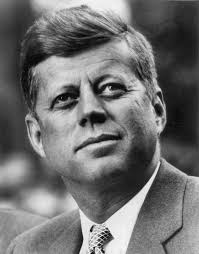
The stereotypical Catholic home in the early 1960s, so I’m told, had 3 pictures in their house: one picture was of the Sacred Heart of Jesus; one picture was of the Pope (which would have been Pope John XXIII); and one picture was of John F. Kennedy.  The first two make sense without explanation.  The third makes sense to any Catholic, because John F. Kennedy was the first Catholic elected president of the United States.  


On 12 September 1960, while still running for president, JFK gave a famous address to the Greater Houston Ministerial Association.  That speech specifically touched on his religion (there was then, as there remains today, a certain popular anti-Catholicism), as well as religious liberty.  He had many good points in that speech, talking about other important issues as well, including encouraging others to work together, rather than let confessional differences tear the country apart.  Of course, in that time, there was still a general Judeo-Christian culture, prayers were said even in public schools, and many businesses were closed every Sunday and Good Friday.
But, in that speech, JFK seemed to also suggest, if not outright say, that one’s religion should not dictate how one acts in a pluralistic society.  Because there are so many religions in America, when it comes to the choices that individuals make in politics, they should check their faith at the doors of the chambers of the legislature or the doors of the oval office.
Fifty years later, Archbishop Charles Chaput, Archbishop of Philadelphia in Pennsylvania, wrote a critical response to Kennedy’s speech, which, he says, did not so much talk about different faiths and the roles they play in American society, but sought to make politics a no-man’s land when it comes to religion.  In part of Archbishop Chaput’s speech, he cites part of the Gospel we heard today when he says, “Human law teaches and forms as well as regulates; and human politics is the exercise of power – which means both have moral implications that the Christian cannot ignore and still remain faithful to his vocation as a light to the world.”
When Jesus says today, “‘You are the salt of the earth’” and “You are the light of the world’” He does not add the caveat, “unless you live in a pluralistic and polyreligious country.”  In fact, Jesus spoke these words in a country that was under foreign occupation, with only a puppet king, whose strings were pulled by a pagan, Roman government, many of whose values directly contradicted God’s revelation in the Tanakh, the Jewish Scriptures.  No, Jesus tells us that we are to give the earth a certain flavor, and we are to provide for the world a certain light, so that others may see our good deeds and glorify our heavenly Father, the true God.
Salt in Jesus’ time wasn’t just about flavor, either; it was a preservative.  It kept things from becoming rotten.  And light wasn’t as simple as flipping a switch; it didn’t exist along roadways automatically when it became dark out.  Light required fuel of some kind, but that fuel kept people from tripping and harming themselves, and guided their feet to their destination.  Light helped individuals encounter each other even as the darkness of night surrounded them.
Brothers and sisters, I don’t think it’s grossly unfair to say that, in many ways, our society has become rotten.  People no longer encounter each other in the light, but seek to control and harm each other in darkness.  Why has this happened?  It would be too facile to say that it is because so many politicians (though not all) check their religion at the door.  But think of how many Catholics are in government today, and how many of them say, “My faith says X is wrong, but I can’t force my faith on others, so I’m going to support X.”  Reasonable people can disagree on how best to implement different aspects of the Gospel, but so many today don’t even think the Gospel has any place in American society.  
But politicians are not the only ones to blame for our current state of affairs.  It is also because Christians do not always try to be salt and light.  In fact, we have, in too many circumstances, become flavored with a taste that is not from the Gospel, and have been guided by a light which does not come from Christ.  We have fallen victim to the ideology that states that we have the freedom of worship, not the freedom of religion.  We can worship God however we want in our churches, but we cannot take the teachings of Jesus out of the church buildings and into our homes, workplaces, and even our government.  I believe that Kennedy sought to assure people that Catholics could be good Americans; but the result we see today is the same that Kennedy’s Irish forebears saw when they came to the US: Catholics need not apply or be engaged in American society.
If we wish to preserve what is good in society; if we wish to be a truly enlightened society, we must first be convinced by what Jesus teaches, and then live it out in all aspects of our lives.  Do we take the Word of God seriously when it says, “Share your bread with the hungry, shelter the oppressed and the homeless; clothe the naked when you see them.  […] Remove from your midst oppression, false accusation and malicious speech”?  Or are those just pious words that are meant to do nothing else but bounce off the brick walls of this church and die in the air?

If we are not the salt of the earth and the light of the world, then our culture, our nation, our politics will continue to spoil, and will soon become rancid.  Darkness will surround us.  Our vocation, our call in Jesus, is to be salt and light.  To paraphrase Kennedy in another speech, let us not seek the Republican answer or the Democratic answer, but the Catholic answer.  Let us be salt and light.

30 January 2017

A Strong Eighth Grader

Fourth Sunday in Ordinary Time
This past Wednesday at our school Mass, we celebrated the Feast of Conversion of St. Paul.  And in my homily I was talking about how God chose St. Paul, even though he had started out persecuting Christians, and trying to arrest them.  And in part of the homily I referenced both what we heard in our second reading today, as well as when St. Paul says that he was given a thorn in his flesh, but God assured St. Paul that God’s power is made manifest in weakness.  To illustrate the point between being strong and weak, I asked one of our eighth grade students to come forward (he didn’t know he was going to be called forward, either).  This was one of our students who plays football and basketball, and is pretty athletic.  Once he was forward, I asked him to flex.  He looked at me for a second, turned a little red with embarrassment, but then flexed and showed off his guns (that’s how some young men talk about their muscles).  And I’ll be honest, I didn’t realize how strong he was!  After Mass he told me that he benches 200 lbs.  I can barely add any weights to the bar, so I was the demonstration of one who is weak.

St. Paul reminds us today that we don’t have to be the wisest, we don’t have to be the most powerful, we don’t have to be nobly born in order to follow Jesus.  God so often chooses those who are not considered strong or powerful or wise to be the vessels of His power.  That’s the way our God works.  More often than not, God’s choices don’t make sense in our modern understanding, whether modern is in the time of Jesus, the first millennium, the second millennium, or even now in the third millennium since the birth of Christ.  
As strange as Jesus’ teaching sounds to us, it probably sounded as weird for the people listening to Jesus.  Now, as then, we don’t tend to think of the poor in spirit, those who mourn, the meek, those who desire righteousness, the merciful, the clean of heart, the peacemakers, and those who are persecuted for righteousness as people who are blessed.  Those people, in fact, seem like the ones who are the victims of society, and those who get run over by everybody.  But Jesus calls them blessed.  
How are they blessed?  They are attentive to God and His will, rather than the will of the world.  They are the ones who spend their attention and energy on serving God and bringing about His reign, rather than trying to hoard money, grab after power, cheat people, seek after vengeance, or look for and act on the desires of lust.  
And though Jesus taught on the mount in Galilee some 2,000 years ago, those words still apply to us today.  If we want to be blessed we have to rely on God, work for justice and peace, be meek and merciful, and be clean of heart.  Clean of heart may be one of the hardest in today’s world.  There are so many groups that make purity difficult: every second over $3,000 is being spent on lewd web pages.  Lack of purity can lead to addictions, can rewire the brains of our youth not to appreciate what is truly good and truly beautiful, can destroy marriages and families, and promote human trafficking.  It is an enslaving force in general.  But Jesus desires us to be free.  He wants to unshackle us from this uncleanness, so that we can live in true blessedness.  If you or someone you know struggles with lack of purity, like pornography, the Diocese of Lansing website has resources on its Marriage and Family Life webpage.  

No matter what beatitude strikes you as the most difficult, being weak is not a problem.  God chooses “the weak to shame the strong,” as St. Paul reminds us in our second reading.  All of us have weaknesses.  And so all of us can be chosen by God to show that God does great things, not by human accomplishment, but by His grace.

23 January 2017

Jesus in Hicksville

Third Sunday in Ordinary Time
Sometimes the name of a place is used, but then no one really knows where it is.  For example, people will still sometimes say, “She lives to Timbuktu,” to express that the woman lives very far away.  But if you ask people where Timbuktu is, most people don’t know, other than the fact that it’s far away.  Other people might think it’s a made-up city.  In fact, Timbuktu is a real city in the West African country of Mali.  Now, as Americans aren’t always the best at geography, even saying it’s in Mali in West Africa might not help.  So, hopefully to make it clearer, Mali is north of the countries of Ivory Coast and Ghana.  If you’re still not clear where Timbuktu is, you can google it when you get home.

For Jews hearing about the lands of Zebulun and Naphtali, they would have understood where that was.  We, as 21st century Americans, probably just glossed over those names, and figured that they are some weird names from a time long past.  Zebulun and Naphtali were two of the 12 sons of Jacob, also known as Israel.  Long after they died, the tribes that bore their names received land in the Promised Land.  They were not the strongest tribes or the most distinguished for anything, and they became the part of Israel that broke away after King Solomon died.  They were later conquered by the Assyrians, and mixed Judaism with the pagan religions.  For observant Jews, those lands were backward, not faithful, and not a destination.  We might use the term “Hicksville” to describe it.
But the Prophet Isaiah promised that God, after degrading those lands, would give it a great light, to bring it out of darkness.  God would give them great joy, as at a harvest festival, and would end their slavery.  God promises good things for those who, for centuries, were not seen as entitled to good things.
That promise was fulfilled in Jesus.  Jesus goes to Capernaum, “in the region of Zebulun and Naphtali,” to preach the Gospel, saying, “‘Repent, for the kingdom of heaven is at hand.’”  Jesus is the one who is the Light of the World, and gives them light by revealing the good news of salvation in Him.  Jesus cures the sick and expels demons, something that would cause anyone to rejoice.  And Jesus would eventually destroy the slavery of sin by His death on the cross.  Jesus was the perfect fulfillment of Isaiah’s prophecy to “Hicksville.”  While Jerusalem was the place to be because of the temple, and was the center of religious life for any Jew, God, in the Person of Jesus, goes to places that other religious leaders had long since abandoned.  
And while in “Hicksville,” Jesus begins to form His new Church.  He choses Twelve Apostles, some of whose names we begin to hear at the end of today’s Gospel: Simon, later called Peter, and his brother, Andrew, as well as James and John, the sons of Zebedee.  These four are fisherman.  They are not well educated, and while they practiced Judaism, they were not scholars of it.  None of them were rabbis or scribes.  
In one sense, as people who live in the greater-Flint area, we should be able to relate to the land of Zebulun and Naphtali.  Flint may not be “Hicksville,” but it’s not exactly the top destination of Michigan.  Generally, people are not climbing over each other to move into Flint, as we all well know.  But that does not mean that God has abandoned us.  To the contrary, God still brings light to people who walk in darkness, and still wants to crush the slavery of sin in our lives.  
We see that through the care of Bishop Boyea, a successor to the apostles, for Flint.  Besides the entire Faith in Flint initiative, which seeks to gather the resources of the Diocese of Lansing to assist the Catholic and even non-Catholic population of Flint, no other region in the Diocese has so many young, dynamic priests like Fr. Zach Mabee, Fr. Paul Donnelly, Fr. James Mangan, and Fr. Dan Kogut.  Just as God has a special love for what Biblical scholars refer to as the anawim, the poor and outcast, so Bishop Boyea has shown his special love for Flint by sending all-star priests to build-up the faithful and spread the Gospel.
But God is also calling you to build up the Church.  While we priests do our best to support the faithful with the graces which flow from the sacramental life of the Church, it is the faithful who are called in particular to spread the Gospel and build up the Church.  It is by encountering Christ, even here in Flint, which strengthens us to live our faith, not just for an hour on Sundays, but seven days a week in our homes and workplaces.  Faith sharing groups like ARISE are meant to strengthen our faith and give us the courage to be sent out, which in Greek comes from the word 𝛂𝛑𝛐𝛔𝛕𝛐𝛌𝛐𝛊, which means those who are sent out.

The strength of this parish comes from your response to God’s grace.  If you engage your faith, and make it something that is not only about Sundays, we will be a strong parish.  If we are willing to be challenged to conform our lives more closely to Jesus, and then to be sent out to show and tell others about that transformation in our lives, then Flint will become a place of blessing, a place Jesus is at work.  God calls us to repent and spread the good news of the kingdom of heaven.  Will we respond to God’s call?

09 January 2017

Giving Not Getting

Solemnity of the Epiphany of the Lord 
To give a person a good gift, one has to know the person.  For example: last Monday my grandfather turned 90.  There are lots of thoughtful gifts that one can get a 90-year-old: maybe precious metals, mementos, etc.,.  My grandfather didn’t want any of it.  He simply wanted to eat together as a family and spend time with each other.  So all four of my uncles, even the two from Arizona, came together with my parents and we ate out at a restaurant.  However, disregarding my grandfather’s instructions that there were to be no gifts, I bought him something we joke about all the time, something I was sure he would use: bologna.  He loved the gift, and it caused a good amount of laughter.
My grandfather, seated next to my grandmother,
with their 5 children behind them
I also recently asked some of the kids at Powers that I know who are dating what they got for their significant others.  The students I spoke to talked about getting jewelry (especially for the girls), clothes, and other sentimental items.  Some of them took their boyfriend or girlfriend out to dinner, or gave them gift cards.  Talking with the students, it reminds me why I was glad I never had a girlfriend in high school for whom I had to buy things.   
We hear today about the gifts that the magi brought Jesus: gold (for a king); frankincense (for a god); and myrrh (for burial).  We of course know that these gifts were very fitting for Jesus (as well as very pricey), as Jesus is the King of Kings, True God, and the one who suffered death and was buried for our salvation.  The gifts of these three wise men were the perfect gifts.
The gift that Jesus wants is the gift of our lives.  He wants all of us, not just some of us, but all of who we are, and He wants that gift because in giving ourselves to Him, we end up finding true happiness.  This is one of the paradoxes of our faith: it is only in giving ourselves away to Jesus that we actually find who we are meant to be and how we can be happy.  In this new year, people do all sorts of things to try to better themselves and give themselves happier lives.  In reality, the only way we truly better ourselves is by giving our mind, heart, body, and soul to Jesus.  Loving God and loving our neighbor is a gift even better than gold, frankincense, and myrrh.
What is interesting is that, as we come to Mass each Sunday to adore the Christ, just as the magi did two millennia ago, some, maybe even many, of us come not wanting to give a gift, but wanting to receive one.  Mass has become to some, or maybe even many, “what do I get out of it?”  Perhaps the words that priests least want to hear on a Saturday evening or Sunday is: “I don’t get anything out of Mass, Father.”  
Of course, we do get something out of Mass.  We get to hear the Word of God; we get to receive the Body and Blood of Jesus; sometimes we get a good homily; we get the opportunity to unite or lives more closely with Jesus.  If we feel like we don’t get anything out of Mass, we have to ask ourselves: is the Word of God and the Body and Blood of Jesus not a good enough of a gift for us?  But the real problem is not what we get or don’t get out of Mass, but thinking that we go to Mass to get something in the first place.  Just as the beginning of cultural changes are hard to pinpoint, so the beginning of this phenomenon of going to Mass to get something is also hard to pinpoint.  When did we first start thinking: Mass is only as good as when I am moved emotionally, or like the music, or like the homily?  I don’t know, but that approach is a poison that is drawing people away from Jesus.
Don’t get me wrong: people do sometimes have great emotional experiences during the Mass, or the music helps them to pray and unite their lives to Jesus, and on rare occasions they even get good homilies.  And that is something for which we can give thanks.  But each time we come to Mass, we come to give, not to get.  Coming to Mass to get something out of it is like the wise men arriving at the home of Mary and Joseph and Jesus, and saying: “Thank God we found the newborn king!  What can you give us?”  No doubt, the magi did receive something for seeing Jesus, and recognizing in Him the newborn King.  But they did not travel from afar to get something, but rather to give something.

If we come to Mass because of what we like, or the experience we want to have, we are coming not so much for Jesus, but for ourselves, and we are missing the point of Mass.  We have the opportunity each week to come and adore the same Jesus the magi worshipped.  We have the opportunity each week to give Jesus the gift that He wants: not so much gold or frankincense or myrrh, but the gift of who we are, so that He can truly make us free and happy.  The wise men followed the star from afar to come to Jesus in Bethlehem; most of us don’t even have to use OnStar to get to St. Pius X.  But in the Eucharist God becomes flesh once more, and we can do Him homage.  If we put ourselves into the Mass, then we will likely get something out of it.  But even if we don’t “get anything out of it” (beyond hearing God’s Word and receiving the Body and Blood of Jesus), then we don’t need to get worried or leave.  At those times Jesus invites us to give more deeply of ourselves and unite even the things we don’t like to the cross of Jesus, so that He can transform us more powerfully into His disciples.  Jesus desires the gift of all of who we are.  Did we come to get or to give?  

04 January 2017

A Mother's Love

Solemnity of the Blessed Virgin Mary, the Mother of God
Of all other humans on earth, Jesus has a special kind of relationship with His mother, Mary.  This probably doesn’t surprise us, as mothers and their children often have a special connection, that a father and his children will never exactly have, because he didn’t carry them in himself for 9 months.  Mary was the perfect disciple, saying yes to God always, and that gave her a unique relationship to Jesus, Himself God-Incarnate.  But Mary also had a special relationship with Jesus, because He is her only Son.  Mothers generally love all children, but their love their own children more.  Mary loved Jesus as her only Son, but also as her God.

If we are members of Jesus’ Mystical Body, the Church, then we should also have a special love for Mary.  And that is why we are here today: not because it’s New Year’s Eve/Day, but to honor and show our special love for our mother.  But, if we are members of Jesus’ Mystical Body, the Church, then Mary also has a special love for us.  And sometimes, that love is made manifest in a particular way.
Fr. Tom Butler is originally from Texas, but he became a priest of the Diocese of Lansing.  His most recent assignment, before he retired a few years ago, was Sts. Charles and Helena in Clio.  He told me this story after he retired and was living in Blissfield in Lenawee County.
Some years back, Fr. Tom’s brother died at a young age, and his mother had the sad duty of burying her son.  Some of you may have had to go through that terrible trauma.  My paternal grandmother did not too long ago.  In any case, Fr. Tom went back down to Texas, around Dallas, where his brother was being buried.  It was an unusually cold, winter day, and at the end of Mass, Fr. Tom, walking with his mother behind the casket, decided to stay inside the church building and not weather the elements.  As the casket was being put into the hearse, Fr. Tom’s mother turned her head, and then started to lose her footing.  She steadied herself, but Fr. Tom said, “Mother, are you okay?”  “Yes, I’m fine,” she said, and Fr. Tom figured that she was overcome with grief at that very powerfully sad moment.  
At this point, Fr. Tom explained that his mother, though a convert to Catholicism, had a hard time giving up some of her Baptist roots.  In particular, she always struggled with the role Catholics gave Mary.  She believed Mary was the Mother of God, but was always afraid that by giving too much of a place to Mary, she would not give enough to God.
A few months after the funeral, Fr. Tom’s mother called him.  “Tom,” she said, “do you remember at your brother’s funeral, when the casket was being placed in the hearse?”  “Yes, mother,” he replied.  “Tom, do you remember me getting a little shaky?”  “Mother, is there something wrong?” Fr. Tom asked as he was getting a little nervous.  “Everything’s fine.  But I need to tell you what happened.  When the casket was being placed into the hearse, I felt someone tap me on my shoulder.  I thought it was you, but then I noticed you were holding my hand.  So I turned, and I saw Mary standing next to me.  And she startled me a little.  But then she said, ‘I’ll take care of your son for you until you come to join him.’  And then she disappeared.  But I knew everything was going to be alright.”  

First, I apologize for those of you who don’t have a kleenex or a handkerchief with you.  Second, while many of us won’t have those extraordinary experiences of Mary’s love, Mary loves us no less, and her care for us is that powerful.  May we show our love for Mary, and may we be receptive to the love of Mary, “now, and at the hour of our death.  Amen.”

27 December 2016

"Lord, help me get one more"

Solemnity of the Nativity of the Lord
One of the questions I am commonly asked is what I do on my days off.  And when I get the chance, I like to see a good movie (when there are good movies out).  In early November I saw a movie called “Hacksaw Ridge.”  It’s based on a true story about a Seventh-Day Adventist, Pfc. Desmond T. Doss, who wants to be a medic in the Army during World War II.  Unfortunately, the Army makes a mistake (even though, as one character states, the Army doesn’t make mistakes), and he is assigned to an infantry division.  I don’t want to ruin the movie for you, but I will say that at one point during the movie, as Private Doss is stationed at a Pacific island, his division tries to take an elevated position, Hacksaw Ridge, which the Japanese have held on to despite multiple sorties.  As the healthy soldiers evacuate after being pushed back, again, by the Japanese, Doss states, at the top of that ridge, “Lord, help me get one more.”  And he rushes back, into enemy territory, to try to save injured members of his division.  He pulls them back, one at a time, and lowers them down the ridge, and then always goes back to find another soldier while saying, “Lord, help me get one more.”  

Now, it might seem odd to talk about a war movie on Christmas Eve/Day.  And this movie is certainly not a Christmas movie.  It’s Rated R for good reason: it’s one of the bloodiest movies I’ve seen in a while.  Children should not see it.  But that line has stuck with me since I saw it: “Lord, help me get one more.”
The Letter to the Hebrews states that, “In times past, God spoke in partial and various ways to our ancestors through the prophets; in these last days, he has spoken to us through the Son.”  All of the Old Testament was a story about God seeking His people, who had fled Him because of their sins, and the people seeking God, who was no longer able to walk among them because of their sins.  All of the Old Testament pointed to God ending this separation by sending His Son, Jesus Christ, the Word through whom all things were made, as St. John says in the Prologue of his account of the Gospel.  It is as if Jesus, God-made-man, God-with-us, was saying about us to His heavenly Father, “Lord, help me get one more.”  We were not injured in a pitched battle, but were beat up by our sins and Satan, who enticed us into evil, but then accused us after we gave into temptation.  We could not save ourselves, and we were dying in the battlefield of the world.  So Jesus came to us to save us.  He came for all of us, but we can also say He came for each one of us individually.  We are the one more Jesus came to help.  
Jesus helped us by being the light to those who walked in darkness, by destroying the yoke of sin and death which enslaved us, by being born as a defenseless child in a part of the world that no one cared about.  Seeing how wretched we were, how lost we were, how injured we were, Jesus could not help but enter our world of sin and sorrow, though He had no sin Himself, and give us the healing, without which our souls would perish eternally.
“Lord, help me get one more,” was fulfilled in the Blessed Virgin Mary, in Joseph, Jesus’ foster-father, in Zechariah, in Elizabeth, in the shepherds, in the magi, and in all those who came into contact with Jesus.  Jesus, whether as an infant at His Nativity, or as a man in His earthly ministry, or hanging on the cross in the sacrifice that put an end to sin and death, came to offer every person the gift of eternal salvation.  Jesus came to rescue us from Hacksaw Ridge.
But Jesus offering to help us didn’t end when He ascended into heaven.  Jesus established a Church to continue His saving work, by the power of the Holy Spirit.  He gave His apostles, who gave to their successors, the bishops, and their assistants, the priests, the authority to act in His name.  They are the ones now who are called to live out, “Lord, help me get one more.”  As long as there is a human on earth who has not come into contact with Jesus, Jesus remains on Hacksaw Ridge to help one more.
Tonight/Today, as at every Mass, Jesus comes to us under the appearance of bread and wine, which are truly the Body and Blood of Jesus.  Every time Mass is celebrated, Jesus becomes flesh once more, and so says to the Father, “Lord, help me get one more.”  He offers to heal our wounds through sacramental confession, and then gives us the food that strengthens us, because we are allowed to partake of Jesus’ own divinity, and puts us on the road to heaven, where there is no more battle, no more Hacksaw Ridge.  

If you’re here tonight/today as a Catholic who attends Mass every week, Jesus is here to heal you and strengthen you; He is here to save you.  If you’re here tonight/today as a Catholic who has been away from the Church or doesn’t come that often, Jesus loves you no less, and wants to heal you through the Sacrament of Penance, and strengthen you through the Eucharist; He is here to save you.  If you’re here tonight/today as a visitor who is not one with us in our Catholic faith, Jesus loves you no less, and is still seeking you on the battlefield to bring you into a full relationship with Him, and heal and strengthen you; He is here to save you.  Tonight/today, Jesus says to our heavenly Father about each and every one of us: “Lord, help me get one more.”

12 December 2016

One of Those Days

Third Sunday of Advent
Have you ever had one of those days?  You know, the day when your car won’t start; or you overslept, and while racing into work get pulled over for speeding; or when you forget about a test that you have today; or when you end up wearing the delicious lunch that you were so proud you brought to work; or just when everything seems to be working against you in general?
Life can be rough sometimes.  We try to do our best, but sometimes our best is not enough, is not appreciated, or simply doesn’t work out at all.  I think we all have those days.  Misery loves company, and so today we can commiserate (at least a little) with St. John the Baptist.  There he was, just preaching God’s word, preparing the way for the Messiah, baptizing people in the Jordan, and then, because he was preaching against the immoral marriage of King Herod and Herodias, gets locked up in jail: no trial, no chance to plead his cause, just locked up indefinitely.  He doesn’t know it, but at some point in the future, he will become the victim of a hastily-made promise in response to a dance by King Herod’s step-daughter, Salome.  Life was not dealing St. John the Baptist good cards.
We can understand his questioning.  Nothing seems to be happening the way he thought it should.  So he sends messengers to Jesus, just to make sure that his second cousin is really the Messiah.  The floor has seemed to come out from under St. John the Baptist, and he’s grasping for some solid footing.  
But Jesus rarely answers questions with a simple yes or no.  There is always more to His answers than an everyday affirmation or negation.  So Jesus says, “the blind regain their sight, the lame walk, lepers are cleansed, the deaf hear, the dead are raised, and the poor have the good news proclaimed to them.”  Jesus’ ministry is confirmed not simply by word, but by what Jesus does.  Jesus’ own actions testify that Jesus is the Messiah, and even more than that, is God Himself.  But then Jesus has that curious line: “And blessed is the one who takes no offense at me.”  In other words, blessed is the one who can accept God’s plan for salvation, even when it’s different from our plans.
The kingdom of heaven is still at hand.  It is still present in embryonic form on earth, and is still coming in its fulness with Jesus’ return.  Somedays, especially on one of those days, we may think, ‘God, can’t you just make things work the way they’re supposed to?  Isn’t it time for all of this brokenness and messed-up reality to come to an end?’  But St. James reminds us that it will happen in God’s way and in God’s time.  He reminds us in the second reading to be patient, and be stout-hearted.  Just as the prophets in the Old Testament kept waiting and waiting for the Messiah to come; just as they preached God’s word without often seeing the fruits of their own preaching, so we are called to wait and let God establish His kingdom in His way, which is often not our way.  If it were up to us, the kingdom of God would likely have come in shock and awe years or even decades ago.  But then, if God were doing it our way, the kingdom of God may have come in its fulness centuries ago, and we would not even exist.  
Today we rejoice, because we are more than halfway to Christmas.  We rejoice because our waiting for the celebration of the Nativity of our Lord is close to an end.  We rejoice because our salvation is nearer now than it was years or decades ago.  But we are not there yet.
Still, God is faithful to His promise, and He is preparing, in His time and His way, a new kingdom where there is life even in the desert; where glory and splendor will be the norm; where feeble hands, weak knees, and frightened hearts will be strengthened.  Isaiah prophesied that the kingdom of God would include the blind seeing, the deaf hearing, the lame leaping, and the mute singing.  Jesus was affirming to St. John the Baptist in His response that the kingdom of God had already begun, and that even though it was not present for St. John in its fulness, it was present in its fulness in Jesus.

If we have Jesus, it doesn’t mean that our life will be easy and carefree.  The gospel of prosperity and a happy-go-lucky life is not the Gospel of Jesus Christ.  But the Gospel of Jesus Christ is that we have take hold of the kingdom of God in the midst of brokenness and error, and that the darkness, though it surrounds us, cannot conquer the light of Christ.  And that should cause us to rejoice.  Because even on one of those days; even on the days when everything seems to go wrong, we have Jesus, especially in the Eucharist, and spending time with Him and receiving Him gives us the strength to persevere in our hope and our faith until Jesus returns again, and ushers in the fulness of the kingdom of God at the end of time, when God will be all in all, when God will put a definitive end to sin and suffering, and when perfect happiness will be the reality for all those who persevered with Christ on this earth in the new heaven and new earth.

05 December 2016

'Twas the Night of Little Giants

Second Sunday of Advent
Two weeks ago we ended our Extraordinary Jubilee Year of Mercy.  Maybe after hearing today’s Gospel we feel like we have begun the Year of Divine Wrath!  St. John the Baptist certainly did not pull any punches.  To those who were open to him, he was preaching, “‘Repent, for the kingdom of heaven is at hand!’”  To those who weren’t open to him, the Pharisees and the Sadducees, he was even harsher: “‘You brood of vipers!  Who warned you to flee from the coming wrath?  Produce good fruit as evidence as your repentance.  […] His winnowing fan is in his hand.  He will clear his threshing floor and gather his wheat into his barn, but the chaff he will burn in unquenchable fire.”
An icon of St. John the Baptist
from outside Ein Kerem, Israel
I often wonder about how St. John the Baptist drew so many people.  He definitely had positive things to say, but a lot of what he said was somewhat harsh and critical.  Who gathers to hear the message: you are sinners and you need to shape up!?  And yet we hear about the large crowds who came to him to be baptized.  I remember walking back from the MSU-Notre Dame game (the famous one with the Little Giants play), and there was a street preacher along one of the sidewalks yelling at people to repent from their sexual immorality, their drinking, and their sinfulness in general.  I was in my collar, and as I looked at him, he said, “And don’t think you are safe because you work in the church!” or some such thing.  But people weren’t lining up to listen to him; in fact, they just walked on by. 
St. Matthew tells us that St. John the Baptist was the one who was preparing the way for the Lord.  God prepares the way for the public ministry of His Son, Jesus, by having a guy who eats locusts and honey tell people that they are sinners.  Hmmm…not the first approach I would think of if I wanted to get ready for the Messiah.
But, as Isaiah says elsewhere, God’s ways are not our ways.  And if we stop to think about it, it actually makes sense (except for the locust and honey part; I’m still not sure I get that).  We did just end the Year of Mercy, and we were rightly focused on God’s generous love which forgives us.  But love cannot be forced or faked.  God does not force His love on us (nor His mercy), and God does not give His forgiveness to those who are not sorry.  And so as odd as we may feel it is, the call to repentance is an important one.
Certainly, God’s grace starts the process.  We cannot be sorry without God enlightening us about our sins and the ways we have separated ourselves from Him.  But then we have to take the second step and acknowledge that we are wrong.  It’s one thing to think, “Maybe I shouldn’t have done X;” it’s another thing altogether to say, “I sinned when I did X.”  And it is only after we say “I sinned when I did X” and are sorry for whatever X is and make a resolution to not do X again that God can forgive us, because it is only after recognizing our sinfulness and our need for being forgiven that we will be open enough to receive God’s forgiveness.
The call to repentance and to admitting we have sinned is vitally important, of eternal importance, because only when we admit we have sinned and repent are we able to be forgiven.  Without someone to remind us that we are not perfect, that we don’t have everything figured out in our life, that we are sinners, we are not in a disposition to receive the mercy of God which we just focused on for the past year.  We need people in our life like St. John the Baptist to tell us we are sinners, not to beat us up, not to make us despair, but to prepare the road that Jesus wants to take to our hearts.  
Is it hard to admit that we’re wrong?  I’m a perfectionist, and it’s hard for me.  But it’s the truth.  I am a sinner.  And I don’t have to be Hitler or Stalin to accuse myself of sin.  We are all sinners, and we all need to repent.  We all have things in our life that are not of God and which have damaged or even severed our relationship with God.  Maybe we are afraid of guilt; maybe we don’t like that feeling.  But feeling guilty is a sign that our conscience, the voice of God in our hearts, is working properly and is properly formed by the Word of God and the teaching of the Church.  I don’t worry about the kid who cries after being caught doing something wrong in our school; I worry about the kid who feels nothing after being caught doing something wrong.

But God does not intend for us to remain in our guilt.  Guilt is meant to move us to repentance and the Sacrament of Penance.  How long has it been since you confessed your sins in the Sacrament of Penance, the way Jesus taught us to receive His forgiveness?  A month? Six months? A year? Five years? Ten years? Twenty years?  No matter how long it has been, do not let it last one more month.  God wants to shower His mercy upon you, and is waiting for you to respond to His grace to go to the Sacrament.  I’ll be glad to help you through the process if you’ve forgotten how to celebrate the sacrament or your Act of Contrition.  Or we’ll have other priests here on Sunday, 18 December at 3 p.m. to hear your confession.  The Year of Mercy is over, but God’s mercy endure for ever.  “‘Repent, for the kingdom of heaven is at hand!’”