Showing posts with label salt. Show all posts

28 October 2024

In A Post-Christendom Age

Christ the King
    In the name of the Father, and of the Son, and of the Holy Spirit.  Amen.  Much ink has been spilt of late on the idea of Christendom, or a worldwide or Western-wide Christian kingdom reality.  In case you’re wondering, we’re not in it.  Christendom often describes a reality where Christian values are the norm, and may even be the major underpinning of the legal system.  In the US, people often think of the 1950s as demonstrating the height of Christendom for Americans.  Certainly, in Europe that history goes much farther back, but also frayed during the time of the so-called Enlightenment, until its collapse probably around World War I, when many in Europe wondered how a Christian ethos could produce the “War to end all wars” between Christian countries.
    Again, in case you’re wondering, we’re not in a time of Christendom.  While our court system, perhaps the last bastion of sanity in our otherwise crazy political system, has upheld our rights as a church against the assaults connected with especially the Obama and Biden administrations (think of Little Sisters of the Poor, the redefinition of civil marriage, and the promotion of gender dysphoria policies), society generally has walked away from a Christian worldview.  
    And in some cases, we’re to blame.  When our lives as Catholics no longer act as salt and leaven, but rather are part of the rot and flatness of society, is it no wonder that others would not want to continue with Christians providing the overarching theme of society?  Two extreme examples from the past century stand out as acute reminders that simply being Christian doesn’t mean you live a Christian life: Hitler and Stalin were both baptized Christians: Hitler a Catholic and Stalin a Russian Orthodox.  But many more stopped living the faith in their work and in their homes, which had an even greater diminishment of trust in a Christian worldview.  
    So, as we celebrate Christ the King this Sunday, what do we celebrate in a post-Christendom world?  This is an important date for the Traditional Latin Mass community of Flint, but how do we celebrate Christ the King when He seems to reign less and less in our country and in our world?  
    In the first place, we have to ask ourselves if Christ is truly king in our lives.  Can people tell that I am Catholic when I work?  When I invite friends over to my house?  When I go on vacation?  The first and most important way to spread a Christian and Catholic culture is to live it ourselves.  If we do not live the Gospel at its roots, that is, in a radical way (from the Latin word radice, meaning root), then no one is going to listen to me encouraging them to become Catholic or to live with Catholic values.  One thing that people look for today is authenticity.  While we all fall short of our goals at times, living something in integrity convinces others.  Living Catholicism only as a mask does not convince others, and strengthens the point that it’s not worth trying, since even those who profess it don’t live it.  May our lives not reflect the quote from G.K. Chesterton: “The Christian idea has not been tried and found wanting; it has been found difficult and left untried.”  If we don’t do what we can to live up to the standard Christ sets, why would we expect others to do so?

    Secondly, Christ told Pontius Pilate that His Kingdom was not of this world.  That doesn’t mean that we don’t advance the Gospel and Christ’s way of life, but that it will always be opposed.  Christ is King, whether we and the world accept Him or not.  And at the end of time, that kingdom will come in force.  But until that happens, our goal is to encourage others, by proposition, not imposition, to join in the kingdom, so that the inauguration of the full reign of Christ will be a day of joy for them and us, not a day of wrath.  The blueprint for this is what is called the Apostolic Model (in distinction from the Christendom Model).  Our key is to live like the Apostles did: filled with the Holy Spirit; committed wholeheartedly to Christ; willing to suffer persecution joyfully for the sake of the Name.  The first disciples were not theologians.  Maybe St. Paul could claim that title, but most of the first disciples simply opened themselves to Christ’s grace and were willing to die for their belief that He is God and saved them from sin and eternal death.  They lived in a way that showed they were ready for Christ’s return at any moment, not growing drowsy from the wait.  
    Living in such a way, and dying in such a way, transformed the first-century world.  The first generations of Christians did not participate in the all-too-common debauchery of public life.  They did not concern themselves with doing anything to gain power and prestige.  They loved those who persecuted them.  They lived innocent lives, but did not disdain to be martyred when confronted with false charges of treason or heresy against the Roman pantheon.  This convinced everyday people to convert and follow Christ then, and it will work to convince and convert everyday people now.  In a world that lacks logical consistency; in a world gone made by lust and power, those who live the truth (not their truth but the truth) stand out as beacons.  Yes, some will persecute those who are not mad.  St. Anthony of the Desert saw this some seventeen hundred years ago when he wrote, “A time is coming when men will go mad, and when they see someone who is not mad, they will attach him, saying, ‘You are mad; you are not like us.’”   So we need to be ready for greater persecution, if it comes.  But when neighbors recognize that we are not buying into the cultural madness, and that we are even willing to suffer because we do not buy into it, they will slowly come to our side, and sense the power of the Gospel, just as ordinary Romans did in the first three hundred years of the Church.
    Christ is King.  And while His Kingdom has not advance in this world recently, and in fact has receded quite a bit, His Kingdom cannot, in the end, be stopped.  In the meantime, our goal is to live the faith in its fulness, doing all we can to follow Christ with all of who we are.  When we do this, we live as faithful subjects of so great a King, and can expect to be welcomed into the mansions prepared for us when His Kingdom comes in all its fulness at the end of time.  To Christ be honor and glory for ever and ever.  In the name of the Father, and of the Son, and of the Holy Spirit.  Amen.  

10 February 2020

Remember the Poor

Fifth Sunday in Ordinary Time
    When it comes to preaching homilies, in seminary we were jokingly (but also a little seriously) told two keys: the 5 Bs and KISS.  The 5 Bs are: Be brief, boy, be brief; KISS stands for Keep It Simple, Stupid (Stupid being directed at the preacher).  I don’t know how brief I’ll be, but I can keep it pretty simple today.
    The readings today focus us on serving “outsiders.”  By outsiders I mean those about whom we heard in the first reading–the hungry, oppressed, homeless–but also anyone who is poor or marginalized.  As followers of Jesus, it is not enough to simply believe the right things (though that is important).  How we live, and how we treat others is also key.  We might say that those are the two parts of the greatest law (Love of God as right belief and right worship, and Love of Neighbor as right actions and morality). 
    This call by Jesus to change the way we treat others is part of what Jesus meant in the Gospel, that we are to be the “salt of the earth” and the “light of the world.”  By following Jesus, and living according to His way of life, we are to preserve what is good in society, and enlighten the parts of the world that are darkened by sin.  By being salt and light, we glorify our heavenly Father.
    St. John Chrysostom, one of the saints depicted in our icons, put it this way:

If you cannot remember everything, instead of everything, I beg you, remember this without fail, that not to share our own wealth with the poor is theft from the poor and deprivation of their means of life; we do not possess our own wealth but theirs.  If we have this attitude, we will certainly offer our money; and by nourishing Christ in poverty here and laying up great profit hereafter, we will be able to attain the good things which are to come, by the grace and kindness of our Lord Jesus Christ…

Chrysostom means golden-mouthed, and though it might not seem so golden, he is certainly right.  As followers of Jesus, as Catholics, we have an obligation to the poor and marginalized, to help them as much as we can.  “Not,” as St. Paul says, “that others should have relief while you are burdened, but that as a matter of equality your surplus at the present time should supply their needs.” 
    Some would suggest that we don’t need to help the poor, because that’s what our taxes supply.  And certainly, there are some ways that the government can help in ways that individuals cannot.  It would be very difficult, if not impossible, to provide public housing based on personal generosity.  It would be very difficult, if not impossible, to take care of basic health needs for people who have no real means of income, without some sort of larger program.  But it is also true that a perennial teaching of Catholic social morality is that individuals or smaller entities that can provide for a need should be allowed to, and only when individuals or the smaller entities cannot should a larger entity or government step in (we call this subsidiarity).
    I should also be clear that St. John Chrysostom is not advocating a wholesale redistribution of wealth.  We hear that a lot from politicians who openly proclaim themselves as socialists.  It is as if a political party can decide to become Robin Hood, and steal from the rich to give to the poor.  But the Church does not advocate socialism, or for people to deputize themselves to decide how much people need, and take the rest from them by force.  Private property and wealth are acceptable, as long as one realizes that the “outsiders” have a right to our assistance for anything beyond what we need for basic living.  Jesus reminds us of this fact in Matthew 25, when he says that we will be judged on how we treated the hungry, thirsty, naked, ill, and those in prison. 
    What that looks like for each person is different.  I can’t give you a dollar amount, or even a percentage, for how much you should be giving to those in need.  The number 10% is tossed around, as the idea of a Biblical tithe, and to the extent that you're able, I would encourage sharing 10% between your parish, maybe Catholic Charities and a few other charities, and having some available as you encounter the poor in your day to day life.  Catholic usually give less than 1% to their parish.  Maybe it’s time for you to consider giving 2% to St. Pius X.  Maybe you can give more.  Maybe you can’t give 2%.  Whatever it is, you’ll know what you can and can’t give, whether to your parish, to charities, and to individuals.
    But remember that, as followers of Jesus, we have a responsibility to the “outsiders.”  As we encounter the daily poor, we can decide best whether they are truly in need, or whether, sadly, they are trying to scam us.  We can decide what charities use the money best for the poor, and areas of our city, State, country, and world that we feel particularly drawn to support.  But the key is that we are committed to helping others to the extent that we are honestly able.  I’ll end here with one more quote from St. John Chrysostom:

Do you want to honor Christ’s body?  Then do not scorn him in his nakedness, nor honor him here in the church with silken garments while neglecting him outside where he is cold and naked.  For He who said: “This is my body,” and made it so by his words, also said: “You saw me hungry and did not feed me, and inasmuch as you did not do it for one of these, the least of my brothers, you did not do it for me.”

06 February 2017

Preserving and Enlightening Society

Fifth Sunday in Ordinary Time
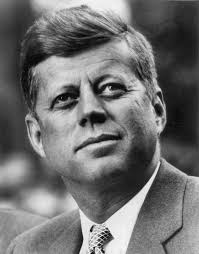
The stereotypical Catholic home in the early 1960s, so I’m told, had 3 pictures in their house: one picture was of the Sacred Heart of Jesus; one picture was of the Pope (which would have been Pope John XXIII); and one picture was of John F. Kennedy.  The first two make sense without explanation.  The third makes sense to any Catholic, because John F. Kennedy was the first Catholic elected president of the United States.  


On 12 September 1960, while still running for president, JFK gave a famous address to the Greater Houston Ministerial Association.  That speech specifically touched on his religion (there was then, as there remains today, a certain popular anti-Catholicism), as well as religious liberty.  He had many good points in that speech, talking about other important issues as well, including encouraging others to work together, rather than let confessional differences tear the country apart.  Of course, in that time, there was still a general Judeo-Christian culture, prayers were said even in public schools, and many businesses were closed every Sunday and Good Friday.
But, in that speech, JFK seemed to also suggest, if not outright say, that one’s religion should not dictate how one acts in a pluralistic society.  Because there are so many religions in America, when it comes to the choices that individuals make in politics, they should check their faith at the doors of the chambers of the legislature or the doors of the oval office.
Fifty years later, Archbishop Charles Chaput, Archbishop of Philadelphia in Pennsylvania, wrote a critical response to Kennedy’s speech, which, he says, did not so much talk about different faiths and the roles they play in American society, but sought to make politics a no-man’s land when it comes to religion.  In part of Archbishop Chaput’s speech, he cites part of the Gospel we heard today when he says, “Human law teaches and forms as well as regulates; and human politics is the exercise of power – which means both have moral implications that the Christian cannot ignore and still remain faithful to his vocation as a light to the world.”
When Jesus says today, “‘You are the salt of the earth’” and “You are the light of the world’” He does not add the caveat, “unless you live in a pluralistic and polyreligious country.”  In fact, Jesus spoke these words in a country that was under foreign occupation, with only a puppet king, whose strings were pulled by a pagan, Roman government, many of whose values directly contradicted God’s revelation in the Tanakh, the Jewish Scriptures.  No, Jesus tells us that we are to give the earth a certain flavor, and we are to provide for the world a certain light, so that others may see our good deeds and glorify our heavenly Father, the true God.
Salt in Jesus’ time wasn’t just about flavor, either; it was a preservative.  It kept things from becoming rotten.  And light wasn’t as simple as flipping a switch; it didn’t exist along roadways automatically when it became dark out.  Light required fuel of some kind, but that fuel kept people from tripping and harming themselves, and guided their feet to their destination.  Light helped individuals encounter each other even as the darkness of night surrounded them.
Brothers and sisters, I don’t think it’s grossly unfair to say that, in many ways, our society has become rotten.  People no longer encounter each other in the light, but seek to control and harm each other in darkness.  Why has this happened?  It would be too facile to say that it is because so many politicians (though not all) check their religion at the door.  But think of how many Catholics are in government today, and how many of them say, “My faith says X is wrong, but I can’t force my faith on others, so I’m going to support X.”  Reasonable people can disagree on how best to implement different aspects of the Gospel, but so many today don’t even think the Gospel has any place in American society.  
But politicians are not the only ones to blame for our current state of affairs.  It is also because Christians do not always try to be salt and light.  In fact, we have, in too many circumstances, become flavored with a taste that is not from the Gospel, and have been guided by a light which does not come from Christ.  We have fallen victim to the ideology that states that we have the freedom of worship, not the freedom of religion.  We can worship God however we want in our churches, but we cannot take the teachings of Jesus out of the church buildings and into our homes, workplaces, and even our government.  I believe that Kennedy sought to assure people that Catholics could be good Americans; but the result we see today is the same that Kennedy’s Irish forebears saw when they came to the US: Catholics need not apply or be engaged in American society.
If we wish to preserve what is good in society; if we wish to be a truly enlightened society, we must first be convinced by what Jesus teaches, and then live it out in all aspects of our lives.  Do we take the Word of God seriously when it says, “Share your bread with the hungry, shelter the oppressed and the homeless; clothe the naked when you see them.  […] Remove from your midst oppression, false accusation and malicious speech”?  Or are those just pious words that are meant to do nothing else but bounce off the brick walls of this church and die in the air?

If we are not the salt of the earth and the light of the world, then our culture, our nation, our politics will continue to spoil, and will soon become rancid.  Darkness will surround us.  Our vocation, our call in Jesus, is to be salt and light.  To paraphrase Kennedy in another speech, let us not seek the Republican answer or the Democratic answer, but the Catholic answer.  Let us be salt and light.

11 February 2014

Catholic Culture?


Fifth Sunday in Ordinary Time
            What would a Catholic culture look like today?  It can often be easier to bemoan the present than to dream of the future.  But let’s take some time to dream, to hope, to imagine what life could be like.  Now, we may think it’s a little arrogant to want to the culture to reflect our beliefs.  And I’m certainly not saying that we would set up a country where you can only enter if you’re Catholic.  But I’m talking about a world where the Catholic view of the world is so well lived that it’s in the air we breathe.  And we want it to be that way, but not because we can be the most powerful.  But if, as Vatican II says, Jesus reveals what humanity is called to be, then what we have we should want to share with everyone, not keep to ourselves.
           
That’s what Jesus means when He says in today’s Gospel passage, “‘You are the salt of the earth.  But if salt loses its taste, with what can it be seasoned?  It is no longer good for anything…You are the light of the world.  A city set on a mountain cannot be hidden…Just so, your light must shine before others, that they may see your good deeds and glorify your heavenly Father.’”  We are meant to give flavor and light to the culture, to the world, and the more we do that, the more we encourage people into right belief and right worship.  Our life of service is meant to help fill this church.  And our worship in this church is meant to enable our life of service.  If all we do is serve without drawing people to conversion and belief in Jesus, then our service is missing a necessary component.  If our worship and belief do not propel us to serve others, than our worship and belief are empty.  As St. John, our heavenly patron, says in his first letter, if we don’t love the brother or sister whom we can see, how can we claim to love God whom we cannot see?
            In a Catholic culture, we embrace and serve the poor, especially those at our front door.  We do pretty good work here with our St. John Food Pantry.  But it goes beyond food bank.  It is a whole way of life.  Think about your clothes: what do you need, and what is extra?  For me, I have a rule that, because I have basically what I need—my clerical attire, some spring/summer casual clothes, and some fall/winter casual clothes—whenever I want to get a new article of clothing, I also have to donate something to the St. Vincent de Paul store.  I have one daily pair of boots, one dress pair of boots, Sperry’s for the summer time, and one pair of athletic shoes.  That’s all I need.  My parents go through shoes faster than I do, because they are more active with running.  That’s what they need.  Business leaders may need more suits than I do, because they go to more dressy functions, including many major charities.  Living a simple life will look a little different for each of us.  But the key is that we don’t just buy clothes because we want them; we buy clothes because we need them.  And should we feel we need a new article of clothing, we can, in many cases, give something else away.
            Another great question for us is how we spend our time caring for those at the fringes of society?  Our first reading is just one example of how God highlights His preference for the poor and outcast.  Is it because poverty and exclusion lead to holiness?  Not necessarily.  Poverty and being excluded can just as easily lead to hatred, jealousy, and vengeful thoughts and deeds.  But the poor and outcasts have no one else to rely on, and so God takes their cause.  And when we do the same, we spread God’s love.  We live as Jesus’ disciples by following the example of the Master.  In ancient cultures, widows were often part of the defenseless because they no longer had a husband to get them food, protect them, etc.  Widows are not so defenseless and helpless now, thank God, but I was just talking to a widow from our parish the other day, and I asked her how things were going.  She said they were ok, but she was lonely.  This is a woman who goes and has gone to Church at least every Sunday certainly for all of her adult life, and, from my four years here, has gone to many weekday Masses.  And yet no one makes time to visit her.  Sadly, I have not made much time, either, so I include myself in that challenge.  Financially widows find more protection these days, but how do we do at visiting widows and making sure they are not lonely?  In a parish about 3400 families, there should be no reason for any person to feel like they don’t have someone they can turn to, or someone to check in on them to make sure they’re alright.
            On this celebration of World Marriage Day, it’s also important that a Catholic culture is one that supports marriage as created by God.  A loving marriage between a man and a woman, with children lovingly welcomed and cared for is a great way to give people a good beginning to use their gifts and talents for the betterment of their city, State, and country, and for the building up of the city of God.  And working to protect that sacred institution is part of being salt and light.  Being salt and light also means that we welcome and support our brothers and sisters who have a same-sex attraction, and help them to strive, along with all of us—married, single, priests, and consecrated people—to live the chaste life that the Gospel calls us to.  Being salt and light also means that we help women who feel like they have no choice but to abort their babies to choose life, as we assist them through the difficulties of a pregnancy which so often has no other support.
            All of these issues that I just mentioned: poverty, spending habits, marriage and family life, and working to end abortion, are all part of the church’s teaching on social justice.  We can’t just pick the parts that we like.  If we say we are for social justice, then we embrace it all.  There are many in our one parish who are working for social justice in its different facets.  But we always need to challenge each other to make sure we’re doing all we can.  Maybe as individuals we can’t do it all, but as the Body of Christ, we can join together and support another in making our world more saturated with the Gospel as a Catholic culture.