Showing posts with label muscles. Show all posts

06 February 2023

For the Right Reasons

 Fifth Sunday in Ordinary Time

    When I started working out over a year ago, I did so at the suggestion of a friend, who encouraged me to lift weights in order to be healthier.  Along the way, around 9 months in, I was getting pretty frustrated because, while I had lost some weight, especially around my waist, I didn’t seem to be gaining muscle mass.  I had worked out for 9 months, and I didn’t have a chiseled body!  When I complained about this to my friend, he told me that lifting weights and exercising is a good unto itself, and shouldn’t be done just to make one look more toned.  I was doing all the right things, but I had started doing them for the wrong reasons.
    We hear this list in our first reading today about the things God wants us to do: feed the hungry; shelter the oppressed and homeless; clothe the naked; remove oppression, false accusation, and malicious speech.  And this seems to be backed up in our Gospel when Jesus tells us to be the salt of the earth and the light of the world.  So we’ve got our list of things to do.  But, you can do all those things even if you’re not Catholic, even if you’re not Christian.  And I’m sure that there are a number of people who have left the Church over the years who have heard the message preached when they were younger about all the ways that they are supposed to love their neighbor, but mistakenly thought that they didn’t have to go to Mass, or believe in the Eucharist, or go to confession, or abstain from meat on Fridays, or not live with a significant other before marriage, or anything else that goes along with being Catholic.  You can almost hear the person asking why they need to do all those other things, as long as they are doing what Isaiah said in our first reading God wanted us to do.
    That person was like me: doing the right things but for the wrong reasons.  And that person probably heard the same message I did growing up: just love your neighbor and you will be good.  Bishops, priests, catechists, and all those who taught the faith had a tendency to boil the significance of being Catholic down to being a social worker or do-gooder.  And, to be clear, we are called to do those things.  But we do them, not because we earn our salvation by doing certain things, but as a result of our relationship with Christ.  
    St. Paul said in our second reading that he resolved to know nothing while he was with the Corinthians except Jesus Christ.  For St. Paul, knowing Christ (and not just knowing facts about Him) was the most important, and he wanted to pass on the message to the people of Corinth.  Everything in Paul’s life revolved around and was a result of his relationship with Christ.  His missionary zeal came because Christ called him; his sufferings were bearable because Christ was with him; his demonstrations of the Gospel came from the Holy Spirit, who was given by Christ.  But all of it was the consequence of St. Paul’s relationship with Christ, not a replacement for it.
    Being Catholic is not about being a do-gooder, or promoting a social program, or being a philanthropist.  Being Catholic is about being in a saving relationship with Jesus Christ, who saves us from sin and death, from which we cannot save ourselves.  Going to confession and Mass; abstaining from meat on Fridays; not living together before marriage; and all the moral teachings of the Church follow from being a disciple of Jesus Christ, because He has revealed to us the way to salvation and the means of true and lasting happiness.  They are not added on rules form old men who have nothing better to do with their time.  Those, and many others, are ways that we deepen our relationship with Christ and live a life like His (as St. Paul says, “It is no longer I who live but Christ who lives in me”).  
    And as we become more and more like Christ, being obedient to the will of the Father, not only do we want to spend time with Him in adoration and in the Church, and mortify our bodies to help us say no to our fallen sinful nature and yes to the divine nature that God implants in us in baptism, but we also want to love the ones that Christ loves, and show that love in a variety of ways.  That love is shown by feeding the hungry, clothing the naked, sheltering the homeless, visiting the sick and imprisoned, and all the corporal works of mercy.  
    If we are truly becoming more and more like Christ, we cannot help but show that love by what we do.  Think of it like a marriage: if we truly love a spouse, then we show it.  But the things that we do are results and demonstrations of that love, not replacements for it.  A person can do all the things that a spouse would do, but if that person is not the spouse, it doesn’t have the same effect.
    Pope Benedict XVI, who should be canonized and declared a Doctor of the Church for his holiness of life, humility, and extremely insightful writings, once wrote in his Encyclical Deus caritas est, “Being Christian is not the result of an ethical choice or a lofty idea, but the encounter with an event, a person, which gives life a new horizon and a decisive direction.”  Being Catholic is first and foremost about our relationship with Christ, which moves us to do certain things and avoid others.  As Catholics we serve others, not simply as a philosophy of service, but as the consequence of knowing and loving Jesus Christ.  Let’s not just do the “right things,” but do them for the right reasons.

09 November 2019

Small Sacrificies Yield Large Results

Thirty-second Sunday in Ordinary Time

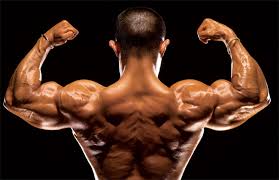
    From time to time I see ads on TV and on the internet for ways to have a chiseled body, with well defined muscles.  I’m sure that some of the ads were photoshopped a bit, but even so, I often thought about what it would be like to have better muscle definition, stronger muscles, and a stronger appearance.  But to truly get into that shape, I would have to give up a lot of foods that I enjoy eating, and actually go to a gym on a regular basis and lift weights, neither of which sounds that appealing to me.  And looking at me, you can see which path I choose!
    Each in our own way, we probably all have things that we want, but for which we’re not really willing to work.  We have a desire for something, but we’re not really willing to do the things to make that desire an achieved reality.  That can even be the case when it comes to our faith.
    In today’s first reading we hear about a mother and her children who are being tortured and killed because they’re not willing to break God’s law, even though the local government is telling them to.  The back story is that the Greeks had taken over the Holy Land, and wanted everyone to live in the Greek manner of life: they placed idols in the temple, forbade parents to have their sons circumcised, and forced the Jews to eat pork, all as ways of rejecting the Jewish religion.  The part we hear in today’s passage highlights a heroic sacrifice that they make, simply because they would rather obey God and be tortured and killed than disobey God and enjoy prosperity. 
    But this heroic action probably did not start the moment they were arrested and brought before the king.  They likely had made smaller sacrifices to be faithful to God throughout their lives, maybe not even perfectly, but still, doing their best to say yes to God in their choices in small ways, which helped them to say yes to God when it was a major decision with drastic consequences.
    I think we can sometimes be as clueless as the Sadducees in today’s Gospel when it comes to the Resurrection.  We desire to be raised, to reign with Jesus in heaven.  But when it comes to the daily ways that we show that we want to accept this gift of eternal life, we’re not quite there, and we don’t want it that much.  We want the end result without wanting the daily effort it takes to obtain that result.
    Being welcomed into heaven is all about putting behind us the fallen parts of our nature by God’s grace, and accepting God’s grace to choose things which do not always seem to desirable, but which help us to say yes to God and say no to our fallen nature.  St. Paul talks about it as putting to death the old man (Adam, who said no to God), and living the life of the new man (Jesus, who said yes to God).  It’s easy to want to do that in major ways, and praise God when that happens, when we’re able to recognize a major temptation as something leading us away from God, and reject it.  But it’s much harder, but more efficacious, to say yes to God in small ways, which, over time, make us more like Christ.
    I would suggest two small ways that we can live more for Christ, and bring us closer to the desire to be welcomed into heaven.  The first you’re already doing today.  And that’s attending Mass every Sunday and Holyday, unless you're sick or homebound, or necessary work prevents you from attending.  Attending Mass might not seem like much, but that sacrifice to set aside your own desires on how to use your time, and then to drive to Mass to worship God, builds up our spiritual muscles.  You may not see it making a difference, but if we could see the difference it makes in our souls, we would be amazed.  Those who go to Mass still have temptations, but it’s much easier to reject temptation and sin when we’re filled with the grace of the Body and Blood of Christ, received in a state of grace.  Even if we still sin even though we attend weekly Mass, imagine the other sins you may have fallen into without attending Mass.  And daily Mass is even better, still!
    A second small way is abstaining from meat every Friday, not just the Fridays of Lent, unless it’s a solemnity, like on All Saints Day.  We might think that it’s not a big deal, and it’s not, especially if we like fish.  But saying no to our desire to eat whatever we want to is a great small sacrifice that prepares us to be faithful in bigger sacrifices that may come our way.  Sometimes, if visiting family or friends, that may not be possible, so maybe try fasting from lunch, or doing an extra work of charity on that day.  I try to abstain from meat on all Fridays, and I have seen the difference it makes in my own spiritual life.
    When I hear the story of the great martyrs, I am inspired by how they suffered for Christ in such major ways!  Some of the pain I think I could suffer through.  Some, like getting boiling water poured on me or having my fingernails pulled out, do not seem so easy to endure.  But in reality, if I’m not doing the smaller, daily sacrifices, whatever they might be, then I’m not going to be successful in the larger sacrifices if and when they ever come my way.  If we truly want to be in that number when the saints go marching in, to be as faithful as the mother and her children in not rejecting God even when it meant coercion, torture, and death by the government, then let us follow the advice of St. Paul to die to our fallen nature by little daily or weekly sacrifices, and live in the new life of the risen Christ.

26 August 2013

"We need to talk..."


Twenty-first Sunday in Ordinary Time
           
There are certain phrases in life that you never want to hear from a person.  If you are a student you never want to have the teacher tell you, “See me after class.”  If you’re dating someone, you never want to hear, “We need to talk.”  If you’re meeting with your doctor, you never want to hear, “We found something that we didn’t expect.”  All those things generally mean that there is some bad news coming, whether it’s a poor grade on a test, a break-up, or an illness or disease that was just discovered.
            At the end of our life, standing before the judgment seat of God, we don’t want to hear, “‘I do not know where you are from,’” coming from the mouth of Jesus.  That means that what comes next is not good news, and we should be prepared for the afterlife elevator to go down, rather than up.  So it makes sense that the person might say, as Jesus has them saying in today’s Gospel, “‘We ate and drank in your company and you taught in our streets.’”  But then they hear something even worse: “‘I do not know where you are from.  Depart from me, all you evildoers!’”  These probably sound like pretty harsh words from the Divine Person who is supposed to be a loving Shepherd.
            But both last week and this week the Church presents for us what can seem like the harsher side of Jesus.  Last week Jesus was saying how following Him will split apart families.  This week, He’s talking about eternal salvation and how many will be saved.  When we hear passages like the one we heard today, perhaps we try to theologize it away, by highlighting other passages from Scripture which talk about how God desires the salvation of all.  And certainly we take those very seriously and must read today’s passage in light of those.  But more often than not, we don’t read this passage in light of those other Scripture passages, we just ignore today’s and pretend that the one’s about God’s desire for all to be saved are the only passages that are important.  But we do so at our own peril.
            Because while God does desire all to be saved, God also tells us with great sobriety that “‘many…will attempt to enter [through the narrow gate] but will not be strong enough.’”  Enjoying eternal bliss is not the automatic destination, even one of one who is baptized.  It’s the destination God programmed into us, but sin so often takes us off course.  Just because we’re baptized doesn’t mean that we’re going to heaven.  Salvation is not a gift that is offered once for all and accepted or rejected in one moment, but is a gift that is offered to us each day that we have to receive each day in order for it to become our eternal reality.  Just because I lived a holy life yesterday, does not mean that I will today.  In fact, I could be particularly evil today, which could undermine all the good I did yesterday. 
            If you think about it in an academic metaphor, we don’t start class off with a 4.0, and then only lose it if we don’t turn stuff in, or answer questions correctly.  Rather, God offers us opportunities to respond to the love He first showed us, homework assignments and quizzes and tests, and if we do well, we can get that 4.0.  Or, if you prefer, think about it in terms of lifting weights.  We don’t start off with buff little bodies.  We need to work out in order to keep a good, muscular physique.  When we don’t, our muscles get weak and they appear smaller.  I’m living proof of that.  If muscles just came, I’d be pretty buff.  But because I never lifted weights or did any kind of muscle conditioning, I have these little scrawny arms.  Now, good grades are not the most important things in life, nor are muscles.  But what is true with getting a 4.0 and getting big muscles is true about salvation: it doesn’t just happen without any work. 
            It is not enough to be around Jesus, as if salvation comes by way of osmosis.  We might as well sleep with textbooks beneath our pillow in the hopes of learning the material.  The people in Jesus’ words today were around Jesus.  They ate and drank with Him and He taught them in their cities.  And yet Jesus says He does not know them.  It is not enough simply that we are baptized.  Each day we are called to respond to God’s love that He give us first, and the opportunities that He sends our way to share that love with others.  Each day we are called to offer to God the sacrifice of our lives as we seek to do His will in all things.  We discipline ourselves to choose God not ourselves; to choose love, not hate; to choose generosity, not selfishness; to choose truth, not lies.  Baptism is not a Get Out of Hell Free card.  It is, rather, a catalyst that can be used to propel us towards heaven.  Or it can just sit on a shelf and collect dust. 
            The work of the New Evangelization is to reenergize our own faith, and to bring others back into the practice of the faith in which they were baptized, to work out those spiritual muscles.  And our impetus in doing so is because we want them to go to heaven, just as much as we want to go to heaven.  And we know for them, as for ourselves, that the gate to heaven is not wide, but narrow, and the way to heaven is not the easiest path, but often is the hardest, and that new life in God comes only through death to ourselves.  It means that we form our minds around what God has revealed to us, rather than doing our own thing.  It means we go to Mass every Sunday and Holyday; we give of our time, talent, and treasure to the Church; that we talk about our faith in public and pass it on to our families and friends; that we live a life of chastity; that marriages for Catholics happen according to the laws of God and the Church; that we feed the hungry and give drink to the thirsty; that we do all this and more according to our abilities.  I pray that I, and all of us, and all those to whom we as a parish are called to evangelize, are not spiritually lazy, but do the hard work of responding to God’s love in everyday life, so that when we die, we will not hear, “I do not know where you are from.  Depart from me, evildoers!” but, “Come, my good and faithful servant; share your Master’s joy.”