Showing posts with label St. Dismas. Show all posts

31 October 2025

Yes to One King

Feast of Christ the King

    In the name of the Father, and of the Son, and of the Holy Spirit.  Amen.  As I prepared for this homily, it struck me that last weekend people across our country organized protests against President Trump under the title of No Kings.  It made me wonder what they would think of this feast day, in which we honor Christ, the King of Kings and King of the Universe (as it’s called in the Ordinary Form).  
    In the United States we do seem to have a love-hate relationship with monarchies.  On the one hand, we fought a war so that we didn’t have to be under the British monarchy (though, the monarchy in 1775 already had given some of its power to the elected Parliament).  On the other hand, tabloids would be half as big if they didn’t cover ever-lingering stories about King Charles and the late-Princess Diana, or, more recently, Prince Harry and/or Prince Edwards.  Many love the pomp and circumstance of the monarchy.  I would also hesitate a guess that many here appreciate Pope Leo bringing back some of the pomp and circumstance to the papal monarchy, at least in his clothing choices.  
    So what do we do with this feast?  Again, I would hazard a guess that most, if not all, of us love the idea of Christ the King.  During the 2024 elections, there were chants of “Christ is King” at political rallies, sometimes welcomed by those running, sometimes rejected (which is a bit troubling).  Many of the Mexican martyrs of the early 20th century died with the words ¡Viva Christo Rey! on their lips, as the Cristero Movement utilized the words as a rallying cry.
    But our Gospel reminds us that, all too often, another cry is on our lips other than ¡Viva Christo Rey!, and that is “Crucify Him!”  No, you didn’t miss it in the Gospel we heard, but in the Gospel Christ was before Pilate, with Pilate asking the Lord about His reign, as part of the mob’s request to crucify the Lord of Glory.  
    We, as Americans, demonstrate our love-hate relationship even with the Kingship of Christ.  At times we embrace Christ’s reign, especially if it coincides with what we want and our way of seeing things.  We want, at times, to be on the king’s side because we enjoy his protection and His rule.  And it doesn’t hurt to be on the winning side, as Christ will subject everything to Himself, as St. Paul says in one of his epistles.  
    But when Christ the King reminds us that His kingdom is not of this world, and that not all of our desires and not all of our plans are part of His reign, how do we treat the King?  With questions on either side about election integrity, it’s not uncommon to see or hear the phrase, “Not my president.”  Whenever we sin, we take up the phrase, referencing Christ, “Not my king.”  When we sin, we choose a new ruler.  We choose to subject ourselves to the power of darkness.  We elect a new king, one we think is more to our liking, but who is not merciful and who does not have our best interests at heart.
    We choose a king other than Christ when we lie to get out of something we would rather not do.  We choose a king other than Christ when we detract about another person who has wronged us or who seems like he or she doesn’t belong.  We choose a king other than Christ when we decide that our own will is most important, and that others, be it a spouse or a friend, has to serve our needs rather than seeking to serve their needs first.  
    Our entire life, if we are striving for holiness, means accepting the kingship of Christ, when it comes easily and when it comes not so easily.  God has claimed us for Himself through Holy Baptism, but we have to accept that dominion, while there’s still time to choose.  After we die, or after Christ returns in glory, there is no more time; our choice will have been made permanently.  But while we have life, we can still return to the Kingdom of Christ, even if we have, from time to time, strayed into foreign powers.
    So who is this king?  He is not a king as the world sees it, as the Savior tells Pilate, and His kingdom is not of this world.  He is a king who has servants, the angels, who can deliver Him from any harm at a moment’s notice.  He is a king who rules by truth, not by opinion polls or public desire.  Last week we heard how He is a king who invites people to His wedding banquet, even though many decide not to attend, but a king who will punish those who do not come to the wedding properly attired.  In Matthew, chapter 25, we hear how Christ the King will separate the nations between those who served Him in the least of His brothers and sisters, those who were hungry, thirsty, naked, ill, a stranger, and imprisoned.  We know that He is a king who, though seemingly conquered, actually conquered sin and death by His own crucifixion, and that no one can compete with His power and His reign.  
    Our King desires that we join His kingdom.  He died so that we could be part of His reign.  He is the only Victor, in the end (in terms of being triumphant).  What is our battle cry?  No Kings or ¡Viva Christo Rey¡?  May the words of the good thief, St. Dismas, be on our lips each day, and especially as we leave this world, “‘Jesus, remember me when you come into your kingdom.’”  Who with the Father and the Holy Spirit is God, for ever and ever.  Amen.  

22 September 2023

Vision and Ventilators

Twenty-fifth Sunday in Ordinary Time
    We hear this familiar Gospel passage, and probably, if we are honest, we don’t like this parable too much.  Perhaps now, more than ever, we all want to get what is ours, what we are owed, and we want what we feel is just.  The idea that someone could work for one hour, and receive the same amount of money as a person who worked for an entire day seems ludicrous.  But Jesus never promises that everyone will get the same amount. 
    This really speaks to how much God values spreading the Gospel.  He is willing to pay someone a full day’s wages as long as they work hard, no matter how long they worked.  The obvious message is the relationship between those who were “faithful” Jews, and those who were making last-minute conversions.  It could also easily be extended to mean the Jews (who were called from of old) and the Gentiles, who were only joined to the olive tree of Israel after Christ broke down the barriers between Jew and Gentile by His Death and Resurrection. 

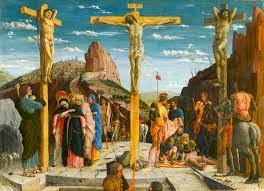
    And we even see this parable at work in a real situation in St. Dismas, the good thief, who was crucified with Jesus, but who prayed that he would be with Jesus in paradise.  “‘Amen, I say to you,’” said our Lord, “‘today you will be with me in Paradise.’”  We have no evidence that St. Dismas had followed Jesus at all during his lifetime, and the only thing we know about him before his death is that he was a criminal, often times described as a thief.  But hours after his statement of faith in Jesus, he would be in heaven. 
    Do we have the same drive for the spreading of the kingdom of God as did the landowner?  Are we willing to pay dearly so that the Gospel can be shared, even to the point of foolishness?  Or do we have other motivating factors for our actions, that we feel are more fair or equitable?
    Jeff and Mary Love, Karen Downs, Deacon Dave and I, recently attended the first of three meetings on helping parishes spread the Gospel.  The meetings are co-hosted by the Diocese of Lansing and the Catholic Leadership Institute.  We learned about parish vision, core values, and purpose statements.  For St. Pius X, it was all a bit awkward, as we know we are on a trajectory towards closing.  In talking privately with one of the facilitators, I spoke about the preference you expressed, to exist until we ran out of sufficient funds.  He asked the question that has been on my heart since you voiced your desire for St. Pius X: is this really what would advance the kingdom more?  Is this really the best path for spreading the Gospel, not just in Flint Township, but for Genesee County and the Diocese of Lansing?
    I know that your preference is based on your love of St. Pius X.  It is hard to let go of something so dear to us, especially when some of you helped to found St. Pius X with your family.  Change is never easy, especially the longer we live, and holding to the status quo requires the least amount of change.  But is it operating with the same drive that Jesus describes in the Gospel for spreading the kingdom and sharing the Gospel, such that resources are brought to bear on those who will do that work?
    To be sure, I understand the mindset of wanting to hold on for as long as possible, even when the end seems obvious.  In late March of 2020 we were at the very beginning of a virus about which we knew little.  Ventilators were in high demand and short supply.  Those with pre-existing conditions were especially vulnerable.  It was in that context that my grandfather, whom most called Jesse, contracted COVID from his nursing home.  He was taken to Sparrow Hospital for treatment.  For his kids and grandkids, including me, it was scary.  The mortality rate was rising quickly, and no one seemed to know how to treat COVID effectively.  My grandfather started out with a cough, needing a little bit of oxygen from a mask from time to time.  He had some good days, and things seemed to be holding steady.  We, of course, were not allowed to visit, except by Zoom.  As the days progressed, though, things got worse.  Eventually the occasional dose of oxygen from a mask became the nasal cannula, the thing they stick in your nostrils in order to deliver oxygen all the time.  We grandkids made a video holding up signs, telling him we loved him.  Around that same time that we showed the video, the nasal cannula was proving not enough, and he was going to need a ventilator.  My mom and her siblings had to decide what to do next. 
    My grandfather was 93.  He had been a strong man throughout his life.  His children, who loved him dearly, and most of whom could not see him, even if they traveled from being out-of-State, would not have a chance to say good-bye in person if they decided to withhold further care.  But, as hard as it was, they made the decision not to use the ventilator, as it was not always proving useful in treatment, especially for the elderly, and perhaps that ventilator could help a younger person who had a better chance of surviving the Coronavirus.  He died shortly after being removed from oxygen on 9 April 2020.
    Do I wish I could have been with my grandfather in his last moments, giving him the Sacrament of the Sick and the Apostolic Pardon?  Certainly.  Would I have done anything to keep him around longer and put him on the ventilator so that we could have, hopefully, a few more days?  No.  At the time, the what-ifs were frequent in my mind, but I know my mom and her brothers made the right decision.  It wasn’t easy, but it was for the greater good.  And I would like to believe, though I have no proof of this, that someone else who needed a ventilator benefited and maybe even had his life saved from the machine that my grandfather would have been using if that route of care had been chosen. 
    Our mission is to spread the Gospel.  I have been preaching that since I arrived in 2016.  We have groups who are active here in the parish, working hard to strengthen their faith, and I applaud those groups.  But I think, if we’re honest, we know where this is going.  From factors both in and outside of our control, our parish is dying. 
    So what is the best thing for us to do?  Is it to remain as long as we can, and just spend money to have the semblance of a parish so that we can pretend everything is ok and pretend that hundreds more people are going to start coming to St. Pius X in the next months or year?  Is that the calculation that the landowner makes for spreading the Gospel of the kingdom?  Or can those resources, both personal and financial, be better used by supporting other parishes in the area?  Could the ventilator we have chosen to use, which may prolong things but which will not cure things, be better used by someone else?
    We hear in our Gospel the paradigm that God uses for evaluating what is best: how can I get more workers for the vineyard to spread the Gospel?  Is that the paradigm that we are using as a parish as we continue our on pilgrimage to closing?  Or do we have another paradigm for how long we should exist?  I know what we all want.  But is what we want in line with the mission of any parish: to spread the Gospel as effectively as possible?  

17 July 2023

True Dichotomy

Seventh Sunday after Pentecost
    In the name of the Father, and of the Son, and of the Holy Spirit.  Amen.  So often we’re nudged in the direction of a false dichotomy.  That phrase, false dichotomy, might sound foreign, might even sound like an obscure body part, but it’s the wrong assertion that there are only two choices.  For example, a person might say, “You have to vote for a Republican or a Democrat,” when, in fact, there are other political parties for whom you can vote.  Or, less weighty, you have to decide whether or not you can put pineapple on pizza.  As I tend to be the pop culture reference guy, it’s like Anakin in “Star Wars: Revenge of the Sith” saying to Obi Wan, “‘If you’re not with me, then you’re my enemy.’” 

    But not all dichotomies are false.  Scripture, and especially our epistle today, talks about the dichotomy between sin and grace, death and life.  Sin brings death, grace brings life.  And St. Paul talks about the Romans had previously been slaves to sin and death, but now were raised to life through grace, “in Christ Jesus our Lord.” 
    But this is not just St. Paul.  It’s the overarching theme in the Scriptures, from Genesis to Revelation.  In Genesis, after God creates everything good, culminating in the creation of man and woman in His image, our first parents have life.  They are living in the grace of God.  But then, Eve, followed by Adam, disobey God; they sin.  And by sinning, they welcome death into the world.  They are expelled from the Garden of Eden, and separated from the Tree of Life, so that they experience death. 
    And so throughout Genesis, we see that when evil is allowed to fester, it leads to death.  Think of the Flood and the destruction of Sodom and Gomorrah.  But, when people follow God, they find life.  Think of Abram leaving Ur because God calls him to go to Canaan, and then becoming Abraham, the father of many nations.  The same could be said for Exodus, where God leads His people from slavery to sin in Egypt to freedom in following His law in the Promised Land.  Of course, throughout the journey, some disobey God, and they find death.  While others, like Joshua and Caleb, follow God, even when unpopular, and they enter the Promised Land.
    This same overarching theme repeats itself in the Books of Joshua and Judges, and then with the Kings of Israel.  The prophetic books are basically warnings from God through His prophets to live according to God’s will, because if they continue in their sin, they will die.  This culminates in the dispersion of the Northern Kingdom of Israel after they start worshiping false gods and oppressing those for whom God has a special love: widows and orphan; and the exile of the Southern Kingdom of Judah to Babylon after they, too, engage in idolatry and mistreatment of the poor and vulnerable.
    Of course, nowhere does this dichotomy appear clearer than with our Lord, who calls Himself, “‘the Way and the Truth and the Life.’”  To follow Him is to have life; to reject Him is to choose death.  The Savior even takes our rejection and the consequence of that rejection–death–upon Himself in His crucifixion, but because He was faithful to God He rises on the third day.  And the rest of the New Testament unpacks that choice between life and death, and helps those who follow the Lord to know what choosing life looks like to the nascent Church.  The Acts of the Apostles, St. Paul’s epistles, the epistles of St. Peter, St. Jude, and St. John all talk about how we can have eternal life and reject the death of sin.
    And at the end of the Bible in the Book of Revelation, we see the cosmic battle between good and evil, a battle that God wins convincingly.  But the Spirit also warns the churches that they have to continue to follow God to have that life.  It was not enough to choose life once or earlier; life must be chosen each day.  In the end, sin and death are defeated forever, and the fullness of the reign of God shines forth, with eternal life for those who remained faithful (and eternal punishment for those who rejected God).
    So which do we choose: life or death?  By our fruits, Christ tells us, you can tell what we choose.  Each time we sin, especially grave sins, we invite death into our lives.  Each time we follow God, we invite eternal life into our lives.  Indeed, though we often think of the judgment as Christ telling us where to go, either to Hell, or to Purgatory or Heaven, really we make that choice each day of our lives.  While the just are surprised that they served Christ through service to the poor, and the wicked are likewise surprised that they ignored Christ through ignoring the poor, they knew that they had served or ignored the poor.  In that way, their salvation or damnation was not a surprise, because they knew their choices, and whether or not they choose to do follow what God had instructed for eternal life.  Sometimes it was one act of following the Lord at the end of one’s life, like St. Dismas, the good thief, who received paradise for his defense of Christ crucified.  At other times it was more choices for the Lord, with some rejections sprinkled in, like St. Peter.  Or, in a negative sense, one great act of betrayal from Judas led him to despair of any chance of salvation.  But Dismas nor Peter nor Judas was ignorant of the choices they made and how each could affect eternal salvation.
    So where will we come out in this great drama and battle between life and death?  By baptism Christ claimed us for Himself and eternal life, and gives us the grace to stay faithful to the choices of life each day.  Each day the enemy works to enslave us once more to death.  Neither Christ nor the devil chooses for us.  We choose if we want death or life.  Praised be to God who gives us all the graces necessary so that we can accept the gift that salvation is, won for us by Jesus Christ, who with the Father and the Holy Spirit is God, for ever and ever. 
    

10 October 2022

As We Forgive Those Who Trespass Against Us

 Eighteenth Sunday after Pentecost
    In the name of the Father, and of the Son, and of the Holy Spirit.  Amen.  When we think about participating in the divine, what occasions first come to mind?  I know for me, the sacraments are the most obvious answer.  The mysteries of our Lord’s life, Pope St. Leo the Great says, have passed into the sacraments.  Specifically, I think about the Mass, the joining of heaven and earth that takes place here in our church.  Not only do we hear God’s Divine Word, proclaimed for us in the Scriptures, we also receive God into us through the Most Blessed Sacrament of the Eucharist, which is the very Flesh and Blood of Christ.  The Eucharist best exemplifies the way in which we can become like God, as St. Augustine reminds us that the intent of the Eucharist is to make us more like the one whom we receive.
    But another way to participate in the divine is through the act of forgiveness.  We heard this very familiar story about the paralytic being brought to our Lord.  He forgives the man’s sins, at which the Pharisees become indignant because only God can forgive sins.  But, to demonstrate His authority to forgive sins, Christ then heals the paralytic as well.
    The Pharisees were not mistaken in their estimation that only God can forgive sins.  In fact, our Lord demonstrated His divinity to them by this miracle.  So any time you hear someone say that Jesus never asserted He was God, point them to Matthew, chapter 9.  There are other times that our Lord reveals His divinity also, but this is certainly one of those times.
    So, if only God can forgive sins, then how can we say, “sicut et nos dimittimus debitoribus nostris”; “as we forgive those who trespass against us”?  How can we forgive if forgiveness belongs to God?
    As a good Thomist, we can consider forgiveness in two ways.  The first way, which is reserved to God alone, is the remission of sins.  When God deals with sin, He eliminates it, wipes it away, and makes it so it ceases to exist.  Only the consequences of that sin remain (and even those can be dealt with through pious acts).  When we examine who forgives our sins in the Sacrament of Penance, it is God.  Yes, God uses the ministry of the priest to convey that forgiveness, but it is God who forgives, which is why the priest is bound to secrecy (we call it the seal of confession).  Those sins have been absolved by Christ through the ministry of the priest, but their use belongs only to Christ, not even to the minister, who then does not divulge or act on those sins in the future.  It is the sacrifice of Christ which washed away the sins of the world, the sacrifice of the unblemished Lamb of God.  We cannot add to that, but we can participate in it.
    But, as with so many aspects of life, God allows us to participate in His work.  We see this in the garden of Eden, as God calls Adam and Eve, not only to continue to care for the garden of Eden, but to create with Him and order with Him, and even to create new life (procreation).  God, further, calls humans to speak for Him when He calls prophets to proclaim His Word, both of comfort and of conversion.  We see that especially with Moses, Samuel, and the prophets that follow them.  God also allows men to exercise governance over His people, as seen through Kings David and Solomon, and the kings of their line.  God shepherds His people through kings who cooperate with His will.  
    But God also allows us to participate in His forgiveness.  He gives us the gift of saying “I forgive you” to a person, and not having it be empty words, detached from reality.  When we forgive someone, something in that person changes, and something in us changes.  We participate in the mercy of God.  It may not eliminate that sin (because a person has offended not only us, but also God), but it does eliminate the attachment of that sin that exists between the two  or more people.  God’s mercy flows through us, and the burden of sin can be lifted from hearts.
    To be Catholic is to be a person of forgiveness, because Christ tells us that the measure we measure out to others, will in turn be measured out to us.  He calls those who show mercy blessed because they will be shown mercy.  And He condemns the servant who was forgiven a great debt, but who could not forgive others their smaller debts.  We are merciful because God was first merciful with us, just as we love God because He first loved us.

    And He showed that love for us by sending His Son to die on the cross so that we could be forgiven.  God’s forgiveness wasn’t an ethereal reality.  God demonstrated His forgiveness by the spit that was hurled upon the face of Christ; by the skin viciously torn out from his back and side at the scourging; by the bruises and scrapes and split skin that came from falling under the weight of the cross as He carried it to Golgotha; by the holes in His hands and feet from the nails that pierced them; by the gall put to His lips; by the thorns pressed into His Sacred Head; by the gash in His side to prove He was dead, whence came Blood and Water that are the streams of Divine Mercy.  God forgave through the crucifixion.  Though He doesn’t ask us to be nailed to the cross in the same way, He does ask us to forgive in the same way.
    And the easiest way to forgive others is to first recognize that we need to be forgiven, not only directly by God, but also by our neighbor.  I wish that I could tell you that I’m a perfect priest, that I always make good decisions, that all my words are the words that our Blessed Savior would speak.  But that would be a lie.  I myself am beset by weakness, and sometimes I act out of my pride; or choose a hurtful word when a loving one works much better; or I choose the easier path instead of the virtuous one; and so many other ways that I fall short of the image of the Good Shepherd, to whom I am configured by sacred orders.  I am a sinner; sometimes it is hard to admit that I am wrong and have followed the wrong path.  And so I ask your forgiveness, as your brother and your father.  For any ways I have hurt you, or not demonstrated the love of Christ the Good Shepherd, I seek your mercy.  And perhaps, to those in your life who have hurt you, you can also show mercy.  
    One of my favorite quotes from saints is from St. Maximus of Turin, who preached, “Sinner he may indeed be, but he must not despair of pardon on this day which is so highly privileged; for if a thief could receive the grace of paradise, how could a Christian be refused forgiveness?”  If our Lord could shower His mercy on St. Dismas, the good thief, in the moments before He died, how could he not have mercy on us whenever we come to Him as He reigns in glory?  And, having received that mercy, our Lord also instructs us: “Go, and do likewise” to the praise and glory of the Father, and the Son, and the Holy Spirit.  Amen. 

14 February 2022

In It to Win It

 Septuagesima Sunday

    In the name of the Father, and of the Son, and of the Holy Spirit.  Amen.  There are no participation trophies when it comes to eternal salvation.  There are winners (those in heaven and those in purgatory), and there are losers (those in hell).  Luckily, it’s not winner take all.  There can be more than one winner, inasmuch as more than one person can go to heaven (thanks be to God, because Mary would be the only one there).  
    But we are still called to give it our all.  St. Paul reminds us that we should run so as to win, and train our bodies for victory, which means denying them things that keep us from winning.  And it means taking things that help us win.  
    Since June, at the advice and with the occasional help of a friend, I’ve been working out pretty much every day Monday through Friday (though, I will admit, I didn’t quite work out while on vacation).  I recently had a doctor’s appointment and he noted that, as far as the bloodwork I had done is concerned, I’m doing much better, especially considering that the blood was taken not that long after Christmas, with all of the goodies associated with it.  I may not be swoll (the Troopers at the State Police Post where I work out often say I’m doing my “holy gains”), I am getting a bit stronger.
    To do that I have to stick with it, day in and day out.  I also have to be more careful what I eat.  That includes not eating as much frozen pizza, but also adding good calories that helps my body grow stronger.  It isn’t always fun to go to the Post for “holy gains,” and the bulking powder I mix isn’t always a delicious, refreshing beverage.  But it helps me, little by little, to keep my body fit and lean.
    The same is true in the spiritual life: we cannot stop (not even for vacation) our desire to grow in holiness and the actions we take each day to develop our relationship with Christ.  The prayers that we say, the foods from which we fast or abstain, the little mortifications that we endure are all meant to help us train to be winners and to receive the crown of heaven from our Lord.  Some days we enjoy those things, or we notice the difference that those ascetic practices are making in our spiritual life.  Other times we seem to be the same, unfit person that we were when we started.  But the key is to persevere.
    Another key is not to make too many comparisons.  Certainly we can look to others as guides, especially the saints.  They help us to know how we can grow in our love of God and neighbor.  To continue the analogy I began earlier, the friend that I occasionally work out with is much stronger than I am, and you can see it clearly in his biceps.  Desiring to be stronger like him can sometimes push me to workout, even when I don’t want to.
    But, on the other hand, comparisons can also be less than helpful, because we’re not concentrating on our own pilgrimage, but get caught up in what others have and do.  That’s one of the messages of the Gospel today.  The landowner promised a certain pay to those who worked all day.  He even promises those who started a little later than the first laborers a just wage.  But when he distributes the pay, those who came last, who only worked a couple of hours, received full pay.  The first workers starting looking at others, and comparing their work to those who came at the end of the day, and assumed they would get more.  But they received what they were promised, no more, and no less.  Their comparison did not help them, but actually drew them away from the goal, which was to work well for the landowner.  
    So in our spiritual life, when we look at what others are doing, sometimes it does not lead us to imitate others’ greatness, but makes us jealous of what they have, and unsatisfied with what we have.  Maybe we feel like we’re doing a lot of work, praying a lot, fasting and abstaining a lot, doing those mortifications, big and small, that are supposed to make us holy.  And all it’s doing is making us look down our noses at those other people who don’t practice the same penances that we do.  Or maybe we see what others do, and we feel like it’s hopeless, like our spiritual muscles will never be as big as that other person’s.  
    God doesn’t want our negative comparisons.  He wants us to be who we are, not someone else, and cooperate with Him in growing in holiness, according to our own state in life, graces and temptations, and abilities.  He doesn’t want us to be Martha, comparing what we are doing to what Mary is doing.  He simply wants us to be Mary, attentive to Him and following His direction for our life.  
    It’s also important to note how merciful the justice of God is.  As I said earlier, the landowner promised to give what was just to those who worked in the morning.  But out of a desire for others to be a part of the great work, he pays the later workers the same as the earlier.  There’s no evidence in the parable that the later workers knew they would be paid the same as the earlier workers.  But they were.  God’s justice was colored with His mercy.  God was generous.  And so he is with us.  God is always looking to forgive us, to draw us closer to Him, even in the last moments.  Think of the good thief, St. Dismas, who at the last moments of his criminal life sought the mercy of God, and it was granted to him, like to the later workers.  So for us, even if our conversion has come late, or even if we’re still working on the conversion we know God wants for us, we should never despair of God’s mercy.  Neither should we presume on it, and wait until the last moments of breath to make a true conversion, but if we are doing what we can to grow in living a life like Christ’s, we know that God will reward that, not only justly, but abundant with mercy.  
    So, as we get closer to Lent, and are starting to think of the Lenten penances we can take on, let’s follow the advice of St. Paul and do the things that will help us truly convert our lives, not make Lent a Catholic 40-day diet.  Choose a penance that will help you be a winner!  But, also know and trust in the mercy of God, who desires heaven for all His children, so they can rest eternally with Him, the Father, the Son, and the Holy Spirit.  Amen. 

14 April 2016

"Peace" not "Really?"

Second Sunday of Easter (or Sunday of Divine Mercy)
I have a niece, and another niece or nephew due to be born in mid-April.  And one of the big things for families that I have come to experience in my own family are the big firsts: the first tooth; the first crawl; the first solid food; and the first word.  There are probably countless comedic scenes about moms and dads trying to get the little child to say mama or dada first, as a sign of which parent is the best.  
So it is interesting that Jesus’ first word to His apostles after He rises from the dead, in both the Gospel according to Luke and the Gospel according to John (which we heard today) is: peace be with you, or shlama amkhon in the Aramaic Jesus would have used (a phrase which is still used in some Eastern Catholic liturgies).  After all that Jesus had gone through, and all the most of the apostles had not been through with Him, Jesus chooses to say: peace.  What a merciful response!  Even if we weren’t mad, how many of us would’ve said something like: “where were you?”; “why did you abandon me?”; or maybe just “really?”
On this Divine Mercy Sunday, we rejoice in God’s mercy, which flows from the piercèd side of Jesus.  We rejoice that Jesus, whom we have crucified with our sins, does not say, “Where were you?” or “Why did you abandon me?” or even “Really?”  Jesus gives us His peace.  
And if we rewind 6 chapters to John 14, when Jesus was speaking to the apostles, again in the upper room, on the night of His Last Supper, we hear more about that peace.  Jesus says, “Peace I leave with you; my peace I give to you.  Not as the world gives do I give it to you.”  Jesus’ peace, the peace of heart, peace of mind, is the peace that comes from God’s mercy being showered upon us.  It is not simply the worldly notion of peace: the cessation of violence.  It is a wholeness and integrity of God with us, and we with God.  It is a right ordering of our souls and minds and body, as well as with our neighbors.  
But that mercy is not something that we put in a bottle on a shelf.  It is something that is meant to be shared.  Immediately after giving the apostles His peace, Jesus also says, “‘As the Father has sent me, so I send you.’”  Jesus’ mercy, God’s mercy, Divine Mercy, is meant to be shared with others, just as the Father shared Jesus with us.  In fact, in encountering us, others should encounter Jesus, and His mercy, just as St. Thomas did a week after the Resurrection.
What is mercy?  Mercy is God’s love.  In Hebrew, they word chesed can be translated as mercy and as love.  The Psalm we heard today is one example of this: chi leolam chesedo: for his mercy endures forever.  It is the way God shows His love for us.  Otherwise, it would have be judgment, not mercy.  Instead, the justice of God for sin fell upon Jesus, so that we could receive the mercy of God, which is offered to us as long as we are alive.  Our sins, as St. Faustina reminded us, as a drop in the ocean of God’s mercy.
But mercy does not call wrong right, or ignore it.  Neither ignorance nor rationalization is mercy.  Instead, mercy recognizes that there is a debt to be paid, but does not demand its payment.  Mercy acknowledges that good has been rejected, but returns an embrace when a punishment could have been dealt.  

We see mercy in one of Jesus’ last acts before He died.  St. Dismas, the Good Thief, admits his sin before Jesus as they both hang on the cross.  But then asks the unthinkable: for mercy.  And Jesus responds, “‘Amen, I say to you, today you will be with me in Paradise.’”  One of my favorite readings from the saints is from a sermon by St. Maximus of Turin, a bishop, which reads, “And so, my brothers, each of us ought surely to rejoice on this holy day.  […] Sinner he may indeed be, but he must not despair of pardon on this day which is so highly privileged; for if a thief could receive the grace of paradise, how could a Christian be refused forgiveness?”  May we never despair of God’s pardon, God’s mercy, God’s peace, but acknowledge our sins, confess them in the Sacrament of Penance, and so prepare ourselves to celebrate these sacred mysteries, in anticipation of the wedding feast of the Lamb in heaven.