Showing posts with label myrrh. Show all posts

08 January 2024

Prayer over the Offerings

Solemnity of the Epiphany of the Lord
    When people talk about preparing for Mass, they often speak of getting dressed with better clothes than usual, brushing teeth, combing or brushing hair, maybe the ladies putting on make-up, maybe guys using that button-up shirt and maybe even a tie.  Or sometimes they mean looking at the readings ahead of time, which can be found at the Daily Readings tab of the usccb.org website.  Rarely do people look over the prayers that are said at Mass before they attend the Mass, but this is also a good way to prepare, as the prayers are usually based on saying from the Church Fathers, and often are poetic and filled with rich imagery.
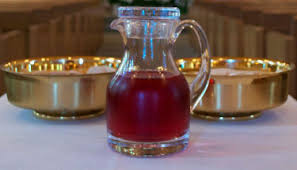
    I want to focus today on the Prayer over the Offerings for the Solemnity of the Epiphany, which we celebrate tonight/today.  For this ancient feast, there are different prayers for the day before than for the day itself, and I want to focus on the Prayer over the Offerings for the actual day of Epiphany.  The prayer reads: “Look with favor, Lord, we pray, / on these gifts of your Church, / in which are offered now not gold or frankincense or myrrh, / but he who by them is proclaimed, / sacrificed and received, Jesus Christ. / Who lives and reigns for ever and ever.”  You will hear me chant that prayer after the altar is prepared for the celebration of the Eucharist.  It is the same prayer from the pre-Conciliar Mass, and I would guess the prayer likely is quite old, much older than even the 1570 Missal that Pope St. Pius V promulgated as a result of the Council of Trent.
    But what does the prayer say?  It is poetic, but what about the meaning?  It starts by talking about the gifts of God’s church, and asks God to receive them favorably.  Those gifts are the same gifts the Church has used since the Lord instituted the Eucharist on Holy Thursday at the Last Supper: bread and wine.  And it compares those gifts to the gifts we heard about in the Gospel: gold, frankincense, and myrrh.  But it talks about how these gifts are not the same gifts of the Magi, but rather, Jesus Christ Himself, who “is proclaimed, sacrificed and received.”  It looks forward to the purpose of the presentation of these gifts of bread and wine, their transformation or transubstantiation into the Body and Blood of Jesus Christ.  It reminds us that what we offer here is not only our gifts, like the gifts of the Magi, but the gift of Christ Himself to the Father, the very offering of His life on the Cross, which is made present for us in an unbloody manner through the Most Holy Sacrament of the Eucharist.  It’s as if we being catapulted through different scenes from the Gospel: first the adoration of the Magi when Jesus was little, to the Last Supper, to the Crucifixion. 
    But it goes even deeper than that.  Because our gifts of bread and wine are meant to represent something much more precious: the gift of our very selves.  Christ is our model, and He offered His entire self to the Father, even to the shedding of His Precious Blood.  He did not hold anything back.  So we, who claim to follow Him, are meant to offer all of who we are, not so much right now in the shedding of our blood, but if the pouring out of all that has happened in our life since the last time we went to Mass like a libation, a liquid offering.  We put on that bread the credit card bill that’s due with all the charges for a Christmas dinner with the family and Christmas presents; we place the joy of conceiving a new child; the concern for an infirm family member; the sorrow of a death at what is usually such a joyous time of year; the excitement of a new job or new opportunities; the extended time spent while on vacation with the kids; the relief of sending the kids back to school.  All of that and more, really our very selves, are supposed to be united to the bread and the wine spiritually.

    And this is the gift that Jesus wants.  Sure, the gold represents Christ’s kingly identity; the frankincense His divinity; the myrrh His Death.  But Christ still wants to receive gifts from us even if we don’t have those items to offer up.  He wants us to offer ourselves, united with Him, to the Father, and to receive, like Him, new life back from the Father who never lets us remain empty-handed.  The Father transforms whatever we give Him, and returns it back to us as a vehicle of grace, a chance to grow closer to Him, which is our ultimate happiness.
    All of that, and more, from a prayer that is six lines and forty-three words long.  How often do we miss those words, not just on the Epiphany, but each Sunday, because we haven’t truly prepared ourselves for Mass?  We miss the poetry, the connections, the deeper meaning of these very deep prayers that the Church has perfected over two millennia of encounters with God. 
    Perhaps this week you can give God a little more of your time and attention.  Perhaps this week, maybe on Saturday morning or even before that, you can look ahead and try to see what the prayers for the Mass are.  Or even if you can’t do it ahead of time, to accustom yourself to paying close attention to the prayers that are said during the Mass.  Offer to God that aspect of yourself, that time of preparation, and be prepared for God to enrich your life even more than you thought, because God will not be outdone in generosity.

06 January 2020

Our Gifts for God

Solemnity of the Epiphany

    When it comes to getting my nieces presents for birthdays and Christmas, I will admit that I’m always just making my best guess at what they want.  I can even ask my sister for ideas, but I’m never quite sure if the gifts I get are the ones that my nieces want, or what my sister and brother-in-law want for their kids.  But this year, I bucked the trend!  One of the gifts that I got my nieces was a mini-backpack (apparently those are very chic right now), one with a koala and koala baby and one with a kangaroo and a joey.  My nieces were so thrilled and wore the backpacks all throughout the rest of our Christmas celebration. 
    On this Solemnity of the Epiphany, we focus on the gifts that Jesus received, as we celebrate the magi bringing the gifts of gold, frankincense, and myrrh.  One of the great liturgical reforms after the Second Vatican Council was the restoration of an extended offertory procession, with the gifts being presented by the people.  There was nothing wrong with how it happened before, with the servers presenting the gifts from the credence table, as the servers represented the entire assembly.  But there is something nice with the gifts of bread and wine being presented by parishioners.
    Those gifts of bread and wine are not only used because they are necessary for the Mass.  But they are meant to also symbolize so much more.  So often during the Mass, we get caught up with the external things that are being done.  When people think of full, active, and conscious participation, which had been called for in the liturgy since the beginning of the twentieth century, people often immediately go to the external things, like bringing up the gifts, or maybe being a reader at Mass, or an Extraordinary Minister of Holy Communion, or an altar server.  And none of those things are bad.  But everyone is called to participate fully, actively, and consciously, even if a person does not have a “special role.”  Externally, this happens through singing the hymns, joining in the Ordinary of the Mass (the parts that never change, like the Gloria, the Sanctus, etc.), and responding to the prayers.  But even those externals are meant to be the outer reality of something that is happening interiorly.
    Interior participation in the Mass is the first step in fully, actively, and consciously participating.  Just because one is responding or doing something does not mean one’s heart is in it.  We can all say the Creed, but how often is that profession of faith an external sign of our internal belief in who God is: Father, Son, and Holy Spirit?  We are all called not simply to go through the motions of the prayers, but to work at making sure our inner reality is being conformed to the outer reality of the rites of the Mass.
    And that brings us back to the gifts at the offertory.  Each time the bread and wine (and on Sundays and Holydays the collection) are brought forward, that external action is meant to be united to our internal action of bringing to God everything that has happened since the last time we came to Mass.  We are invited and called to unite in a mystical way our lives with the bread and the wine, which will be offered to God the Father by the power of the Holy Spirit, united to the perfect offering of Christ on the Cross. 
    Allow me to give you an example of what that could look like from my own life, extended a bit beyond what happened since the last time I went to Mass (yesterday) into the entire Christmas season thus far.  While the collection is happening, while we’re singing the offertory hymn, in my mind I would be recalling the different parts of my life, and offering them to God.  I would give God the blessing as well as the challenge and sorrow of seeing both my grandfathers, both widowers, as their own health declines, and their minds lose some of their  sharpness that I remember.  I would give God my own frustration at not being able to see a best friend who was in town for a couple of weeks, my fear that maybe our friendship isn’t as strong as I thought it was, but also my gratitude at the small ways that he confirmed for me that our friendship is a priority for him as well.  I would give God thanks for the generosity of you, my parish family, to me as an individual, and to the parish which helps us keep St. Pius X running, not only by financial donation but also the donation of time and talents.  I could go on, but you get the idea.  The offertory is our opportunity to give gifts to Jesus.
    When it comes to giving gifts to Jesus, I think it’s a little easier than my nieces.  Jesus is pleased with any gift that we give Him, as long as it’s our best gift that we can give him.  It doesn’t have to be perfect, but it does need to be honest and come from us.  It may not be gold, frankincense, or myrrh, but it’s meant to be the best that we offer to God from what we have experience since the last time we came to Mass.  Today, every Sunday, and every time we go to Mass, unite those experiences, good and bad, joyful and sorrowful, to the bread and wine presented from you to God the Father, transformed by the Holy Spirit into a gift of new life which God returns to you from His love: the Body and Blood of Jesus Christ. 

07 January 2019

Giving Jesus our Time, Talent, and Treasure

Solemnity of the Epiphany
When we think about the gifts that the magi bring to the Christ Child, we might think that they’re a little odd.  Gold, yes, everyone can use some gold.  Frankincense, we might not think as so helpful.  And myrrh, well, let’s be honest, many people probably don’t even know what myrrh is.  We may think that the magi should have brought more practical gifts, like diapers, or blankets, or almost anything else.  
But while our minds are geared towards practicality, the gifts that the magi, or wise men, brought is not concerned with the practical, but rather, the symbolic.  The magi, by their gifts, mean to communicate a message about who they understand Jesus to be.  Gold is a gift that you would give a king.  The magi understood, however faintly, that Jesus is the King of kings and Lord of lords, and their gift acknowledged that reality.  Frankincense, like the incense we use today, is what is offered to God.  The smoke of the incense rises, reminding us of our prayers rising to the heavens as we adore God.  It also gives a sense of transcendence, since the cloudy can seem otherworldly.  Think about Mt. Sinai in the Book of Exodus: the mountain is wrapped in smoke when God is present.  The magi recognized that, in addition to being a king, Jesus was also a deity, and deserved worship and the things that belong with it.  Myrrh is an oil, or a balm, and it was used to anoint the bodies of the dead.  While the Egyptians embalmed their dead, such a practice was not as common in the rest of the world.  So the bodies were anointed with a perfumed oil as a sign of respect and preparation for whatever came after death.  Besides recognizing that Jesus was a King and God, they also recognized that He was going to die (especially an odd thought if you believed that Jesus was a God).  Yet, we all look to Good Friday when God died on the Cross in the Person of Jesus.
As we celebrate this Epiphany, and the gifts that the magi presented to Jesus, we, too, have a chance to bring our gifts to Jesus.  Maybe we wonder what gifts Jesus really needs, since He’s God and owns the whole world.  But what Jesus desires from us is all of who we are.  Jesus desires us to share with Him our very life, each day, in all that we do.  This is what St. Paul means when he exhorts us to pray constantly.  When we offer our lives, and everything that is a part of it, each day to God, we are praying throughout the day as we work, as we learn, as we relax.  
The Church sometimes expresses how we can give Jesus a gift through the word stewardship.  Stewardship means that we have received gifts which do not, in fact, belong to us, but are given to us to use wisely.  A steward had the full authority of the master, and could act in his name.  But the steward was supposed to act according to the mind of the master, too, not simply using the master’s possessions without reference to the will of the master.  When we talk about stewardship, we talk about the three Ts: time, talent, and treasure.
Treasure is the easy one to think about.  We earn money by working, using what we have received from God to provide for ourselves and our families.  But that money is entrusted to us to use for our good, the good of the poor, and the good of the Church.  I honestly hate talking about money, and our generosity with money is often the fruit of a deep relationship with Jesus.  When we love Jesus we give what we can to serve Him through the poor and the Church.  When we are selfish with money it usually betrays a lack of a love for the poor and Jesus, as we put other priorities, sometimes simply our own will, ahead of the good of others.
Talents, though, are easy to talk about.  Each of us have gifts that God has given to us.  God expects us to use those gifts for helping us to be saints, and helping others to be saints.  Those gifts are not meant to be kept to ourselves (like in the parable of the talents), but are meant to be “invested,” shared, for the building up of the kingdom of God.  A talent doesn’t have to be extraordinary, but it is meant to be shared.  And at this time I invite our ushers to pass out our stewardship surveys.  This survey is meant to help you determine how best you can share your talents with our parish family.  You can mark down how you currently participating, or how you wish to participate.  If it’s something new, someone will contact you (give us a few weeks) about how to get involved.  But I encourage you to get involved.  This parish cannot operate without volunteers, and one of our parish challenges is that our volunteers are getting voluntired and we need people to fill the roles that many of our older parishioners used to fill.  Usually, about 20% of the people do 80% of the work.  It would be great if we could even get that number up to 30 or 40%!
Time is also easier to talk about, though perhaps this is a commodity that we value at least as much as our money.  How much time do we give to God?  If we are in a good relationship with another, we want to spend time with them whenever we can.  Facebook is always showing me ways that friends are spending time with each other.  But when it comes to our relationship with God, are we willing to spend time with God?  We have a great number of retirees in our parish, and our Mass times during the week are geared towards them.  But it seems like the same people each week (and, to be clear, I’m happy to have them!), which is simply a small selection of the parish.  I’m not saying you have to go to Mass every day (there are worse things to do with your time), but maybe, if you have a weekday open at 8:15 a.m., you could join us for Mass.  Or make sure you’re taking time out to pray.  If you’re not at all, start with 5 minutes, and then increase from there.  Or maybe, if your schedule allows, spend 30 minutes with Jesus in adoration on 3rd Fridays, or almost every Friday between 7 and 8 a.m.  

God desires gifts from us, not out of necessity, but as a sign of our love.  Is there anything that we’re holding back from God?  Will we give Him the gift of our time, talent, and treasure?

09 January 2017

Giving Not Getting

Solemnity of the Epiphany of the Lord 
To give a person a good gift, one has to know the person.  For example: last Monday my grandfather turned 90.  There are lots of thoughtful gifts that one can get a 90-year-old: maybe precious metals, mementos, etc.,.  My grandfather didn’t want any of it.  He simply wanted to eat together as a family and spend time with each other.  So all four of my uncles, even the two from Arizona, came together with my parents and we ate out at a restaurant.  However, disregarding my grandfather’s instructions that there were to be no gifts, I bought him something we joke about all the time, something I was sure he would use: bologna.  He loved the gift, and it caused a good amount of laughter.
My grandfather, seated next to my grandmother,
with their 5 children behind them
I also recently asked some of the kids at Powers that I know who are dating what they got for their significant others.  The students I spoke to talked about getting jewelry (especially for the girls), clothes, and other sentimental items.  Some of them took their boyfriend or girlfriend out to dinner, or gave them gift cards.  Talking with the students, it reminds me why I was glad I never had a girlfriend in high school for whom I had to buy things.   
We hear today about the gifts that the magi brought Jesus: gold (for a king); frankincense (for a god); and myrrh (for burial).  We of course know that these gifts were very fitting for Jesus (as well as very pricey), as Jesus is the King of Kings, True God, and the one who suffered death and was buried for our salvation.  The gifts of these three wise men were the perfect gifts.
The gift that Jesus wants is the gift of our lives.  He wants all of us, not just some of us, but all of who we are, and He wants that gift because in giving ourselves to Him, we end up finding true happiness.  This is one of the paradoxes of our faith: it is only in giving ourselves away to Jesus that we actually find who we are meant to be and how we can be happy.  In this new year, people do all sorts of things to try to better themselves and give themselves happier lives.  In reality, the only way we truly better ourselves is by giving our mind, heart, body, and soul to Jesus.  Loving God and loving our neighbor is a gift even better than gold, frankincense, and myrrh.
What is interesting is that, as we come to Mass each Sunday to adore the Christ, just as the magi did two millennia ago, some, maybe even many, of us come not wanting to give a gift, but wanting to receive one.  Mass has become to some, or maybe even many, “what do I get out of it?”  Perhaps the words that priests least want to hear on a Saturday evening or Sunday is: “I don’t get anything out of Mass, Father.”  
Of course, we do get something out of Mass.  We get to hear the Word of God; we get to receive the Body and Blood of Jesus; sometimes we get a good homily; we get the opportunity to unite or lives more closely with Jesus.  If we feel like we don’t get anything out of Mass, we have to ask ourselves: is the Word of God and the Body and Blood of Jesus not a good enough of a gift for us?  But the real problem is not what we get or don’t get out of Mass, but thinking that we go to Mass to get something in the first place.  Just as the beginning of cultural changes are hard to pinpoint, so the beginning of this phenomenon of going to Mass to get something is also hard to pinpoint.  When did we first start thinking: Mass is only as good as when I am moved emotionally, or like the music, or like the homily?  I don’t know, but that approach is a poison that is drawing people away from Jesus.
Don’t get me wrong: people do sometimes have great emotional experiences during the Mass, or the music helps them to pray and unite their lives to Jesus, and on rare occasions they even get good homilies.  And that is something for which we can give thanks.  But each time we come to Mass, we come to give, not to get.  Coming to Mass to get something out of it is like the wise men arriving at the home of Mary and Joseph and Jesus, and saying: “Thank God we found the newborn king!  What can you give us?”  No doubt, the magi did receive something for seeing Jesus, and recognizing in Him the newborn King.  But they did not travel from afar to get something, but rather to give something.

If we come to Mass because of what we like, or the experience we want to have, we are coming not so much for Jesus, but for ourselves, and we are missing the point of Mass.  We have the opportunity each week to come and adore the same Jesus the magi worshipped.  We have the opportunity each week to give Jesus the gift that He wants: not so much gold or frankincense or myrrh, but the gift of who we are, so that He can truly make us free and happy.  The wise men followed the star from afar to come to Jesus in Bethlehem; most of us don’t even have to use OnStar to get to St. Pius X.  But in the Eucharist God becomes flesh once more, and we can do Him homage.  If we put ourselves into the Mass, then we will likely get something out of it.  But even if we don’t “get anything out of it” (beyond hearing God’s Word and receiving the Body and Blood of Jesus), then we don’t need to get worried or leave.  At those times Jesus invites us to give more deeply of ourselves and unite even the things we don’t like to the cross of Jesus, so that He can transform us more powerfully into His disciples.  Jesus desires the gift of all of who we are.  Did we come to get or to give?  

07 January 2016

Two Sets of Kings

Solemnity of the Epiphany 
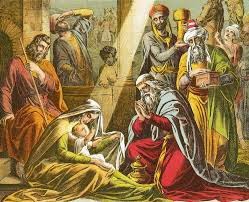
When we think about the Epiphany, which we celebrate today in this country, we probably think about the Three Magi, or Three Kings.  We hard about them in the Gospel today searching for Jesus, the “‘newborn king of the Jews’” and how they presented their gifts of gold, frankincense, and myrrh to Jesus: gold for a king, frankincense for God, and myrrh for burial.  The Scriptures don’t actually say there were three, but we presume that each magi brought one gift, and that there weren’t other kings who arrived empty-handed.
We’ve likely heard tons of homilies about how we should bring our gifts to Jesus, and how wise men (and women) still seek him, and the like.  So as I prepared my homily, I was trying to think of a different homily other than the usual one we hear on the Epiphany each year.  I even looked back at last year’s homily, where I preached about how the word Epiphany means to show off, and how God shows Himself off, but without bragging, and how we are also called to show off Jesus.  And as I was preparing, my heart was leading me to speak about the Magi.  But then it struck me: the Magi were not the only kings searching for Jesus.
I have never really focused on it before, though I have heard this Gospel at least 32 times, but there are two sets of kings looking for Jesus.  One is the Magi, following the star.  The other is King Herod, who wants to follow the Magi, but not to do Jesus homage, as he stated.  On the one hand we have people trying to find Jesus to honor Him.  On the other hand, we have people trying to find Jesus to kill Him.  The Magi bring their gifts to Jesus to honor who He is.  Herod brings the sword to kill Jesus because Herod is afraid of who Jesus is.  The Magi can see God’s design even in the stars, and are open to how God is communicating, though they are not Jews.  Herod has to ask the chief priests and the scribes where the king of the Jews would be born, and is not aware of God’s Holy Word which reveals that Jesus would be born in Bethlehem.  There are two very different searches going on
Th same is true today.  There are those who seek Jesus because they believe He is the King of Kings, and the answer to all their troubles.  There are those who seek Jesus in disdain because Jesus ruins all the “fun” they want to have and He threatens the way of life they prefer.  There are those who see with the eye of faith and notice how Jesus is the answer to the deepest longings of their hearts.  There are those who try to find ways to disprove Jesus’ teachings and find examples of how His disciples don’t live Jesus’ teachings out.  There are those who run to Jesus to obtain mercy.  There are those who run to Jesus and condemn Him for all the troubles in the world.
If Jesus is who He says He is, then gold, frankincense, and myrrh are the smallest gifts that we can give Jesus.  If Jesus truly is God and Man and rivals to humanity what it means to be human, then our response cannot be anything other than trying to change our life to follow Him.  Those who believe Jesus find in Him a new way to live, not just as a set of rules, but as a relationship with a person who prepares them for heaven.
But others, feeling that same tug at their hearts to change their lives, are more like King Herod, and fear what Jesus will take away from them.  They are worried that the change which Jesus requires for His disciples will diminish who they are, what they can do, and the joy that they will find.  They seek to put to death anything which threatens the reigns of their own ego, and will search for ways to discredit Jesus and His life as much as possible.

If we’re truly honest, we’re a mix of the two.  At times we are convinced by the Gospel and we want to be more like Jesus.  At other times we are afraid that Jesus will take away from us something that we need, and we do not trust Him.  May this celebration of the Epiphany, and our reception of the Body and Blood of Jesus in the Eucharist, make us less like King Herod who feared Jesus’ reign and sought to end it, and more like the Magi, who honored Jesus and brought Him gifts that represented so much more.  May we seek after Jesus, who wants to be found by us, so that we can give Him the gift of our very life.