24 September 2018

Rebuild My Church

Solemnity of the Anniversary of the Dedication of St. Pius X Catholic Church
As we celebrate this 62nd anniversary of the dedication of St. Pius X church, the first thing that came to mind was the admonition given to St. Francis in the church of San Damiano in Assisi: Rebuild my church.  This is what St. Francis heard a voice say to him.  Being the practical man that he was, he started to gather stones because that little church was falling apart.  But soon he realized, even as he completed that little church that still stands today, that God was giving him a bigger mission: to help rebuild the Church, the people of God, that that little church, the building, symbolized.
Ever since Vatican II, it has been vogue to say that the buildings don’t matter; that what matters is the people.  Like all errors, it’s attractive because it’s partly true.  But being partly true, it’s also partly false.  Buildings do matter–the way they look, their shape, how they are decorated and adorned–because God uses material things to communicate His grace, His life.  Our minds need order, and a building orders creation, and orders it for a particular use: for the worship of God.  No other place helps us worship God more than a church, especially a beautiful one.  Yes, seeing a sunset on Lake Michigan with the hues of pink and red against the blue background and white clouds is a way to experience God; no, it’s not the same as worshipping God in a church.  Inside the church is better because God dwells here in a special way that He does not in nature.  
And yet, the people do matter, because the building represents what the people are called to be: living stones in God’s temple.  Some of us are more chiseled than others.  But we are the stones that God uses to build His temple, built on the foundation of the apostles, with Christ Jesus Himself as the cornerstone, the stone that holds everything together.  We are the church, just like this building is a church.  And just like this building is ordered, not just stones randomly placed on each other, so the church is made up of different people with different roles, functions, and ministries, which keep the church going.
But today, just as in the 13th century, the church needs to be rebuilt.  And in this case, I’m not talking about this building, though it can always use repairs and beautifications.  But I’m talking about the people.  We need to rebuild God’s Church.  It is falling apart.  The gates of Hell will not prevail against it, as Jesus promised St. Peter when He made him the first pope, but we need to strengthen this building.  Some of the stones are covered in filth of crimes against children; some of the stones are covered in filth of breaking promises of chastity; some of the stones are covered in filth of cover-ups and dereliction of duty.  And the only thing that will change that, the only thing that will take us from these dark days of scandal is if we are the stones that God wants us to be in His temple.
There are three ways that we rebuild the Church and are the stones that God wants us to be in His temple.  And they are connected to our identity given to us in baptism to be priests, prophets, and kings.  
Our identity as kings does not make us in line to become an earthly monarch like Princes William and Harry.  Our identity as kings allows us to govern, not only our passions, but also to transform this world to look more like the Kingdom of God, in whose kingdom we are subjects by baptism.  We are not all called to be politicians, but we are all called to transform this world in our day to day lives.  That means we cannot settle for the common argument, “My faith tells me that X is wrong, but I don’t want to force my view on another.”  One example shows how foolish that sentiment is: My faith tells me that murder is wrong, but I don’t want to force my view on another.  If we really believe murder is wrong, then we should work as hard as we can, in many different ways, to prevent murder from happening.  If it’s truly wrong, then it’s wrong for everyone, not just Catholics.  To rebuild the Church, we cannot be satisfied with being Catholic only within the walls of this church.  Our faith, strengthened by a worthy reception of the Eucharist, should exude from us in everything we do.  We have too many part-time Catholics who only live their faith when they go to Mass, if they go to Mass.  Live your life saturated with the teachings of Jesus.  It will rebuild the Church.
As prophets, we are called to proclaim God’s Word.  Prophets were not early fortune tellers, who told you what lottery numbers to play.  Prophets spoke God’s Word, and told of what would happen if God’s Word was not obeyed.  Jeremiah did it in the 7th century BC in Judah, when he told the people that they needed to live their faith out, especially in the treatment of the poor, widows, and orphans, or else the consequences were exile and destruction of the Temple.  Very few, especially the princes, listened to Jeremiah, and so the people went into exile, and the Temple was destroyed.  We, too, are called to speak God’s Word to others.  We are called to do so charitably: “Stop X or you’ll go to Hell!” has rarely found a welcome ear.  But letting others know how God’s law and the teachings of the Church help us to be happier people, that’s something people listen to, especially when spoken out of love.  Live your life proclaiming the teachings of Jesus and His Mystical Body, the Church.  It will rebuild the Church.
Last but not least is priest.  Now, the priesthood of the baptized is different not only in grade but also in kind from the ministerial priesthood.  But both are important.  And being a priest by virtue of baptism means offering our daily sacrifices to God like a priest offering a sheep or goat in the Old Testament.  The sacrifice that God desires from us is a contrite, humble heart.  He wants us to recognize that He is God, and we are not.  He wants us to do penance for our sins, and even the sins of others, so that God’s mercy, and not God’s judgement, may rain down from heaven.  Sacrifice is not fun; it’s not easy; it always calls us to not do things we would like to do.  But it’s how we live out our call to be priests.  Not eating meat on Fridays was a sacrifice all Catholics used to do every week.  Maybe we should return to that.  Sacrificing five minutes of our time to pray is a great sacrifice.  Praying for that person that drives us mad is a great sacrifice.  Praying an extra rosary, reading the Bible, coming to daily Mass if we can, those are all sacrifices.  Sacrificing time and energy and the things we love is not easy; it requires personal commitment.  But living out your baptismal priesthood will rebuild the Church.

Today God says to each of us what He said to St. Francis of Assisi: rebuild by Church.  By living out our vocation as priests, prophets, and kings, we can be shaped and chiseled into the living stones that build up God’s temple.  It may hurt at times; it will always require a sacrifice; but without you, the People of God, the Church, living out this call, then the Church will remain in ruins, not destroyed, but not thriving, either.  Rebuild God’s Church!

04 September 2018

Responding to the Word

Twenty-second Sunday in Ordinary Time
Usually every week, a different day each week, I get a phone call.  Recently it’s been more local numbers, like from Lansing, Detroit, or somewhere in the area.  I answer the call, and this is what I hear: (long pause); and then: hello, could I please speak with Mr. Strouse?  I think if you own a phone, you get those calls, too, unless you just let them go to voicemail (which they never leave, of course).
Today we hear about great news: God is closer to us than we could ever imagine.  Moses tells the Chosen People in the first reading, “‘For what great nation is there that has gods so close to it as the Lord, our God, is to us whenever we call upon him?’”  And while that was true in its own way in the Old Testament, as God revealed Himself to His people, and gave displays of His presence while crossing the Red Sea, while fighting the pagan nations, and while giving the Law on Mount Sinai, it’s even more true for us because of Jesus, the Messiah, who is God-made-flesh.  Jesus is truly and full God, and yet truly and fully man.  God walked among us, spoke to us with a human voice, listened to us with human ears, touched us with human hands, and experienced everything we do, except without sin.
We’re used to that news, because we’ve heard it for almost 2,000 years.  But it’s pretty shocking.  God, who is transcendent, made Himself sensible and limited.  He knows what it’s like to be born, to be in a family, to be poor.  He knows the heat of the day and the cold of the night, the fatigue of walking all day and the joy of reaching a destination.  He knows the cool splash of water, and having a great meal fill His stomach.  He knows what it is to be loved, but also what it is to be rejected.  And He knows what it is to die, to experience excruciating pain.  In any experience we have, we know that God understands us, even better than we do ourselves.
And that’s a great comfort.  When we’re sick, when we’re tired, when we’re lonely, when we’re supported by family, when we make a new friend, when we complete a job; all these things the Lord Jesus knows intimately.  He never abandons us.  And God desires to be so close to us that He gives us the Body and Blood of Jesus Christ, the co-eternal Son of God, in the Most Holy Sacrament of the Eucharist, so that He can dwell inside us, just like in a tabernacle here in the church.  That’s great news!!
And yet, we can sometimes be like the telemarketers who call us but who don’t respond.  God gives us this great gift, and we’re unresponsive, or, even worse, apathetic.  St. James tells us today that we are to be “doers of the word and not hearers only.”  We’re often good at hearing.  We often stink at doing.  
We are part of the way that God’s work, the ministry of Jesus, continues today.  The Holy Spirit gives us His gifts to continue the work of Jesus.  God doesn’t need us, as if we didn’t exist nothing could happen.  And yet God humbles Himself to allow us to bring His presence to others.  He gives us His grace so that we can continue that closeness with His people.  His Spirit fills us with His life (what we call grace) so that when His children are sick, tired, lonely, celebrating, making new friends, completing a job, etc., they feel His presence and His love through us.  Sometimes, too, God wants us to challenge others with the power of His Spirit.  When we see something happening that is not right, we are not called to be tattletales, but are called to address the wrong.  
People are rightfully upset about the reports coming out that other bishops knew about Archbishop McCarrick and the evils he perpetrated, and yet they did nothing.  There seems to be some evidence that even Pope Francis knew.  And we are justifiably and righteously angry about that.  But it should also become an opportunity for us ask if we have looked the other way in our own circumstances when we have seen evil done: evil like cheating or stealing from a company; greed; harassment; inappropriate jokes; and more.  We have to be prudent about when to address wrongs and how to address them, but how often are we content to be hearers only of this message of repentance, and not doers ourselves?

God is close to us.  He is closer to us than we are to ourselves.  And Jesus makes Himself present to us in a special way by humbling Himself each day by becoming incarnate, once more, in the Eucharist, in His Body and Blood that look like bread and wine.  But God, who strengthens us with His grace and His presence, wants us not only to enjoy His presence, but to spread it to others, to help others experience how close the Lord, our God, is to us whenever we call upon him.  “Be doers of the word and not hearers only.”

27 August 2018

"Do you also want to leave?"

Twenty-first Sunday in Ordinary Time
So the second week of August was not a great week for me.  It was one of those weeks, I know you’ve had them, where everything seemed to come together, but not in a good way, but in a way that kept draining me emotionally and spiritually.  I had my regular responsibilities of taking care of parishioners, which is both something that gives me joy and something that tires me out, and then my grandmother was dying (she passed away on Tuesday, 7 August), and then the news came out about Archbishop McCarrick and how he is accused of abuse of minors and engaging in homosexual relationships with seminarians and priests.  I buried my grandmother on Friday, 10 August, buried a parishioner of St. John the Evangelist in Davison on Saturday (because their church wasn’t available).  Then the weekend schedule, then continuing with my usual parish duties with a few hospital visits, and also working with the State Police trying to comfort a woman whose husband had just committed suicide and left her four children fatherless.  And then the grand jury report came out of Pennsylvania, talking about the horrific crimes perpetrated against children, some which could best be described by the word diabolical.  Let’s just say my emotional and spiritual tank were running on E.  
Bishop Mengeling, when he was still bishop of Lansing, would often say that he quit frequently, usually at the end of the day.  And I can honestly say that at points, especially as the news about Archbishop McCarrick and the priests in Pennsylvania came out, I wondered what sort of organization I was working for, and whether it was worth it.  I don’t mind all the work, and in fact I love helping others find God in difficult times, especially sickness and death when God seems so absent.  But to hear about so many brother priests who were priests in name only, who did not serve God’s people but preyed on them, that just killed my morale.
So today’s Gospel really hit home.  Jesus is finishing with what we call His Bread of Life Discourse.  He has told the people that unless they eat His flesh and drink His blood, they do not have life within them.  He has told them that what He is giving them is even more precious than the manna that God gave them in the desert.  And what do His disciples, those who followed Jesus, do?  “‘This saying is hard; who can accept it?’”  And they mostly leave.

What’s interesting is that Jesus doesn’t stop them; He doesn’t run after them to say that they misunderstood, that they were thinking about eating human flesh, when He was talking about the Most Holy Sacrament of the Eucharist under the appearance of bread and wine.  He doesn’t even expand His teaching where He is.  If it were a numbers game, Jesus was not doing what He should have to keep His attendance high.  All Jesus does is ask the Twelve, the Apostles, “‘Do you also want to leave?’”  And honestly, in the midst of my fatigue, my lack of energy, my disgust at people who betrayed Jesus and misused the sacred office entrusted to them by Jesus, I felt like Jesus asked me, “Do you also want to leave?”  
There are a million reasons to leave the Church.  In heaven she is the immaculate bride of Christ, but on earth, she is made up of sinful members, sometimes very sinful members.  And I don’t have to look beyond myself to find a sinner in the Church.  There are myriad historical examples of the Church not doing what she should have, even if we take off our modern way of thinking, which would have been very odd to those who lived centuries and a millennium before us.  We’ve had popes, bishops, and priests who fathered children why claiming to live a chaste life; we’ve had lay people in public office who claimed to be doing the will of God even while they were anything but godly in their governance; we’ve been on the wrong side of history more times than we’d like to admit.  Sometimes pastors make decisions that we don’t like, that we think are bad decisions.
But while there are a million reasons to leave the Church, there’s only one real reason to stay: Jesus.  If Jesus really is God, and if the Church is really the Mystical Body of Christ, then even when the Church on earth messes up and does horrible things, my faith in Jesus can still remain.  If Jesus said that we need to be baptized, to be born again in order to have eternal life; if He said that unless we eat His Body and drink His Blood we do not have life within us; and if He set up His Church in such a way as to continue that power to make His Passion, Death, Resurrection, and Ascension–His Paschal Mystery–present for us through bishops and priests, then even when some whom He has chosen as priests act in a polar opposite way than Jesus, it does not shake my faith in Jesus and His Mystical Body.  It may break my heart, first and foremost for the victims who suffered so horribly, and then for an institution that I love which is going through a very painful purification from its sinful members.  But it doesn’t make me leave, because my faith was never in those individuals, but it was in Jesus.  They were supposed to lead me to Jesus and act in His name, but they weren’t Jesus Christ Himself.  

In the midst of this trial, Jesus asks us, “‘Do you also want to leave?’”  And you’ll have to decide how you will respond.  Maybe you want to leave because of the horrendous news over the past few weeks.  Maybe you don’t like the new Mass schedule.  Maybe you have a different reason that makes you want to leave the parish or the Church.  But to that question from Jesus, asking if I want to leave, I have to make my own the words of Simon Peter and Joshua: Master, to whom shall I go?  You have the words of eternal life.  I have come to believe and am convinced that you are the Holy One of God.  As for me, I will serve you, Lord.

13 August 2018

A Godly Diet

Nineteenth Sunday in Ordinary Time
There are all sorts of diets these days: Atkins, South Beach, Paleo, No Carb, and the list goes on and on.  The different types of food you eat are supposed to help you either lose weight or maybe grow muscle mass, or help with a particular health goal.  Growing up watching cartoons, I was very familiar with the Popeye diet, where, if you wanted to grow strong, you downed a can of spinach.  I didn’t know what spinach was (we never really ate it at my house), but it seemed to work well for Popeye.  I have had spinach in salads and Greek food since, and it’s pretty tasty, but I can’t say that I have become as strong as Popeye when I eat it.

Our first reading, psalm response, and Gospel reading all have to do with eating.  So if you’re getting hungry, that’s understandable.  In the first reading, an angel tells Elijah to eat, or else “the journey will be too long!”  And our psalm and Gospel both speak about tasting the Lord.  The Psalm says that we are to taste and see the goodness of the Lord.  And Jesus in the Gospel talks about Himself as the Bread of Life, and if we eat of Him we will live for ever.  
We need the Eucharist.  It is our spiritual diet that gives us strength to live as Christians.  Vatican II called the Eucharist the source and summit of our Christian life: the fount from which we gain all of our strength to follow Jesus, and the goal of our life, because heaven in the wedding banquet of the Lamb of God.  We tend to talk about the Eucharist as food for our Christian journey with people who are dying, as we give them Viaticum, which literally means “on the way with you,” but in our daily lives, even when we are not dying, we need Jesus to be with us on our way to Him.  
The Eucharist is our spiritual life, because it is the life of God, the true flesh and true blood of Jesus.  We taste the goodness of God by tasting His Body and Blood in the Most Holy Sacrament of the Eucharist.  And yet, from the very beginning, we have also protected the Eucharist and required preparation for it, since it is not any everyday food.  St. Justin Martyr, in the early second century, spoke about how the Eucharist was only for those who were baptized and believed what the Church taught.  It wasn’t for everyone.  And to this day, we still hold that, unless one is Catholic, one cannot receive the Eucharist in a Catholic church (with very few exceptions).  Those who are not Catholics, even if they believe in Jesus, cannot partake of Holy Communion with us, because they don’t have communion with us, and we are never closer to each other in the Body of Christ than we are in the Eucharist.  
But even beyond that, sometimes even Catholics lose communion with Jesus and with the Church through grave or mortal sins, sins that separate us from the saving grace of God given to us in baptism.  And so the Church requires us to have that communion restored, to be healed of our grave or mortal sins before we present ourselves for Holy Communion, for, how can we have communion with Jesus in Holy Communion if we have separated ourselves from Him through sin?  Now perhaps you are thinking to yourself, “Well, I’m not aware of any grave or mortal sins, nor have I been in some time, so you’re losing me, Father.”  Praise God that you have been sustained in grace.  But others may struggle more, and, as a good shepherd, I need to warn the sheep about pitfalls.  If we have skipped Mass through laziness, if we are guilty of adultery or fornication, if we have taken God’s Name in vain, or any other grave sin, then we need to go to confession first before we present ourselves for Holy Communion.  Otherwise, our unworthy reception of the Eucharist does not help us on our way, but becomes another obstacle to having God’s grace and life within us through the Sacrament of the Body and Blood of Christ.
But beyond what we shouldn’t do, what does the Eucharist do for us?  If it is the food for our Christian journey, how does it give us strength?  For one, the Eucharist unites us to Christ more closely than we could ever be with anyone else on earth.  We often think of marriage as the greatest exchange of love between two persons, but infinitely greater than that is receiving the Eucharist, because we receive the love of Jesus which was made manifest for us when He died on the cross for you.  If no one else existed on earth, Jesus would have still died for you; that’s how much he loves you, and that love is consumed when receive the Eucharist worthily.
A second effect is that our venial sins, the small ways that we have said no to God, are wiped clean.  All those little things that we do, and we know what they are, that are not what we should be doing as followers of Jesus, those things are washed clean in our souls.  The Eucharist is a great way to find forgiveness for our small sins (not our mortal or big sins, but our small ones).  
A third effect is that we get to taste heaven.  We often talk about being so close to something that we can almost taste it.  In the Eucharist, we can taste heaven, because we receive Jesus who is in heaven.  When we receive the Eucharist, heaven exists within us, and the more that we live the life of heaven here on earth, the more we’ll be ready for it for ever at the end of our lives.  The more we practice for heaven, the more we’ll be ready for it at game time.  Through the Eucharist, the veil that separates heaven from earth is pulled back, and Jesus gives us Himself so that we can experience it in a small way.  What a great blessing the Eucharist is for us!  There is nothing more valuable on earth, because nothing is more valuable than Christ, and the Eucharist is His Body and Blood.
I want to leave you today with a beautiful prayer written by St. Thomas Aquinas for the Solemnity of Corpus Christi, the Body and Blood of Christ.  I invite you to learn this prayer, and perhaps make it a part of your preparation prayers before Mass begins.

O Sacred Banquet, in which Christ is received, the memory of his Passion is recalled, the soul is filled with grace, and the pledge of future glory is given us.  Amen.  

06 August 2018

Want or Need?

Eighteenth Sunday in Ordinary Time
In my first few years as a priest, I would, from time to time, buy lotto tickets with my own money.  Every time I would buy a ticket, I would remind God that I would give at least 10% to the Church, and how much good $15 million (I would usually only play if the jackpot were $150 million or higher) could do.  And yet, I never seemed to win; I barely even won enough to pay for the tickets.  So I stopped playing.

I’m sure some of you have done that, have told God that if He just gave you some money, or something else you want, how much good you could do with it.  We tend to be, especially in our younger days, better at knowing what we want than what we need.  Sometimes what we want is what we need, but not always, and often that comes with a certain level of maturity.  As a kid at Christmas, it was always better to get toys than to get clothes (especially underwear!).  But toys will fall out of favor or break, while clothes (even underwear) are more necessary.
In our first reading and the Old Testament prefigurement of John chapter 6, we hear about the Israelites who are not happy with what the Lord in the desert.  They’re so ungrateful to God that they would rather go back to slavery than remain with God.  It’s interesting to really think about that: they would rather go back to slavery, to barely making it, to being subservient laborers making the grand buildings of the Pharaohs, than stay with God, who had destroyed Pharaoh’s army in the Red Sea while the Israelites passed through safely.
We also hear about the Jews in this week’s installment of John, chapter 6.  Jesus knows that they are not following Him because they believe in Him, even after He fed more than 5,000 of them from 5 loaves and two fish.  They are following Him because they thought Jesus was what we could call now a vending machine that gives out free food.  And when Jesus pushes them to believe in Him, they demand another sign, another multiplication of loaves.  Instead of giving them what they want, Jesus says that He is the bread of life, and if anyone believes in Him he will never hunger or thirst.  
In both the first reading and the Gospel, the people want what they want, and reject what they need: God.  And we might think it is silly for people to prefer slavery to God, and to not recognize that Jesus is God based on His miracles.  But we have not always come so far; in our own lives we prefer things to God, and prefer slavery of our favorite sins to God.
So many times in our daily lives we think about things that we want, things that we think will make us happy.  Maybe it’s a person, maybe a boyfriend or girlfriend that we’re convinced we can’t live without.  Maybe we want lots of money, because we’re convinced it will make our life easy.  Maybe we want a better home with more space, or maybe a pool, or maybe that cottage up north on a lake.  There are so many things we can want, and focus our attention on, that we think will make us happy.  And none of those things are bad in themselves.  But they all come second to God, and not even a close second.  The person who has nothing but who has God can still be filled with joy.  The person who has everything but does not have God is never filled, and always feels that emptiness in his heart.  St. Paul encourages us in the second reading to put behind us the old way of life, the way of life where we focus on what we have and on what we can get, and to live in the new way of life where we recognize that we have all we need in Jesus.   
In fact, St. Augustine of Hippo, one of the saints depicted in our icons, says that virtue and holiness is found when we order rightly our loves, with the love of God first, and the love of everything else in its proper place after God.  It’s not wrong to want things, but do we think about those things more than we think about God?  Do we work harder to obtain those things than we work on our daily relationship with God?
There’s a beautiful Gospel hymn called “Give Me Jesus” that echoes this point.  It starts out, “In the morning, when I rise / In the morning, when I rise / In the morning when I rise / Give me Jesus. //  Give me Jesus, / Give me Jesus. / You can have all this world, / Give me Jesus.”  The next verse starts, “When I am alone,” and ends, “Give me Jesus.”  And the final verse starts, “When I come to die,” and ends, “Give me Jesus.”  The Gospel hymn reminds us that, at all times of our life, and even at the end of our life, we should recognize our need for Jesus.  The others are all wants, all desires that we may not really need.

That’s a hard prayer.  I know that I’m not perfect in preferring Jesus to everything.  But it’s my goal.  I have friends that I prefer to Jesus sometimes; maybe not when I think about it, but in the way I act.  But, if they are more important to me than God, then I’ve made an idol for myself, and I need to re-evaluate my priorities.  Of course, just because we prefer God to other people or other things doesn’t mean that we will necessarily lose them.  But we could if God asked us to, because God is enough for us.  In these moments of silence, think about what you desire the most.  What takes up most of your time and energy?  The many things that you want in your life, or the one thing that is truly necessary: Jesus?  You can have all this world, give me Jesus.

30 July 2018

Like Fr. Mulcahy

Seventeenth Sunday in Ordinary Time
Whenever I ask my parents what they want for their birthday or Christmas, they usually say they don’t need anything.  There may be a few things that they might pick-up for themselves, but they’re usually not that communicative about what those things are.  And the things that I usually think of that they probably would enjoy, are a bit out of my price range for gifts. 
As we begin our five-week trek through John chapter 6 today, we start with Jesus feeding the 5,000 plus.  We heard a similar story in our first reading from the Second Book of Kings with the Prophet Elisha.  Elisha has twenty barley loaves for 100 people, and Jesus has five loaves and two fish for over 5,000 people.  When Philip says that they don’t have enough, Andrew replies that they only have a little, and certainly not enough for everyone.  But Jesus takes that little, and miraculously multiplies it so that everyone has enough, and, in fact, there are twelve wicker baskets left over.  God provides for His people, even when all they have is just a little gift.
I’m a pretty big fan of the TV show “M*A*S*H.”  And, as you might imagine, I identify a bit with Fr. Mulcahy.  But it goes beyond the fact that he’s a priest chaplain in the show, and I’m a priest and chaplain in real life.  Fr. Mulcahy is a little naïve, doesn’t get the big crowds for Sunday services, and doesn’t have much that is spectacular about him.  In one of the episodes, he has to compete against a great runner for a competition between two different units.  And even though the other runner is far superior, Fr. Mulcahy does not back down and runs his best race anyway.  I won’t spoil the episode for you by telling you what happens, in case you want to watch it.
I’m a bit like Fr. Mulcahy.  I’ve lived a fairly sheltered life.  People don’t generally look at me with the word “spectacular” on their mind (in fact, one of my great disappointments in life is how little time I have spent and spend on my own physical fitness).  I’ve got no great talents (one of my classmates has a special charism of healing).  I enjoy learning but I’m not a great student or teacher (one of my other classmates learns foreign languages with ease and has his doctorate).  I work hard at preaching, but I’m no Bishop Barron or Fulton Sheen, let alone St. John Chrysostom.  I’m just Fr. Anthony Strouse, with a few small talents from a small town, doing his best to lead people to God and run a parish.
But, like Fr. Mulcahy in “M*A*S*H,” I can honestly say that I try to give what little I have to God, and He uses them to bring about some good.  I know it’s God, because it’s far beyond what I could have ever done on my own.  God takes this pipsqueak of a man, with an average amount of small talents, and does great things, just like He did almost 2,000 years ago when He fed all those people.  There’s nothing spectacular about five loaves and two fish.  But God made it more than enough through Jesus.  
Maybe some of you are the brightest in your field, or the richest, or the strongest, or the most socially connected.  Praise God for those things and use them for His glory.  But if you’re like me, and don’t have much to offer the Lord, I would invite you today to give it to Him anyway.  How? you say.  Well, as you might have noticed in my three years here, I’m big on the liturgy, and celebrating it well.  And part of celebrating that well is for all the people at Mass to give Jesus everything, even the smallest thing, that has happened since you last came to Mass.  Just give it to Jesus.  Tell him about it in your prayer before Mass begins.  Visualize putting whatever it is you have with the bread and the wine that are brought forward.  And as you listen in silence to the Eucharistic Prayer I say, see the angels taking those small things and big things to God the Father in heaven, through Jesus Christ His Son, in the power of the Holy Spirit.  And then God will do something great with it.  I don’t know what it will be, but when we give our best gifts to God, no matter how small they are, He always receives them as the best gift from His children, and transforms us and the world by it.  
Maybe I’m wrong.  Maybe letting the liturgy transform us by offering ourselves to God the Father through Christ the Son in the power of the Holy Spirit won’t have a huge effect.  Maybe its just a cockamamie belief of mine that I picked up through years of study.  But I don’t think I am wrong on this.  And I think the Mass can transform us if we truly offer ourselves with the bread and the wine.  Now, it hasn’t made me a strong stud, I still don’t have the gifts that many of my brother priests do, and I’m certainly not a saint yet.  But I know it’s helping to change me, for the better, and helping me become the saint that God wants me to be.  

So maybe try it out yourselves, if you’re not already.  In these moments of silence after the homily, think of what you want to give God, no matter how insignificant you think it might be.  After all, if God can feed 5,000 plus with five loaves and two fish, imagine what He could do with you!

23 July 2018

Wasting Time with Jesus

Sixteenth Sunday in Ordinary Time
Brad Paisley, one of the great country music singers of our time, has a song he released in 2005 called, “Time Well Wasted.”  He goes through all the things he could have been doing, things that were very practical, like raking leaves, washing the car, etc., but talks about how spending time with his love was “time well wasted.”
America, in particular, has a thing against “wasting” time.  We place work and productivity on a very high pedestal.  And there’s something good about that.  Work can be sanctifying if we unite it to Jesus, and producing new ideas and new products helps to better society.  But the temptation in our prodigiousness, the excess of that virtue of working hard, is working too hard, and missing out on the important things of life.  I remember when I was studying in Italy how things would close down for a few hours around lunch.  Now, I don’t mean to offend, and certainly I don’t want to stereotype too much, but in Europe, Italians are not known for being hard workers in the first place.  But they always make sure to take a break in the middle of the day for pranzo, lunch, and a nice riposo, a nice nap.  And while we might think that’s a waste of daylight, there’s something good about spending time with family and friends to enjoy a leisurely meal and rest.  The work will always be there, but as some people learn in tragic ways, friends and family are not always with us on earth.
Bishop Barron, in his new series on the Mass, talks about how the Mass is the ultimate form of play.  That might seem counterintuitive, given how serious we take the Mass.  But, think about children and how seriously they take playing.  Or think about sports and how seriously we take playing those games.  There are rules, there are expectations, there are uniforms.  So often, we think that the most important thing is work, and we play if we have time.  But play can be more important, especially when we talk about the Mass.
It’s no secret that people don’t go to Mass anymore.  We notice it as we look around, and as we prepare for the transition to two Masses per weekend.  So why are Masses so scarcely populated, and not just here in Flint, where people continue to leave the city, but around the United States and around the world?
Jesus, after His disciples had returned, invited the apostles to go off “to a deserted place and rest awhile.”  The ones whose very title, “apostle,” means one who is sent out, need time to rest with Jesus.  And what do we do at Mass, if not rest with Jesus?  We worship God, and that is most important, but just like the Jews on the Sabbath, we rest, and worshipping God allows us to rest from our labors, not because we are lazy, but because we imitate God in resting from His work of creation.  I think that part of the reason for people not coming to Mass is that they expect the Mass to provide something that it’s not meant to provide.  If you want to be entertained at Mass, then you will surely be disappointed, because the Mass is not a movie or a show.  If you want an emotional or spiritual high, then you may be disappointed, because the Mass is not meant to appeal to every personality style and temperament every week.  If you want music that speaks to you each and every time, then you’re putting way too much pressure on the Mass, because Catholic music, truly Catholic music, is meant to be adding dressing to Scripture.  Can we be entertained at Mass?  It happens; some priests are funny, and others, like me, are just funny-looking.  Can we get an emotional or spiritual high?  It can happen, and praise God when it does!  Can music touch our hearts in a way that mere words cannot?  Sometimes the words put together with a certain musical setting hits us right in the feels.  But Mass is meant to help us worship God and rest in Him.  
I know that’s a tough message.  I know it’s not the message we want to hear, because we want to be entertained, we want the high, we want the feels.  But too many sheep have wandered away from the fold because what they want from the Mass is not what the Mass is meant to give.  Sometimes even priests have mislead and scattered the flock by overly inserting themselves in the Mass, making the Mass a performance of their personality, instead of celebrating the Mass as the Church asks.  And I also know that sometimes, despite my own best efforts, my homilies are boring.  Our sound system could also use some updating. 

But I invite you to come to St. Pius X each weekend after your weekly work of spreading the Gospel to rest with Jesus and to worship Him, who brought us near by His blood, and who reconciled us to God through His Body through the Cross.  Sunday sports may sound more enticing.  The lawn may need mowing and the laundry may need cleaning.  The kids may be a handful and may be noisy.  But come to Mass anyway, to rest with Jesus.  And since you all already do come to Mass, tell your kids, tell your godchildren, tell your friends that Jesus knows you need a rest–not entertainment, not an emotional or spiritual roller coaster, but rest.  Receive the Body of Christ.  Taste the fountain of immortality.  Waste time with Jesus and worship Him who gives you the precious gift of rest in Him.

09 July 2018

Domesticated Prophets

Fourteenth Sunday in Ordinary Time
According to the most scholarly of sources, Wikipedia, dogs were domesticated sometime around 14,700 years ago, based on a dog being buried near a human grave.  Since then, we have many different varieties of domestic dogs that are called, because of their long association with humans, man’s best friend.
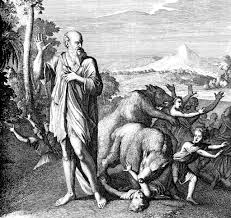
What our early ancestors did with dogs, we have done with Biblical prophets: we have domesticated them.  We have taken out, or chosen to ignore, many of the wild traits, in order to make it more comfortable to live with them.  But prophets have always been quite eccentric people that were not, at first blush, the best spokesmen for God.  Moses, the first great prophet, was slow of speech and tongue, according to his own words.  And he, by the power of God, changed a staff into a snake, caused the Nile to turn to blood, and brought a number of plagues upon Egypt.  Samuel, the great prophet who anointed the first kings of Israel, Saul and David, killed the Amalekite King Agag because Saul, was ordered by God to kill King Agag, but refused to do so.  Elisha was jeered at by some small
boys, who said, “‘Go up, baldhead!” and he cursed them, and two she-bears came out of the woods and tore them to pieces.  In chapter 20 of the Book of the Prophet Isaiah, God tells Isaiah, “Go and take off the sackcloth from your waist, and remove the sandals from your feet.  This he did, walking naked and barefoot.”  And it says in the next verse that this happened for 3 years.  Jeremiah told the king that Jerusalem, the place of the great Temple of the Lord, was going to be destroyed, and no one believed him.  And St. John the Baptist, the last and greatest of prophets, wore a camel-hair tunic and ate locusts and honey.  None of these seem to be people that civilized folk would want to be around.
And perhaps that is part of the reason they were never accepted in their home towns, as Jesus said in the Gospel today.  We tend to think of the prophets as nice guys who were able to tell the future.  We make them pretty well-dressed, white-bearded men.  But they railed against the injustices of their day and often became very unpopular in the process (walking around naked for 3 years can tend to make a person unpopular).  In many cases, they spoke out against the king, because he was the leader of the people.  But no matter whether they spoke out against a person or a situation, they always spoke the words that God gave them to say.
It’s cliché, but as prophets, God calls us to give comfort to the afflicted and affliction to the comfortable.  Jesus, as the source of prophecy and the Prophet about whom Moses spoke, to whom the Chosen People needed to listen, lived this out in a most perfect way.  To the Pharisees and scribes, those who were assured about their own righteousness, Jesus did not have great words to say, calling them “broods of vipers” and “white-washed sepulchers.”  But to the sinners, those who were often excluded from the daily life of Israel, Jesus preached love and acceptance, even while calling them, too, to conversion.  The woman caught in adultery is not stoned for her sin, but is told to go and sin no more.  The Samaritan woman at the well was convicted by Jesus about her many husbands, but she is also encouraged to drink the living water that comes from Jesus so that she can have eternal life.
There are parts of our life that God calls others to confront in us, and parts of our life that need the comfort of God.  When a person does not realize the conversion that needs to take place, God calls us to issue strong, dramatic words to help that person realize his or her need for God and a change in life.  When a person is beat up by the world, and despairing of any chance of redemption, God calls us to issue tender, loving words to help that person realize how much value he or she has.  We are not called to be nice, to say, “but that’s none of my business,” when we see sin and its effects in others.  But we are called to be prophets, by virtue of our baptism, who afflict the comfortable and comfort the afflicted.  
I’m not suggesting that we should walk around naked, not even for a day.  I’m not saying that we should curse people who make fun of us and send she-bears after them to tear them to pieces.  I’m not saying that we should threaten the destruction of a church.  But we also have to be careful about only saying things that people want to hear, things that do not make demands on life or call for conversion, things that do not challenge.  

God has called us to be prophets, and that in itself is a radical demand.  God calls us to speak His Word in our daily lives so that others can either turn from the evil they’re doing and live, and/or know just how much God loves them and wants the best for them.  Do not take the wild nature out of our prophetic call!  God save us from domesticated prophets!!

02 July 2018

Death and Resurrection

Thirteenth Sunday in Ordinary Time
Death.  It’s scary.  It seems so final.  What is beyond death is, generally, unknown.  It is the biggest change a person goes through in life, after being conceived and born.  We do everything we can to avoid death: we create new medicines; we buy creams to try to keep us looking young; we spend lots of money to fight death.  And yet, death comes to us all, some as young people, some as old.
Fighting death is, in one sense, natural for us because we were not made for death.  In the Garden of Eden, Adam and Eve cared for the Tree of Life, which would have allowed them to live forever.  But they were cast out of the garden, and banned from that tree.  And, as our first reading stated, “God did not make death.”  Death entered the world because when our first parents rejected God, they rejected life.  St. Paul says it this way in the Letter to the Romans: “Therefore, just as through one person sin entered the world, and through sin, death, and thus death came to all, inasmuch as all sinned…”  Everything in our being knows that we are made for eternal life, and yet we all have to experience death, and so we fight against it.
But, we need no longer fear death, because Jesus has conquered it by His Death and Resurrection.  Jesus gave a foretaste of that in today’s Gospel.  The woman with hemorrhages was getting worse; perhaps she was close to death.  But she went to Jesus because she had faith that He could make things better.  The little girl, the synagogue official’s daughter, was already dead by the time that Jesus got to her.  But her parents had faith, and she was returned to them.  Jesus unbound the power of death and gave new life.  Now, in both cases, the woman and the girl, they would later die.  But their faith changed the approach to death.  They followed Jesus’ command that we heard, “‘Do not be afraid; just have faith.’”
Death, for those who have faith in and follow Jesus should not be something that we fear so much.  Yes, we still may be anxious about the unknown, and we should not do anything to speed up our own death, but we need not be afraid if we have faith.  
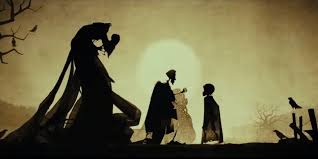
In “Harry Potter and the Deathly Hallows,” a story is told about the Deathly Hallows and three brothers.  Two of the three brothers try to cheat death.  But the third brother gained Death’s cloak of invisibility, and hid from death for many years.  After a long life, the third brother gave his cloak of invisibility to his son, and, as the story goes, “greeted death as an old friend.”  That’s not quite our view of death as Christians, but there is something that rings true in that story.  As believers in Jesus, death is not something we fear, but something that we can greet as a friend, because it is the necessary transition from this life to the life to come.  St. Augustine says that the only Christian who should fear death, is the one who has not truly followed Jesus, because eternal life will not be a life of joy, but a life of eternal torment.
If we are not afraid, if we have faith in Jesus, death is that which is the conclusion of our trials and testing on earth, and the beginning of our reward.  The student who has studied is not afraid of the final exam, but sees it as the necessary way to move towards graduation.  Our final judgment is not based on what we know, but, as St. John of the Cross states, whom we loved and how we loved.  But it still can allow us to graduate, to move on, to pass over, from this Valley of Tears to the eternal banquet of the Lamb of God in heaven.  
But death need not only be thought of in terms of our final breath.  We experience little deaths throughout our life, and our approach to those little deaths should be no less occasions of faith in what Jesus can do.  There’s the little deaths that happen in our family life: when we realize that our little baby is no longer a baby and is becoming more independent; when we lose a job; when, despite years of Catholic education and formation in the home, a child breaks our heart and stops practicing the faith.  There’s also little deaths that happen in our faith life: when we lose a pastor that we love; up 75 a bit and then down 475, St. Mary in Mt. Morris announced last Tuesday that, effective immediately, the school is closed; in our own parish as we make the transition to two weekend Masses from three.  All of those and more are little deaths in our lives.  We can fear it, we can fight it, we can kick and scream about it, or we can be not afraid and have faith in Jesus, trusting that He who brought us to all those situations and more will carry us through it.

Because our faith and our hope is in what is beyond the death, and that’s new life.  When Jesus rose from the dead He blazed a trail for us so that where He has gone, we hope to follow.  And although we have never seen what is on the other side of our own death, we have seen what is on the other side of Jesus’ death, and that is new life, transfigured life, glorified life.  To gain that new, transfigured, and glorified life, we need only follow Jesus and His way.  As we face death, in its many forms, Jesus invites us today: “‘Do not be afraid; just have faith.’”

25 June 2018

Celebrating Birthdays

Solemnity of the Nativity of St. John the Baptist
In our own times, birthdays are big deals.  Everybody I know celebrates birthdays, or avoids their celebration because they don’t want to be reminded that they’re going older.  Some people celebrate half birthdays (another excuse to party, I suppose), and some priests I know joke about celebrating an octave (8 consecutive days) of the day of their birth, just like we do for Jesus in the Octave of Christmas.
But for the Church, we generally celebrate the day a person died.  We don’t do this because we’re morbid, but because, especially as the Church first started celebrating holy men and women, we were celebrating martyrs, those who died for the faith.  So the date of their death was actually the date of their victory through Christ, the day they were born to eternal life; we might call it their heavenly birthday.  So today’s celebration, which supersedes a Sunday celebration, something not all that common, means something pretty big.  There are really only three birthdays that the Church celebrates: the Nativity of the Lord on 25 December, which is one of the holiest days of the year, after Easter; the Nativity of the Blessed Virgin Mary on 8 September, which, when it falls on a Sunday, is not celebrated; and the Nativity of St. John the Baptist, which is one of the handful of days in the Church’s calendar that has different readings for the vigil, the night before, than for the day.

Birthplace of St. John the Baptist
in En Kerem
And St. John the Baptist, the Precursor, as he is also called, is a pretty big deal.  He’s not as holy as the Blessed Virgin Mary, but he prepares the way for the Lord.  He plows the ground, as it were, so that the seed of faith that Jesus plants, can grow in the hearts of the men and women of his time.
John is known as being, what we would call a radical: he wears camel hair and eats locusts and honey.  He lives near the Jordan River, in a mainly uninhabited place, and tells everybody that they’re sinners, in need of repentance.  He calls out King Herod for his unlawful marriage to his brother’s wife, and St. John loses his head for it.  But the word radical does not really mean extreme.  Radical comes from the Latin word radix, which means root.  Our English word radish is simply a transliteration of the Latin word, which, in another form can be radice.  Not a very inventive word for not a very special root that we eat.  But John goes to the root of following Jesus: proclaiming repentance in preparation for Jesus.
In the Gospel on Saturday we hear about how John’s conception is achieved miraculously, but without faith from his father, Zechariah, believing it could happen, and so he is struck mute by the Archangel Gabriel.  And in the Gospel on Sunday, we hear about the naming of John, which frees Zechariah’s tongue and allows him to proclaim God’s wonders again.  But in both the first readings, we hear about being a prophet, speaking God’s Word to the people, which is exactly the mission of St. John the Baptist.
And that is exactly the mission of all of us: to proclaim God’s Word.  And that Word is not so much a particular teaching (though we can teach others about what God says), but a Person, the eternal Word of God that St. John the Apostle and Evangelist talks about, the Word that was in the beginning, the Word that was with God and is God.  We, like Jeremiah, like Isaiah, like St. John the Baptist, are called to prepare the way of the Lord, to make straight His paths.  
But, you might say, if you’re paying attention and not reading your bulletin, Jesus has already come!  We don’t need to prepare for Him, any more than we need to prepare for the Belgium vs. Panama World Cup Soccer game, because it’s already come.  But, in fact, Jesus’ coming happens daily to each person.  Each day Jesus wants to enter our hearts.  But in order to do that, we have to be prepared for him, and in order to be prepared, someone has to help us prepare, and that’s where we come in.  Each day we are called to help people see Jesus in what we say and in what we do: in the kind word to a person who is having a rough day; in the challenging word that we speak with love to a person who is not living as Jesus teaches us; in serving people in the food pantry.  But we have to be purposeful about it, about making it about Jesus.  When the person asks us why we are being kind to them, or why we are lovingly challenging them, or why we are serving them, we need to witness to Jesus and say it’s because Jesus loves them, and as followers of Jesus so do we.  It’s not enough to hope that they’ll catch on.
Imagine if John had been calling people to repentance, but then when Jesus came by, not said, “Behold the Lamb of God!”  He would not have completed his mission.  If, when John was baptizing and being asked why, John said, “I don’t really feel comfortable talking about it,” instead of, “One is coming after me who will baptize you with fire!”, maybe we wouldn’t be celebrating the Nativity of St. John the Baptist.  But we are.  And that in itself is a challenge to us to be like John, to prepare the way of the Lord, to help Jesus find a welcome home by our participation in the mission to proclaim the Word of God, the eternal Word of God, Jesus Christ in our daily words and actions.  

Be radical!  Embrace your mission!  Prepare the way for the Lord!