Showing posts with label Matthew 5. Show all posts

29 June 2026

War and Peace Begins with Us

Fifth Sunday after Pentecost

Pope Pius XII
    In the name of the Father, and of the Son, and of the Holy Spirit.  Amen.  “Nothing is lost by peace; everything may be lost by war.”  Who do you suppose said this?  Pope Leo XIV?  Pope Francis?  It was Pope Pius XII in 1939, a week before historians say that World War II began.  “It is hardly possible to imagine that in an atomic age era, war could be used as an instrument of justice.”  That was Pope St. John XXIII in his Encyclical, Pacem in Terris.  As we hopefully find ourselves at the end of another war, this time with Iran, and given the readings today, I thought it important to reflect on violence and peace on this fifth Sunday after Pentecost.
    To be fair, declarations of war are the proper authority of governments.  Yet the Church has something to say about war and the moral questions and implications of war.  But today’s homily is not for members of Congress nor for heads of state.  Today’s homily is for you, not so much as a one-sided talking to about whether or not we should have entered into a war (declared or not) in Iran, but what we contribute to war or peace.  
    St. Peter, our first pope, tells us today in the epistle that Christ does not call us to return evil for evil, and that we “must turn from evil and do good, seek peace and follow after it.”  Why?  Because, frankly, we’re bad at meting out just punishment.  It doesn’t mean that we can’t, but we’re not very good at it.  And we see this from a young age.  There you are, a young child, minding your own business, riding in a car with your parents on a beautiful sunny day, maybe even on your way to or coming from church, and your sister decides to push your buttons by poking you in the arm.  Now, you know your parents have told you to use your words, so you tell your sister to stop.  But this only eggs her on all the more, and she keeps poking you.  So you hit her, to show her that she can’t pick on you without repercussions.  But she doesn’t want to look like a weakling, so she pushes you back, until you’re in a full-on car fight and your parents look back and tell you both to cut it out, and your dad says, “If I have to pull this car over…”
    When we respond to perceived wrongs, we tend to give a little more than we got, as a deterrent to the person wronging us.  In our attempt to be just, we tend to go a little beyond justice.  But then the other person feels aggrieved, and has to respond to us, and goes a little beyond what we deserve.  And so the cycle starts and sometimes even goes to a point we never would have imagined.
    St. James asks in his epistle, “Where do the wars and where do the conflicts among you come from?  Is it not from your passions?”  Our Lord knew that we often don’t hit the target of justice and tend to give more punishment than others deserve.  And so, while the Decalogue forbade murdering another (“Thou shalt not kill”), Christ the New Moses teaches us that we have to nip anger in the bud in order to stop unjust force, and change our hearts so that we act from a place of peace, not a place of wrath or vengeance.  
G.K. Chesterton
    “But,” you may say, “what about the Nazis?  Shouldn’t we have fought them?”  Before answering that, if you have to use Nazi’s to justify your argument, you probably haven’t developed your arguments well enough, and simply disagree with the conclusion without having an issue with individual propositions that lead to the conclusion.  But, having said that, the Church does allow, in some limited cases, that war, primarily in self-defense, is necessary.  And this finds its basis in our individual right, and sometimes duty, to defend ourselves and others.  A parent who doesn’t defend their child from violence is a coward, not a virtuous person.  But, again, what is the motivation?  Is it because we really don’t like the aggressor and we’re glad we finally have a reason to knock his lights out?  Or is it because we love our children and don’t want any harm to come to them.  G.K. Chesterton wisely wrote, “The true soldier fights not because he hates what is in front of him, but because he loves what is behind him.”  The motivation comes not from antagonism towards others, but love of those he or she is bound to protect by some obligation, be it a parent of a child, a law enforcement officer of a community, or a soldier of a nation.  
    When we “give it to them” to prove that we are the victors and the stronger person, we tend to perpetual the cycle of violence.  Even looking at World War II, most historians agree that the ingredients for the rise of the Nazi party came from an overaggressive and punitive response to Germany and Austria in the Treaty of Versailles.  The allies were so hurt by the people and materials lost in World War I, that they allowed vengeance to govern the resumption of peace, rather than trying to truly bring back justice and not going beyond that.  
    In our lives, we have to ask ourselves if we, or probably how we, perpetual a cycle of violence.  Even if I am simply acting only out of anger or animus towards another, I am contributing, even in a very small way, to a mentality that might makes right and violence is the only answer that works.  While we don’t have to make decisions on going to war, we do have to decide how we respond to injustices.  Are we willing, without denying our right to self-defense and defense of others, especially the vulnerable, to seek good rather than evil, peace rather than conflict?  Do my insults and harsh words of others build up the common good, or make others feel victimized so that they have to get back at me?  If every person learns to give better than you get, will the people who get elected to positions of government just carry that over into international relations?  
    God does not call us to be doormats and allow others to victimize us without consequence.  But if we can die to our passions which seek retribution; if we can truly seek the good of the other, even if we have to do so from afar, then we can, in our own small way, promote peace, which comes when people feel they are treated with dignity.  If we wish to stop wars, violence, and hatred, then we cannot simply state that we have not murdered anyone.  As Christ teaches us, we have to first work on eliminating the anger and hatred in our own hearts, and love others as Christ has loved us.  Who with the Father and the Holy Spirit is God, for ever and ever.  Amen.   

16 February 2026

Bars Low and High

Sixth Sunday in Ordinary Time–Rite of Sending
    Do the red and say the black.  When it comes to the sacraments, that’s what the Church asks priests and deacons to do.  The red refers to the rubrics, the words literally written in red type-face, that say what to do.  The black refers to the words that the minister should say.  When the priest or the deacon does the red and says the black, we know that God makes the sacrament take place.  So, for example, if the priest, while pouring water over the head, says the words, “I baptize you in the name of the Father, and of the Son, and of the Holy Spirit,” the person truly has received baptism.  If the priest changes the words, or uses a different liquid other than water, the sacrament didn’t take place.
    But that’s a pretty low bar.  Sometimes a priest will say, “As long as I do the red and say the black, I know I’m good.”  But there’s so much more to exercising ministry well than just doing the minimum.  A priest who deeply loves Jesus and wants to communicate that saving, sacramental grace will do more than just the least required.  I could say in a monotonous and quick-paced voice, “I baptize you in the name of the Father, and of the Son, and of the Holy Spirit,” and people’s faith that this person has just become a child of God and a member of the Church and had original sin washed away would not increase.  Do we really want our celebrations of the sacraments, especially by those ordained to act with the power of Christ, just to be the minimum?

    You may wonder right now what that has to do with you?  I’m not, after all, preaching to a seminary crowd, even if we have future priests in the pews.  But in our Gospel, Jesus, the new Moses, gives a new law that goes beyond the bare minimum and actually helps support the conversion to which God calls all His children.  The Ten Commandments are good and help us to lead a good life.  But they’re more of the minimum, not the fullness of living as a child of God.
    Not many, if any, of us have murdered someone, which the fifth commandment prohibits.  I can honestly say, as I’m sure many of you can, that I have not even planned on how to murder someone because I wanted them dead.  I have not even planned on getting a room with a woman of ill-repute to commit adultery.  I have never considered putting my hand on a Bible to make God as my witness and then lying.  So I, and probably many of you, have managed to reach the low bar of not breaking those three commandments.
    But how many times have we harbored serious anger in our hearts?  How many times have we wished ill on another person because of some wrong they have done to us?  Or in what ways have we used another person, even if only in our minds, to give us some sexual gratification?  How many times have we wished that we could get away with adultery without suffering any consequences?  How many times have we lingered on a image, be it in person or online, of a scantily clad member of the opposite sex?  Or when are the occasions where we “bend” the truth, or convince ourselves that it’s only a white lie and it won’t hurt that many people?  Or when do we make the mental calculation that a small lie will not hurt someone else’s feelings?
    What Christ reveals to us today is that He calls us not only to do the right things, but to go deeper and make sure our hearts really belong to Him.  If we truly wish to follow Him, we have to allow His grace to transform every part of our lives: not just our external actions, but even the desires of our hearts.  Some transformation of the world would certainly happen if no one murdered another, or committed adultery with another, or swore to God and lied.  But imagine how much better life would be if we didn’t give room for rage and vengeance, and didn’t use others at all as objects of our lust, or we knew that a person’s word meant clearly what was said.  As Louis Armstrong sang, “What a wonderful world”!
    My dear catechumens: today you will be sent, in a manner of speaking, to the Rite of Election.  Your formation up to now has included how Catholics are to live, what they are to do and what they are not to do.  But you hopefully have been growing more and more in love with God: the Father, the Son, and the Holy Spirit.  And during these next weeks, especially during the Scrutinies during Lent, we will ask God to draw you even closer to Him, and transform your hearts.  While a major change will occur at your baptism, where God will wash away all your sins, you, like all of us, will need to continue to work on allowing God’s grace to transform our hearts and desires throughout the rest of your life.  
    But God promises, both to you and to all of us, to give us what we need to meet, not just the low bar, but even the higher bar of Christian perfection.  God promises, especially through our worthy reception of Holy Communion, to make us disciples not only on the outside, but on the inside, where our actions begin.  Especially through our upcoming Lenten observances, may God help us to live as a people transformed from death to life, from darkness to light, from sin to holiness, so that we can be effective witnesses of the power of the Gospel and transform this world, by the power of God’s grace, to be the place He originally created it to be. 

02 February 2026

Clogging the Drain

Fourth Sunday in Ordinary Time
    Growing up, my dad and I were outnumbered, three females to two males.  One of the practical realities of having three women in the house was that hair could be found everywhere.  In most places it was just an inconvenience (like on couches, countertops, etc.).  But, when it came to bathroom sinks and tubs, it had a more significant impact.  Yes, men also shed hair a little, but when long hair starts going down drains, it has the tendency to clump up and block the drain, creating a blockage that can slow or even stop water flowing down the drain, requiring Drano or snaking the drain, if it gets bad enough.
    Pride is like the clumps of hair that blocks the drain of God’s grace.  Pride puts up an barrier (the Latin word is obex) to the flow of God’s life that He gives through the sacraments and the sacramentals (like the Rosary, daily devotions, reading of Scripture, etc.).  The opposite of pride is humility, which comes up in all our readings today, if not explicitly, implicitly.  
    What is it about humility that makes it such a great virtue?  Our own times don’t seem to value humility, and probably would see humility as a denigration of our self-esteem.  We live in a world where, if I think it, it must be true.  That’s the logical reasoning behind the phrase, “live your truth.”  It makes the individual the judge of reality, rather than starting with reality and adjusting to what reality gives us.  Imagine for a second that your truth is that gravity doesn’t exist.  You will quickly learn that “your truth” doesn’t really matter as you try to walk off a cliff.
    Humility does not primarily consist, however, in self-deprecation.  Humility is, according to such saints as St. Thomas Aquinas, whose feast day we celebrated last Wednesday, and St. Teresa of Avila, the acknowledgment of the truth.  Pride goes above who we are; self-deprecation does not give ourselves enough credit.  The truth stands in the middle, where we recognize who we truly are and who we are not.
    So how does humility mean a clean pipe, not filled with clogs of the hair of pride?  Humility allows our hearts to be open to God’s grace because it recognizes that we stand in need of God’s grace.  And then, when God’s grace flows, it allows us to accomplish what God wants and what will truly make us happy.  If I don’t think I need God because of my pride, or if I don’t think God would ever want to work with me (self-deprecation), I close myself off to God’s grace, and therefore close myself off to the power that allows me to do truly great things, which are only possible by God’s grace.  If I act as if I am God, why would I open myself up to God’s help?  If I don’t think I have anything good or worthy in me, I wouldn’t think that God would send His grace to me anyway, and would miss out on those opportunities.  
    God chooses the humble because He knows He can work with them.  The people “humble and lowly” from the first reading receive refuge and safety from God because they know they need Him, rather than trusting in political power, whether of themselves or of neighboring kingdoms.  The ones the world considers fools, “the lowly and despised of the world” from our second reading, God elevates because His power can work through them.  If we could have saved ourselves we would have done it.  But we couldn’t.  Even the best couldn’t open up heaven, because pride is exactly what closed it off.  Adam and Eve wanted to be gods on their own terms, even though, when they didn’t try to be gods God walked with them and provided everything they needed.  They had a healthy love of God and each other, as well as the creation entrusted to their care.  Only when they strove to be gods on their own terms did they begin to hide from God and hide their bodies from each other, and eventually even the animals started to avoid them.  

Church of the Beatitudes in the Holy Land
   The Beatitudes of the Gospel show us ways to be humble.  The poor in spirit are those who know that they need God; those who mourn know that all true comfort comes from God; the meek do not strive after things beyond them; those who hunger and thirst for righteousness know that it cannot come merely from their own efforts; the merciful recognize they are not perfect and need to receive and show forgiveness; the clean of heart understand that not all their desires should be followed; the peacemakers aim for the peace that comes when people receive what is their due; those who are persecuted for the sake of righteousness know that they do not always have to restore right order on their own, but that true righteousness comes from God; those who are injured for the sake of Jesus understand that vengeance belongs to God, and He will repay, either through allowing repentance or in the justice which only God can perfectly give.  Those are tall orders, but when we live opposite the beatitudes, we clog our souls with blockages to God’s grace and we live in the misery that is the opposite of beatitude.  
    As we get closer to Lent, perhaps now is a good time to think of how your Lenten practices can help you grow in humility.  I know I still have a long ways to grow in this virtue that allows me to be a conduit of God’s grace.  May God, especially through the Sacrament of Penance, snake our souls with His mercy so that we can live a humble life, and allow God to do powerful things through us by His grace. 

14 July 2025

How To Fix Us

Fifth Sunday after Pentecost
    In the name of the Father, and of the Son, and of the Holy Spirit.  Amen.  There’s only so much repair work that can be done on an object before you have to buy a new one.  Patching it together eventually does not work.  As kids, when we would get a hole in the knees of our school uniform pants, mom or grandma would patch it up.  But if the patch got a hole in it, or if the stitching kept coming undone, mom and dad would break down and buy new navy blue pants.  Or maybe you had something that was duct taped together, until the adhesive started to wear out, and you had to finally get a new whatever rather than just taping it up again and again.  
    When we talk about the human person and following Christ, we’re not talking about a simple repair.  We need a comprehensive overhaul.  We may think we just need a few tweaks here and there, but in reality, what Christ desires of His followers is not possible except by His grace.  In order for our righteousness to surpass that of the Scribes and Pharisees, to live the deeper law that Christ gave in the Beatitudes, we can’t just muscle through ourselves.  The new law requires grace.  In order to exhibit the virtues St. Peter enumerates in the epistle, we cannot simply struggle hard enough in order to live that way.  We need Christ’s grace to transform us.
    When we talk about conversion, we often use the Greek word, metanoia.  That word comes from two Greek words, 𝜇𝜀𝜏𝛼, meaning change, and 𝜈𝜊𝜐𝜍, meaning mind.  But, perhaps better than mind is the idea of seeing the world differently.  Conversion, from the Latin words cum and versio, meaning to turn towards something, means that we see the world differently because we have turned ourselves towards Christ and have taken on His mind.  But it even goes beyond the intellect.  Conversion–metanoia–means that even our hearts are changed so that we re-direct our loves to the way that Christ loves.  
    And only when we love the way that Christ loves and see the way that Christ sees can return a blessing for a curse.  Only when we allow the grace of God to change us can we not only avoid murdering others, as the commandment prescribes, but also avoid hatred towards the other in our heart, the deeper meaning of the word “anger” that St. Matthew uses in the Gospel.  
    We don’t have it in this passage, but our Lord raises the bar for the sixth commandment as well as the fifth commandment.  Only when we allow the grace of God to change us so that we love as He loves can we not only avoid committing adultery and fornication, but we go deeper and avoid even using someone in our hearts and minds.  And for the eighth commandment, not only do we not swear by anything–not by heaven, not by Jerusalem, not by our head–but we let our yes mean yes and our no mean no.  We speak straightforwardly.
    Too often we try to pull ourselves up by our bootstraps, and then get frustrated when we cannot live up to the standard that we want, or the standard to which Christ calls us.  But we have to recognize that we are broken, and that Christ alone can repair us.  This is not to say that we are totally depraved, as some Protestants hold.  God still made us good, and that goodness exists in us no matter what.  However, that goodness does not always operate in us because of sin and our draw towards it.  And the healing that we need, the repair, only comes by what Christ has done for us.  Only He can heal what has wounded us.  It would be like trying to heal our own compound fracture without having any medical knowledge beyond a basic grasp of the body.  We might get some things right, but we will never be able to heal ourselves as we need to be healed to be whole again without the help of the Divine Physician.
    And this should give us hope.  Our salvation does not rest on us alone.  We do have to cooperate in it, and Christ gives us many opportunities to work with Him in going to heaven, but if we could save ourselves, all that Christ did and taught would be wholly unnecessary, which means that Abraham would have been able to go to heaven without a redeemer.  But that would make the sacrifice of Christ unnecessary, at least for some, which would be cruel to make a Son go through if it were not truly necessary.
    This is the great battle between Christ and the Pharisees.  They complained about the Lord always spending time with sinners, but the sinners were the ones who knew they were broken and couldn’t fix themselves.  The Pharisees thought they were fine, that they could live the Old Law perfectly on their own, and so did not need a redeemer, which made many of them miss out on the salvation Christ was offering.  

    Like the first line of the Coldplay song, “Fix You,” says, we tried our best but we didn’t succeed.  We tried to fix ourselves, but it didn’t work.  We needed a healer, a Salvator, to use the Latin, to fix what sin had broken in us.  And that’s precisely what Christ came to do.  He came to fix us so that we could offer blessings when we are cursed, so that we could be compassionate, so that our lips would not speak deceit.  Christ came so that our hearts and minds could be changed not only to avoid the grave actions of sin, but even to change the heart whence those grave actions arose.  We cannot do it on our own.  We cannot repair ourselves enough to be prepared for heaven.  We need Christ to fix us.  Christ who, with the Father and the Holy Spirit lives and reigns for ever and ever.  Amen.   

30 June 2023

Revenge

Fifth Sunday after Pentecost
    In the name of the Father, and of the Son, and of the Holy Spirit.  Amen.  When I was (I think) in first grade, there were these fifth graders at my parochial school who liked to pick on me.  They weren’t horrible, but they would sometimes just grab on to my arms, which I didn’t like.  One time they were holding my arms on the playground, and I could feel the frustration welling up inside of me, wanting to break free of their grasp, but not having the physical strength to wrest myself away from them, so I did what I could: I bit one of their arms.  They let go, and I was free; at least until a teacher found out and I had to go to the principal’s office, and eventually write an apology letter to them.
    Revenge is a primal urge that we all can have.  We experience some sort of injustice, no matter how big or small, and we want to make it right on our own terms.  The sense that something is not right and should be addressed, which leads to the emotion we call anger, is a sign that we recognize good and evil.  If we didn’t want wrong things to be righted, that would not be a good sign of the state of our soul.
    The problem is that our view of what is truly just is not always accurate, since it is limited by our restricted view of reality (as compared to God’s omniscient view of reality), and our passions for justice often goes beyond what is truly just.  When we respond to someone who has done us wrong, we tend to give them a little more than they gave us, just to make sure that they know not to mess with us again.  It’s like kids in the back of a car, where one looks at the other in a funny way, so then the other pokes the first with a finger, and then the first hits the other with a hand, and it just keeps escalating (until mom or dad says, “If I have to pull this car over…” and metes out their best justice to get them both to stop). 
    Which is why St. Peter and our Lord both instruct us this weekend not to give into revenge.  St. Peter tells us not to render evil for evil, but a blessing instead.  And Christ tells us that the true life of God to which He calls us does not suffice not to kill someone, but to stop that anger in the heart, which is where all action begins.  Murder, which the commandment forbids, is the end result of seeking to administer justice on our own terms, which often, as I said, goes beyond true justice.

St. Paul the Apostle
    St. Paul, quoting Leviticus and Deuteronomy, reminds us that vengeance belongs to the Lord.  So our desire to exact punishment on those who have done us wrong is also a form of pride, a desire to supplant God and put ourselves in His place.  St. James takes up a similar theme in his epistle when he writes, “There is one…judge who is able to save or to destroy.  Who then are you to judge your neighbor?”  When we try to take revenge, we are trying to take the place of God, falling to the temptation that the enemy gave to Eve in the garden, when he enticed her to evil by suggesting that eating the fruit would make her like God.
    But if we truly wish to be like God, then we should seek to reconcile whenever possible.  Yes, God is the judge of the world, and He will judge justly.  But He is also merciful, because in Him justice and mercy have embraced.  He is patient with us sinners, giving us so many opportunities to turn away from our sins and repent, so that we can have union with Him.  That is why our Lord not only teaches us that we should seek to root out anger in our hearts so that we don’t turn to revenge, but also encourages us to make sure that we reconcile before we offer our sacrifice to God in the Mass.  How can we be in communion with others through Holy Communion if we are at the same time seeking their downfall? 
    Instead, God wants us to bear others faults patiently, as he bears ours.  This doesn’t mean that we can’t correct and call others to right behavior, but no matter what, not to carry a grudge if others have done us wrong and have not repented.  A great way to accomplish this is through the Sacrament of Penance, which we often call confession.  Through the sacrament, we are not only reconciled with God, but we are also reconciled with the the community, both of whom the priest represents.  We turn to our brother and ask his mercy for our offenses, and then God invites us to be merciful with others, just as He has been merciful with us.  And having been reconciled with God and with the community, our gift is then acceptable to God, because it is truly offered in communion with Him and with the rest of the Church. 
    A good examination of conscience today will ask ourselves: against whom do I seek revenge?  What harm have others done to me that I have not forgiven?  What anger do I bear in my heart towards my neighbor?  What might they bear against me?  If I truly wish to be like God, then I should offer opportunities to show mercy, just as we have been shown mercy by our Lord Jesus Christ, who with the Father and the Holy Spirit is God for ever and ever.  Amen.  

10 February 2023

Sweat the Small Stuff

Sixth Sunday in Ordinary Time

   “Don’t sweat the small stuff.”  We’ve probably heard that phrase a time or two.  And in some cases it can be quite good advice.  One can get so focused on little things that you miss the bigger things of life.  Or, to use another cliché, “you can’t see the forest from the trees.”  
    But when it comes to our life in Christ, when it comes to following Jesus, that’s not the message we hear today.  We are still advised to take care of the big issues, e.g. murder, adultery, divorce, and false oaths, but Jesus encourages us to go deeper, to look to the smaller roots that lead to those bigger problems.
    Because those big ones can be easy (at least to some or most) to keep.  Most people are not going to murder another person.  Most married couples do not cheat on their spouse.  Most people do not “swear to God” and then do not follow through.  And if that’s all we think that following Jesus is about, then we probably think we’re pretty good.  Indeed, many have come to think that as long as they’re not a horrible sinner, then they’re probably going straight to heaven after death.  It’s a nice wish, but not one that is in line with the Gospel.
    Jesus reminds us that the small stuff is precisely where the big stuff begins.  If you have enough trees to do get a forest.  In following Jesus, it does not suffice not to be an egregious sinner.  Jesus desires us to have a change of heart.  In Church language we use the Greek word metanoia.  In fact, what we translate as repent, often comes from that Greek word “metanoia,” which could also be translated, “change your hearts.”  
    And a heart that is changed to be more like Jesus is a heart that recognizes how those smaller desires in our hearts lead to action.  Every action comes from a desire, really, but those big sins we see in seminal form by smaller sins and desires that stem from the heart.
    Very few, if any, wake up one day and say, “You know what?  I haven’t murdered anyone lately.  I think I’ll give that a try!”  No, it starts with that person that we find annoying, and an anger with that person in our heart.  It continues with us calling others names, insulting them, giving them the middle finger.  It builds to desiring evil for another person whom we do not like, hoping that some bad happens to them so that they’re taught a lesson.  Those may not always lead to murder, to killing an innocent human being, but every homicide started many steps back with anger in the heart.
    Very few, if any, wake up one day and say, “I haven’t cheated on my spouse” or “I haven’t messed around with my girlfriend” (ladies, you can replace this and later examples with the male counterpart) and then proceed to be unfaithful and unchaste.  It starts with the song we hear on Spotify, or the Netflix drama we watch.  It continues with that longer look we take of the attractive woman at work or in class, or the racy adds we linger on that pop-up on the Internet.  It builds through watching pornography, or being alone in a room with a girlfriend when no one else is home, never intending to cross that line, but hoping to get as close to that line as possible.  
    When our desires and our hearts are rightly ordered, then the big stuff never enters our mind.  When our desires and our hearts run wild, and follow any desire they have for small things, it is much easier to give into bigger evils.  Again, smaller evils don’t necessarily lead to bigger evils, but even those small evils show that God is not number one, which means that we’re not ready for heaven, where God is all in all.  
    Jesus says later in the Gospel according to St. Matthew that, “‘the kingdom of heaven suffers violence, and the violent are taking it by force.’”  Following Jesus is not for sissies or wimps or whatever other word you want to use.  Following Jesus means fighting battles day in and day out.  It is not for the faint of heart.  Following Jesus means we fight those small disordered desires in our hearts because even in themselves acting on those small disordered desires means that we’re pulling away from God.  If someone were trying to take our life, we would fight with all we had, using any means necessary to preserve it.  God wants us to use the same, all-out mentality when it comes to our eternal salvation, to eternal life.  Fight with everything we have to deny ourselves those little sins that we often overlook.
    The good news is that, just as we should sweat the small stuff, doing small things for Christ also can help us beyond what we imagine.  Just as small disordered desires lead us away from God, and can lead to much greater sins, so small acts of fidelity to God can build up to greater witness that God is number one in our life.  That excuse for the person who cut us off on the road, thinking that the person may be going to a dying family member rather than cursing them out; that change of the channel when something lewd comes on TV, or going to a different page when the Internet brings us a scantily clad member of the opposite sex; that act of kindness towards a person for whom we do not particularly care; the putting of a filter on the phone or the choosing of an accountability partner who helps us avoid pornographic sites; all those things help change our heart for the better, and make us better disciples of Christ.
    The good news is also that we don’t have to fight alone.  No good, whether small or great, is possible without the grace of Christ leading us there, accompanying us through it, and completing it.  And God showers down his grace like rain at all moments of our life so that we can say no to evil and yes to good.  Pay attention to the small desires of the heart.  Keep what is good, reject what is evil, so that, by God’s grace, we will be as prepared as we can be for our judgment, and hopefully be welcomed into eternal life in heaven.  

06 February 2023

For the Right Reasons

 Fifth Sunday in Ordinary Time

    When I started working out over a year ago, I did so at the suggestion of a friend, who encouraged me to lift weights in order to be healthier.  Along the way, around 9 months in, I was getting pretty frustrated because, while I had lost some weight, especially around my waist, I didn’t seem to be gaining muscle mass.  I had worked out for 9 months, and I didn’t have a chiseled body!  When I complained about this to my friend, he told me that lifting weights and exercising is a good unto itself, and shouldn’t be done just to make one look more toned.  I was doing all the right things, but I had started doing them for the wrong reasons.
    We hear this list in our first reading today about the things God wants us to do: feed the hungry; shelter the oppressed and homeless; clothe the naked; remove oppression, false accusation, and malicious speech.  And this seems to be backed up in our Gospel when Jesus tells us to be the salt of the earth and the light of the world.  So we’ve got our list of things to do.  But, you can do all those things even if you’re not Catholic, even if you’re not Christian.  And I’m sure that there are a number of people who have left the Church over the years who have heard the message preached when they were younger about all the ways that they are supposed to love their neighbor, but mistakenly thought that they didn’t have to go to Mass, or believe in the Eucharist, or go to confession, or abstain from meat on Fridays, or not live with a significant other before marriage, or anything else that goes along with being Catholic.  You can almost hear the person asking why they need to do all those other things, as long as they are doing what Isaiah said in our first reading God wanted us to do.
    That person was like me: doing the right things but for the wrong reasons.  And that person probably heard the same message I did growing up: just love your neighbor and you will be good.  Bishops, priests, catechists, and all those who taught the faith had a tendency to boil the significance of being Catholic down to being a social worker or do-gooder.  And, to be clear, we are called to do those things.  But we do them, not because we earn our salvation by doing certain things, but as a result of our relationship with Christ.  
    St. Paul said in our second reading that he resolved to know nothing while he was with the Corinthians except Jesus Christ.  For St. Paul, knowing Christ (and not just knowing facts about Him) was the most important, and he wanted to pass on the message to the people of Corinth.  Everything in Paul’s life revolved around and was a result of his relationship with Christ.  His missionary zeal came because Christ called him; his sufferings were bearable because Christ was with him; his demonstrations of the Gospel came from the Holy Spirit, who was given by Christ.  But all of it was the consequence of St. Paul’s relationship with Christ, not a replacement for it.
    Being Catholic is not about being a do-gooder, or promoting a social program, or being a philanthropist.  Being Catholic is about being in a saving relationship with Jesus Christ, who saves us from sin and death, from which we cannot save ourselves.  Going to confession and Mass; abstaining from meat on Fridays; not living together before marriage; and all the moral teachings of the Church follow from being a disciple of Jesus Christ, because He has revealed to us the way to salvation and the means of true and lasting happiness.  They are not added on rules form old men who have nothing better to do with their time.  Those, and many others, are ways that we deepen our relationship with Christ and live a life like His (as St. Paul says, “It is no longer I who live but Christ who lives in me”).  
    And as we become more and more like Christ, being obedient to the will of the Father, not only do we want to spend time with Him in adoration and in the Church, and mortify our bodies to help us say no to our fallen sinful nature and yes to the divine nature that God implants in us in baptism, but we also want to love the ones that Christ loves, and show that love in a variety of ways.  That love is shown by feeding the hungry, clothing the naked, sheltering the homeless, visiting the sick and imprisoned, and all the corporal works of mercy.  
    If we are truly becoming more and more like Christ, we cannot help but show that love by what we do.  Think of it like a marriage: if we truly love a spouse, then we show it.  But the things that we do are results and demonstrations of that love, not replacements for it.  A person can do all the things that a spouse would do, but if that person is not the spouse, it doesn’t have the same effect.
    Pope Benedict XVI, who should be canonized and declared a Doctor of the Church for his holiness of life, humility, and extremely insightful writings, once wrote in his Encyclical Deus caritas est, “Being Christian is not the result of an ethical choice or a lofty idea, but the encounter with an event, a person, which gives life a new horizon and a decisive direction.”  Being Catholic is first and foremost about our relationship with Christ, which moves us to do certain things and avoid others.  As Catholics we serve others, not simply as a philosophy of service, but as the consequence of knowing and loving Jesus Christ.  Let’s not just do the “right things,” but do them for the right reasons.

30 January 2023

Lord, It's Hard to Be Humble

 Fourth Sunday in Ordinary Time

    There certainly is a country song for every occasion and situation, and as I read over this weekend’s readings, one came to mind called, “It’s Hard to Be Humble.”  When I first heard Willie Nelson singing it, someone I know comes to mind.  I have to adapt the lyrics a little to make them fit for church, but the refrain goes, “Oh Lord, it’s hard to be humble/ When you’re perfect in every way. / I can’t wait to look in the mirror / Cause I get better lookin’ each day. / To know me is to love me. / I must be a [heck] of a man. / Oh Lord, it’s hard to be humble/ But I’m doin’ the best that I can.”  The someone I thought of isn’t really that bad, but it does bear some resemblance at times, and brings a smile to my face.
    Humility is an often unpracticed and misunderstood virtue.  It sounds good when it’s encouraged by Tim McGraw in his song, “Humble and Kind,” but then we get busy with daily life, and we default to "My Way” by Frank Sinatra.  
    Often times we think of humility as putting ourselves down.  We may think we need to pretend that we’re not good at something, or don’t have particular gifts.  But that is not humility.  Humility is the acknowledgment of the truth, not the hiding of truth.  Romano Guardini, a great German Catholic author form the mid-twentieth century, wrote that St. Francis of Assisi kneeling before the pope was not an act of humility, but of honesty.  But St. Francis kissing the leper because he saw Christ in that leper was a great act of humility.
    Humility is also not puffing ourselves up, or lording who we are or what gifts we have over others.  When we think about bragging, we don’t think of that as an example of humility, and rightly so.  We sometimes also use the word arrogant as an antonym of humility.  
    Getting back to music, pride, another opposite vice to humility, is precisely expressed in the song, “My Way.”  Pride is a turning in on oneself, an elevation of the ego, an exaltation of one’s personal desires and wants over that of others.  Pride considers others, but only inasmuch as they promote the self or advance the desires of oneself.  Others exist only as pawns to be used.  Rarely does a person operate solely out of pride; we often do think of others, not just as they help us or provide for what we want, but also because they are good and we want to affirm that goodness.  But you often don’t have to dig far to find pride lurking around the corner, or coloring what can even look like selfless generosity.
    We might try to excuse pride by saying that it allows us to get things done.  Jesus taught us today that the meek (a synonym for the humble) will inherit the earth.  But we don’t usually see that.  Those who inherit the earth–power, prestige, land, etc.–are those who seek their own plans, who make sure that they rise to the top, even if it means climbing over others.  Those who do it their way seem to get their way more often than not, while the humble and kind are left behind with the scraps and to pick-up the pieces.  
    So how can we understand humility?  How can we understand meekness?  We have to examine things not from an earthly point of view, but from a heavenly one.  We need not look with the shortsighted vision of a decade, a century, or even a millennium, but with the view of life that never ends.  If all we do is work for ourselves, elevate ourselves, hold on to ourselves, then what happens when the self falls away at death?  Sure, we may have some lasting legacy of buildings constructed or other groups or peoples conquered, but what good is that when we’re standing naked before the throne of God?  When God judges us, as He will for all of us, what remains is what was rooted in God, not what was rooted merely in us.  That is why St. John of the Cross can say that, at the end of our lives, we will be judged on our love.  We will be judged on whether or not we participated in God, because all that is connected to God will last, because God is infinite.  While all that is simply earthly will pass away, because we, and everything connected to earthly existence, is finite.  
    True happiness, beatitude, we might say, is putting things in right order, with God first, others second, and consideration of ourselves and our desires last.  That is true humility, when we don’t seek to have the universe revolve around us, but to participate in the reality which God has set before us.  We can practice true humility by not considering ourselves first when making a decision, but taking our desires and considerations to God, and then thinking how those desires, considerations, and choices will affect the people around us.  Sometimes we may have to make decisions that help us get ahead in life–maybe get a better job or enjoy certain benefits–but are we doing things only for our own good, or to help contribute to the good of others and the building up of society, not to mention, is it what we understand God’s will to be.  
    Because of our fallen nature, which seeks its own good first, rather than God’s will and the good of others, it can be hard to be humble.  But can we commit to doing our best to be part of God’s plan and support others, rather than putting ourselves first and making others pawns in the games that we’re playing?  Can we do our best to be humble and kind?

11 July 2022

Stopping the Anger and Violence

 Fifth Sunday after Pentecost
    In the name of the Father, and of the Son, and of the Holy Spirit.  Amen.  How providential is it that, a week after another horrible shooting, this time in the Chicago suburb of Highland Park, our Gospel wants us to focus on anger.
    Our Lord begins with the commonly-known prescription that we are not to kill.  It is important to note that, while in English we say kill, the meaning behind the original word is closer to “commit homicide,” or kill and innocent person.  We might also use the word murder.  But Christ says that the prohibition against murder is not sufficient for being in right relationship with God.  Indeed, I imagine all of us here can say, without equivocation, that we have not murdered anyone.  But beyond murder, and really, leading to it, is anger, hatred, and de-humanizing the other.  
    Again, the word anger, like kill, needs a little unpacking.  Anger, St. Thomas Aquinas says, is the reaction to a perceived injustice.  When we talk about the emotion of anger, we have very little control over that feeling.  Whenever we feel that someone acts unjustly toward us, that emotion appears.  That, in itself, does not merit blame.  But when we take that emotion and use it to attack, demean, or belittle the other, that is when anger can be thought of as a sin.  So, as one calls another a name, or puts another down, whether in thought, word, or deed, we start to walk down the path to murder, to killing the innocent.  
    We may think of putting others down as a far cry from murder (and it certainly is), but demeaning another is the first step on the path that leads to the destination of murder, if those actions of anger are not quenched.  Indeed, in the Catechism of the Catholic Church promulgated by Pope St. John Paul II, the fifth commandment not only includes treatment of intentional homicide, abortion, euthanasia, and suicide, but also treats respect for others (and the sin of scandal), respect for bodily integrity, and working towards peace.  Gossip, in its own way, is also connected to this, as a way that we speak ill of others, killing, as it were, their good name.
    But how do we stop what are becoming regular acts of violence, often mass violence, in our society?  How do we work to thwart other people not only demeaning others, saying cruel and harmful things about others, but even the taking of innocent life?
    Like so many things, it will start in small ways, especially in the family.  The change from a culture of death to a culture of life will not often gain wide notice in the press.  Like the mustard seed that starts as the smallest of seeds but becomes a large bush, the transition from death to life will fly under the radar until it breaks forth in a way that cannot be ignored.
    Starting in the family, then, is the respect for human life.  Two grave offenses against human life have run rampant in our country for decades, and are even widely promoted by some.  Those two offenses are abortion and pornography.  Is it any surprise that there is a disregard for some lives by members of a society that often trumpets the killing of an innocent and defenseless baby in the womb?  Is it any wonder that human life can be snuffed out so easily by some when another human being is used merely as an object of pleasure to satisfy personal lust?  
    Society cannot fix these problems, the recent Supreme Court ruling that abortion is not a constitutionally protected action notwithstanding.  While governmental action can help, at the end of the day respect for each human life begins, is sustained, and finds its greatest success in family life.  The family knows best how to show respect for life, even from a young age.  
    I think of a family I know rather well, and one of the adult children recently had a baby.  The toddler sees the baby, and often wants to hold that baby, like the adults do.  The adults, for their part, allow the toddler to hold the child (while supervised and supporting the baby’s head and neck), and in doing so are teaching the sacredness of human life in a way a toddler can understand.  As toddlers grow, they can become a bit more aggressive, especially with siblings, when they don’t get their way.  Teaching children that they can’t simply hit or kick a sibling (let alone an adult) when that other person gets in the way is teaching the sacredness of life.  
    As children grow into teens who have more freedom and make more decisions on their own, even as they face more temptations, the lessons become even more important: not to tease others because they are awkward (as every teen is at some point); not to drive in a way that puts others at risk, especially under the influence or even simply with a phone; not treating another person, whether a classmate or as communicated through social media or the internet, as a way to satisfy the desire for sexual union.  All those ways and more promote the dignity and sanctity of life.  

Fr. Anthony as an 8th grade graduate (left)
    I remember when I was a teen, and made a transition from one Catholic school to another.  Despite the stud you see before you today, I was very weak and awkward as a teen.  I was a bit of a nerd, and didn’t have great social skills.  I remember being asked by one of the boys in my class if there were any girls that I thought were cute.  Not knowing that this guy was just out to make fun of me, I gave him an answer of a girl I thought was quite breath-taking, only to find out that the girl I named was his girlfriend.  He teased me quite often about it.  But I had a home where I could escape teasing and could know acceptance and love, which helped me navigate through the tumultuous waters of teenage social interactions.  Many teens now, with Facebook, Twitter, and Instagram, don’t have a refuge where they can regroup and have their dignity reaffirmed.
    For us adults, we can work on watching how we talk about others, what we say to others, and how we communicate when we don’t get in our own way.  It seems like many more adults are living like toddlers: when I don’t get my way, I yell or destroy stuff, whether it’s at a customer service representative for a company, or in riots when a government decision isn’t what I wanted it to be.  
    If we want to end these mass shootings, there may be political action that could help.  I’m not a political science expert, so I’m not going to weigh in on what can be done in this forum.  But I do have knowledge about the human person, as revealed to us through Jesus Christ, and how the practice of religion helps society.  And so I can say, without hesitation, that if we want, not only to stop the symptoms, but stop the disease of the lack of respect for human life, it will start in our homes, in our families.  Have dinner together as a family, without phones.  Show love for your spouse and for your children in concrete ways.  Monitor video game, internet, and phone usage.  Support each other in the family.   The perpetrators in these mass shootings often do not have a strong family life, do not have a support system to reaffirm their dignity when others do put them down, and often turn to violent video games as the first place they vent their anger.  I’m not here to blame this or that factor, but only to say that we can do better, and it starts in the family.  
    Christ teaches us today that murder does not begin at that drastic action.  There are many smaller actions of anger that precede the more notorious tragedies.  One tried and true way to stop these mass shootings is to teach the dignity of every human being, from natural birth to natural death, which happens best when a family communicates by what they do and by what they say, the love of the Father, and the Son, and the Holy Spirit.  Amen. 

24 February 2020

Not Giving as Good as we Got

Seventh Sunday in Ordinary Time

    When I was around 5 years old, my sister and I were racing up our basement steps on our hands and knees towards the first floor.  On the way up, I slid off the side, and fell, around 8 feet, head first, onto our concrete floor (I’m sure some of you are thinking: that explains a lot about Fr. Anthony!).  I suffered a concussion, and was in the hospital for some time.  While I have no evidence to support this, I jokingly say, to my sister’s chagrin, that she pushed me off so she could beat me to the top.
    I don’t really believe that my sister pushed me, but I do know human nature, and I know that, often, when we feel slighted in some way, we not only give back what we got, but go a little further to make sure that the other person understands that they shouldn’t mess with us again.  This is the tricky thing with justice: we’re good at demanding it, but quite awful at exacting it.  We always give a little bit more than we got.  We see this with kids all the time: one sibling touches another, which leads to a slap, which leads to a punch, with leads to an all-out fight.  But adults aren’t much different, except that as adults were a little bit better at hiding our retribution. 
    As Jesus teaches us in the Gospel today, the idea of exacting justice for ourselves does not always lead to justice.  When we keep returning offense for offense (“an eye for an eye and a tooth for a tooth”), we continue a cycle of violence that will never stop.  Even if we could exact perfect justice, the cycle would still continue: you offend me, so I offend you back, but then you are offended so you offend me, and then I offend you back, etc., etc. 
    Instead, Jesus invites us to end the cycle, and turn the other cheek.  Jesus is not teaching us here to be punching bags or victims of others’ aggression, but to remove ourselves from this cycle where we think we need to get revenge any time someone does something wrong to us.  Jesus invites us to forgive the other and will the good of the other, or said more simply, to love the other. 
    Now, we can all think of times when this would be unreasonable.  For a cop, he or she may have to use force to subdue an attacker or arrest someone who is not following lawful commands; for our justice system to work we have to punish those who do wrong to the city and help them to understand that breaking legitimate laws is not something that promotes the common good; for our men and women in the armed forces, they are called on to fight enemies of the USA in defense of our country; and even for individuals, one has a right and often an obligation to defend oneself or one’s family against violence. 
    But at the same time, in our day-to-day lives, we have many opportunities to end the cycle of vengeance at home, at work, on the road, and elsewhere.  And when we do, we imitate our heavenly Father who offers even those who offend Him time to repent and to turn away from their evil and live a life of holiness.  Nowhere is this more evident than with St. Paul.  The Acts of the Apostles documents, and St. Paul himself writes in some of his epistles, that he persecuted the Church that Jesus founded.  He even consented to the stoning of St. Stephen.  But God didn’t stop loving Paul, or only give him bad things.  By God’s grace, which was showered upon Paul, he became the greatest missionary in the history of Christianity and gave his life in witness to the faith. 
    So today, let us recommit ourselves to doing as we heard in the first reading, to loving our neighbor as ourselves.  As disciples of Jesus, may we follow the example of our Master, and not respond in vengeance, but end the cycle of giving back at least as good as we were given when someone offends us.  As we have received mercy from our heavenly Father, when strict justice demanded punishment, so may we also be merciful, as our heavenly Father is merciful.

10 February 2020

Remember the Poor

Fifth Sunday in Ordinary Time
    When it comes to preaching homilies, in seminary we were jokingly (but also a little seriously) told two keys: the 5 Bs and KISS.  The 5 Bs are: Be brief, boy, be brief; KISS stands for Keep It Simple, Stupid (Stupid being directed at the preacher).  I don’t know how brief I’ll be, but I can keep it pretty simple today.
    The readings today focus us on serving “outsiders.”  By outsiders I mean those about whom we heard in the first reading–the hungry, oppressed, homeless–but also anyone who is poor or marginalized.  As followers of Jesus, it is not enough to simply believe the right things (though that is important).  How we live, and how we treat others is also key.  We might say that those are the two parts of the greatest law (Love of God as right belief and right worship, and Love of Neighbor as right actions and morality). 
    This call by Jesus to change the way we treat others is part of what Jesus meant in the Gospel, that we are to be the “salt of the earth” and the “light of the world.”  By following Jesus, and living according to His way of life, we are to preserve what is good in society, and enlighten the parts of the world that are darkened by sin.  By being salt and light, we glorify our heavenly Father.
    St. John Chrysostom, one of the saints depicted in our icons, put it this way:

If you cannot remember everything, instead of everything, I beg you, remember this without fail, that not to share our own wealth with the poor is theft from the poor and deprivation of their means of life; we do not possess our own wealth but theirs.  If we have this attitude, we will certainly offer our money; and by nourishing Christ in poverty here and laying up great profit hereafter, we will be able to attain the good things which are to come, by the grace and kindness of our Lord Jesus Christ…

Chrysostom means golden-mouthed, and though it might not seem so golden, he is certainly right.  As followers of Jesus, as Catholics, we have an obligation to the poor and marginalized, to help them as much as we can.  “Not,” as St. Paul says, “that others should have relief while you are burdened, but that as a matter of equality your surplus at the present time should supply their needs.” 
    Some would suggest that we don’t need to help the poor, because that’s what our taxes supply.  And certainly, there are some ways that the government can help in ways that individuals cannot.  It would be very difficult, if not impossible, to provide public housing based on personal generosity.  It would be very difficult, if not impossible, to take care of basic health needs for people who have no real means of income, without some sort of larger program.  But it is also true that a perennial teaching of Catholic social morality is that individuals or smaller entities that can provide for a need should be allowed to, and only when individuals or the smaller entities cannot should a larger entity or government step in (we call this subsidiarity).
    I should also be clear that St. John Chrysostom is not advocating a wholesale redistribution of wealth.  We hear that a lot from politicians who openly proclaim themselves as socialists.  It is as if a political party can decide to become Robin Hood, and steal from the rich to give to the poor.  But the Church does not advocate socialism, or for people to deputize themselves to decide how much people need, and take the rest from them by force.  Private property and wealth are acceptable, as long as one realizes that the “outsiders” have a right to our assistance for anything beyond what we need for basic living.  Jesus reminds us of this fact in Matthew 25, when he says that we will be judged on how we treated the hungry, thirsty, naked, ill, and those in prison. 
    What that looks like for each person is different.  I can’t give you a dollar amount, or even a percentage, for how much you should be giving to those in need.  The number 10% is tossed around, as the idea of a Biblical tithe, and to the extent that you're able, I would encourage sharing 10% between your parish, maybe Catholic Charities and a few other charities, and having some available as you encounter the poor in your day to day life.  Catholic usually give less than 1% to their parish.  Maybe it’s time for you to consider giving 2% to St. Pius X.  Maybe you can give more.  Maybe you can’t give 2%.  Whatever it is, you’ll know what you can and can’t give, whether to your parish, to charities, and to individuals.
    But remember that, as followers of Jesus, we have a responsibility to the “outsiders.”  As we encounter the daily poor, we can decide best whether they are truly in need, or whether, sadly, they are trying to scam us.  We can decide what charities use the money best for the poor, and areas of our city, State, country, and world that we feel particularly drawn to support.  But the key is that we are committed to helping others to the extent that we are honestly able.  I’ll end here with one more quote from St. John Chrysostom:

Do you want to honor Christ’s body?  Then do not scorn him in his nakedness, nor honor him here in the church with silken garments while neglecting him outside where he is cold and naked.  For He who said: “This is my body,” and made it so by his words, also said: “You saw me hungry and did not feed me, and inasmuch as you did not do it for one of these, the least of my brothers, you did not do it for me.”

13 February 2017

The Spirit of the Law

Sixth Week in Ordinary Time
Some, or maybe many of you, have heard that I have applied to become the chaplain of the Flint Post of the Michigan State Police.  I’m almost done with the process and will know by the middle of March whether I have been approved or not.  In the mean time, hoping that I am approved, and trying to get to know the troopers, I have been doing ride-alongs with them.  Many people who have experiences with law enforcement have negative experiences with them, because they have been caught doing something wrong.  But in my ride-alongs, I have been extremely impressed with the mercy of the troopers, and how often people get only a warning.  In fact, on one ride-along, a trooper asked me (and he said, “Be honest,”), “Do you think I should be doing anything differently?”  I told him that, if I were in his shoes, I probably would have given out more tickets and given fewer warnings.  He chuckled.

Besides what I see as a generally antagonistic culture when it comes to law enforcement (i.e., the cops are always wrong, they use way too much force all the time, they’re all racist, they’re horrible human beings, etc.), we are also in a culture that does not value the law.  Many people, if not we ourselves, feel like the rules were made to be broken, and that rules get in the way, rather than help us.  
So Jesus’ words today might be hard to swallow.  After all, Jesus, so we hear, wasn’t about laws and rules!  That’s why he was so tough on the Pharisees and the scribes!  But what did Jesus say today?  “‘Do not think that I have come to abolish the law or the prophets.  I have come not to abolish but to fulfill.  Amen, I say to you, until heaven and earth pass away, not the smallest letter or the smallest part of a letter will pass from the law.’”  It would be hard to argue the whole “spirit of the law” theory while quoting these words.
But Jesus was a spirit of the law guy.  Now, the spirit of the law does not mean undoing the law.  So often that’s what we want it to mean: the spirit of the law means we don’t have to follow the real law.  But as Jesus goes beyond the letter of the law (Thou shalt not kill…, thou shalt not commit adultery…, whoever divorces his wife…, do not take a false oath…), He seems to make things stricter, not looser.  
As a confessor, I’m not sure I have ever had someone say, “Yeah, I killed somebody.”  But I do often hear anger and hatred and vengeance of the heart.  But Jesus goes beyond simply doing bodily harm.  He goes to the heart of the issue, which is, pardon the earlier pun, the heart.  
The letter of the law says that I cannot take an innocent life.  If we consider how many people are on earth, and how many of them ever actually murder someone (murder being the word we use for the taking of an innocent life), that percentage is probably pretty low.  But how many of us have wanted to do someone serious harm because they wronged us?  How many of us have held something against another person in hatred and vengeance?  That’s probably a much larger percentage.  But Jesus, the new Moses, the new Lawgiver, tells us that our offering here at Mass is only acceptable if we have been reconciled with those with whom we have issues.  If there is a large separation between us and another person, or us and God, we should go to confession, receive forgiveness of sins, and only then present ourselves for Holy Communion.
The letter of the law says that we can’t have marital relations with a person who is not our spouse or who is married to another.  Jesus reminds us that the infidelity or unchastity does not begin with the exterior parts of our body, but begins in our hearts and in our minds.
The teaching on divorce might seem very difficult.  After all, Jesus makes it very clear that we cannot divorce and remarry without committing adultery, unless the marriage is unlawful.  This is the passage that the Church points to in what is commonly referred to as the annulment process.  The Church examines the validity, or lawfulness, of the marriage.  But until the Church declares that bond unlawful, each spouse is bound to live a life free of sexual relations with someone other than their spouse.  
Whenever Jesus gives us a law, it is meant to guide us to lead happy lives.  And in my ride-alongs with the Michigan State Police, I can tell you that, outside traffic stops, the difficult situations into which the troopers are called began earlier than when 911 was called: with anger or lust in the heart; with distrust; or with any other issue.  The calls we responded to were simply the outer manifestations of interior problems that had been festering for some time.  

Today we are invited to listen to the words of Jesus.  To paraphrase our first reading from Sirach, if we follow the words of Jesus, we will be happy and be in a right relationship with God.  Before us are the choices between good and evil, life and death.  Choose the life-giving words of Jesus.  

06 February 2017

Preserving and Enlightening Society

Fifth Sunday in Ordinary Time
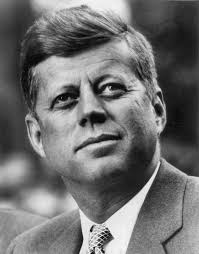
The stereotypical Catholic home in the early 1960s, so I’m told, had 3 pictures in their house: one picture was of the Sacred Heart of Jesus; one picture was of the Pope (which would have been Pope John XXIII); and one picture was of John F. Kennedy.  The first two make sense without explanation.  The third makes sense to any Catholic, because John F. Kennedy was the first Catholic elected president of the United States.  


On 12 September 1960, while still running for president, JFK gave a famous address to the Greater Houston Ministerial Association.  That speech specifically touched on his religion (there was then, as there remains today, a certain popular anti-Catholicism), as well as religious liberty.  He had many good points in that speech, talking about other important issues as well, including encouraging others to work together, rather than let confessional differences tear the country apart.  Of course, in that time, there was still a general Judeo-Christian culture, prayers were said even in public schools, and many businesses were closed every Sunday and Good Friday.
But, in that speech, JFK seemed to also suggest, if not outright say, that one’s religion should not dictate how one acts in a pluralistic society.  Because there are so many religions in America, when it comes to the choices that individuals make in politics, they should check their faith at the doors of the chambers of the legislature or the doors of the oval office.
Fifty years later, Archbishop Charles Chaput, Archbishop of Philadelphia in Pennsylvania, wrote a critical response to Kennedy’s speech, which, he says, did not so much talk about different faiths and the roles they play in American society, but sought to make politics a no-man’s land when it comes to religion.  In part of Archbishop Chaput’s speech, he cites part of the Gospel we heard today when he says, “Human law teaches and forms as well as regulates; and human politics is the exercise of power – which means both have moral implications that the Christian cannot ignore and still remain faithful to his vocation as a light to the world.”
When Jesus says today, “‘You are the salt of the earth’” and “You are the light of the world’” He does not add the caveat, “unless you live in a pluralistic and polyreligious country.”  In fact, Jesus spoke these words in a country that was under foreign occupation, with only a puppet king, whose strings were pulled by a pagan, Roman government, many of whose values directly contradicted God’s revelation in the Tanakh, the Jewish Scriptures.  No, Jesus tells us that we are to give the earth a certain flavor, and we are to provide for the world a certain light, so that others may see our good deeds and glorify our heavenly Father, the true God.
Salt in Jesus’ time wasn’t just about flavor, either; it was a preservative.  It kept things from becoming rotten.  And light wasn’t as simple as flipping a switch; it didn’t exist along roadways automatically when it became dark out.  Light required fuel of some kind, but that fuel kept people from tripping and harming themselves, and guided their feet to their destination.  Light helped individuals encounter each other even as the darkness of night surrounded them.
Brothers and sisters, I don’t think it’s grossly unfair to say that, in many ways, our society has become rotten.  People no longer encounter each other in the light, but seek to control and harm each other in darkness.  Why has this happened?  It would be too facile to say that it is because so many politicians (though not all) check their religion at the door.  But think of how many Catholics are in government today, and how many of them say, “My faith says X is wrong, but I can’t force my faith on others, so I’m going to support X.”  Reasonable people can disagree on how best to implement different aspects of the Gospel, but so many today don’t even think the Gospel has any place in American society.  
But politicians are not the only ones to blame for our current state of affairs.  It is also because Christians do not always try to be salt and light.  In fact, we have, in too many circumstances, become flavored with a taste that is not from the Gospel, and have been guided by a light which does not come from Christ.  We have fallen victim to the ideology that states that we have the freedom of worship, not the freedom of religion.  We can worship God however we want in our churches, but we cannot take the teachings of Jesus out of the church buildings and into our homes, workplaces, and even our government.  I believe that Kennedy sought to assure people that Catholics could be good Americans; but the result we see today is the same that Kennedy’s Irish forebears saw when they came to the US: Catholics need not apply or be engaged in American society.
If we wish to preserve what is good in society; if we wish to be a truly enlightened society, we must first be convinced by what Jesus teaches, and then live it out in all aspects of our lives.  Do we take the Word of God seriously when it says, “Share your bread with the hungry, shelter the oppressed and the homeless; clothe the naked when you see them.  […] Remove from your midst oppression, false accusation and malicious speech”?  Or are those just pious words that are meant to do nothing else but bounce off the brick walls of this church and die in the air?

If we are not the salt of the earth and the light of the world, then our culture, our nation, our politics will continue to spoil, and will soon become rancid.  Darkness will surround us.  Our vocation, our call in Jesus, is to be salt and light.  To paraphrase Kennedy in another speech, let us not seek the Republican answer or the Democratic answer, but the Catholic answer.  Let us be salt and light.

30 January 2017

A Strong Eighth Grader

Fourth Sunday in Ordinary Time
This past Wednesday at our school Mass, we celebrated the Feast of Conversion of St. Paul.  And in my homily I was talking about how God chose St. Paul, even though he had started out persecuting Christians, and trying to arrest them.  And in part of the homily I referenced both what we heard in our second reading today, as well as when St. Paul says that he was given a thorn in his flesh, but God assured St. Paul that God’s power is made manifest in weakness.  To illustrate the point between being strong and weak, I asked one of our eighth grade students to come forward (he didn’t know he was going to be called forward, either).  This was one of our students who plays football and basketball, and is pretty athletic.  Once he was forward, I asked him to flex.  He looked at me for a second, turned a little red with embarrassment, but then flexed and showed off his guns (that’s how some young men talk about their muscles).  And I’ll be honest, I didn’t realize how strong he was!  After Mass he told me that he benches 200 lbs.  I can barely add any weights to the bar, so I was the demonstration of one who is weak.

St. Paul reminds us today that we don’t have to be the wisest, we don’t have to be the most powerful, we don’t have to be nobly born in order to follow Jesus.  God so often chooses those who are not considered strong or powerful or wise to be the vessels of His power.  That’s the way our God works.  More often than not, God’s choices don’t make sense in our modern understanding, whether modern is in the time of Jesus, the first millennium, the second millennium, or even now in the third millennium since the birth of Christ.  
As strange as Jesus’ teaching sounds to us, it probably sounded as weird for the people listening to Jesus.  Now, as then, we don’t tend to think of the poor in spirit, those who mourn, the meek, those who desire righteousness, the merciful, the clean of heart, the peacemakers, and those who are persecuted for righteousness as people who are blessed.  Those people, in fact, seem like the ones who are the victims of society, and those who get run over by everybody.  But Jesus calls them blessed.  
How are they blessed?  They are attentive to God and His will, rather than the will of the world.  They are the ones who spend their attention and energy on serving God and bringing about His reign, rather than trying to hoard money, grab after power, cheat people, seek after vengeance, or look for and act on the desires of lust.  
And though Jesus taught on the mount in Galilee some 2,000 years ago, those words still apply to us today.  If we want to be blessed we have to rely on God, work for justice and peace, be meek and merciful, and be clean of heart.  Clean of heart may be one of the hardest in today’s world.  There are so many groups that make purity difficult: every second over $3,000 is being spent on lewd web pages.  Lack of purity can lead to addictions, can rewire the brains of our youth not to appreciate what is truly good and truly beautiful, can destroy marriages and families, and promote human trafficking.  It is an enslaving force in general.  But Jesus desires us to be free.  He wants to unshackle us from this uncleanness, so that we can live in true blessedness.  If you or someone you know struggles with lack of purity, like pornography, the Diocese of Lansing website has resources on its Marriage and Family Life webpage.  

No matter what beatitude strikes you as the most difficult, being weak is not a problem.  God chooses “the weak to shame the strong,” as St. Paul reminds us in our second reading.  All of us have weaknesses.  And so all of us can be chosen by God to show that God does great things, not by human accomplishment, but by His grace.