Showing posts with label COVID. Show all posts

21 April 2026

Our Surpassing God

Third Sunday of Easter

Grand Tetons National Park
    About halfway through 2020, and about 5 months into “14 days to flatten the curve,” I decided to travel to a national park.  I was sick of being cooped up in Flint, and needed to get away to destress from all the new stress of COVID that we pastors had to deal with as we learned how to shepherd people during a pandemic.  While I knew a flight was not going to be great, I did look forward to going somewhere far away where I could enjoy the outdoors and not have to wear a mask.  So I looked to our national park system, and decided to visit Grand Tetons and Yellowstone National Parks.  I had looked forward to being less encumbered by COVID protocols, but the views I had from the two national parks out west were spectacular and far surpassed any expectations I had for parks I had heard about, but never visited.
    In both our first reading and our Gospel, we hear about expectations that God far surpassed.  In the first reading, St. Peter, on the day of Pentecost, tells the Jews that Jesus has fulfilled the prophecy of David, but did so in a very unexpected way.  And in the Gospel, Jesus Himself enlightens the disciples on the road to Emmaus about the ways that God had foretold the Messiah.
    For David, God had made a promise that his descendants would always sit upon the throne of Israel.  And I’m sure David considered this promise as a guarantee that his sons would always rule over Israel as earthly kings.  That was exciting enough.  But David, too, prophesied in the psalms that God would not abandon David to the netherworld, nor let his holy one (perhaps David used this title to refer to himself) undergo corruption.  But God far surpassed what David expected.  God made one of David’s children, Jesus, an eternal king in heaven whose reign would never end because Jesus has a kingdom which lasts forever.  And God did not let the truly Holy One, Jesus, undergo corruption, nor let Jesus remain in the abode of the dead, but raised Him to new life.  David thought that what God would do was glorious enough from an earthly standpoint.  But what God really was going to do would have blown David’s mind.
    Likewise, for the disciples on the road to Emmaus, they knew the prophecies about the Messiah, David’s son.  They knew that Moses prophesied about a future prophet to whom the Chosen People must listen.  They knew that God would provide a Davidic king who would trample Israel’s enemies and restore glory to the Chosen People from their oppressors.  But again, they thought of the Messiah in earthly ways.  They wanted a king who would throw out the Romans and restore an earthly kingdom to Israel.  But God did better: He destroyed the true enemy of Israel, sin and death, and established a heavenly kingdom that could never be conquered by any power in heaven or on earth.  And in that kingdom swords would be changed into plows, and spears into pruning hooks, and the lion and the lamb would lie down together and dwell in peace.  Those who heard these prophecies of Isaiah probably thought them to be hyperbole, but God intended it much more realistically, where, in God’s reign, there would be no more war, death, sorrow, or disease, and harmony would be the hallmark of God’s kingdom.
    When we think about what we think God wants, our earthly vantage point often limits us.  We have something good in mind, but perhaps it’s not all that great.  It may have a certain excellence from an earthly point of view, but God wants much more than our limited minds could ever hope for or anticipate.  His plan excels ours as much as diamonds excel fools gold.  But we get stuck in our ways and our views and so do not see, like the disciples on the road to Emmaus, what God really can do and has done for us.  When our measly projects don’t come to fruition the way we wanted, we, too, can become downcast.
    In the midst of our dashed earthly hopes, we should turn to the Lord and ask Him to enlighten us with His plans and what He has done, which is far greater than our own plans and expectations.  We do this through reading the Word of God, through daily prayer, and through our worthy reception of Holy Communion.  We come to Christ, like the disciples, and let Him know that we don’t understand what God is doing, and ask Him to show us the way, to show us the great things that He has done, so that we can appreciate them.  And God–the Father, and the Son, and the Holy Spirit–will open our eyes to His plan and His great deeds in our lives and the lives of others, which accomplish far more than we could ever hope for or imagine.
    In August, 2020, I wanted to get away and live a freer life, without social distancing, without masks, without living like a prisoner in my own home.  I went out west, thinking that at least it would allow me to accomplish those goals.  But as I toured through Grand Tetons National Park and Yellowstone National Park, I experienced such natural beauty and grandeur, that it not only refreshed my body, but even lifted up my mind and my soul as I stood in wonder and awe of what God had made, and what He allowed me to experience as part of my inheritance as a citizen of our great country and an adopted child of the God who made such magnificent mountains and grand geysers.  God surpassed my hopes, and He wants to surpass yours.  Do not let your hearts droop down when our limited goals and desires do not come to fruition.  Bring them to God, and see the great things He wants to do for us, things that surpass our hopes and dreams.

10 November 2025

Busting Myths

Feast of the Dedication of the Basilica of St. John Lateran
    [In the name of the Father, and of the Son, and of the Holy Spirit.  Amen.]  Sometimes we hear things that sound good or make apparent sense, which, in the end, do not hold up.  I’m the sort of guy who generally fills up my gas tank when it’s half full, and I started doing this because, when I was young, someone (I can’t remember for sure who) told me that gas could freeze in the tank in the winter if there was room in the tank.  I recently mentioned that, and the other person challenged me on the factuality of that claim.  And it turns out, gas freezes somewhere between -40º and -200º Fahrenheit.  So it’s not going to freeze.  And even if the temperature at which gas freezes is higher, it would freeze whether they tank was half full or entirely full.  So, myth busted.  
    We might have heard another myth: that I can worship God just as well outside a church as I can inside a church.  People may say that they feel closer to God in nature.  Or they feel the comfort of God’s presence best in their home.  Or, in a post-COVID world, some will say that they prefer to attend Mass via livestream.  Certainly, God is present everywhere, indoors and outdoors.  Certainly our homes are places of comfort.  And, for a while, many people’s legitimate only access point to the Mass was through a computer screen.

    But as we celebrate the Dedication of the Basilica of St. John Lateran today, if those statements about worshiping God that I just mentioned are true, then why do we celebrate a church, albeit beautiful and awe-inspiring, in Rome?  And why even bother coming here?  If we can access God, who is omnipresent, anywhere, what’s the point in going to church on Sunday or any other day?
    The tricky thing about bad teachings is that something which is false tends to include something that is true.  If it had no truthful aspect, we would reject it outright.  But if it has some truth to it, we might choose to believe because we recognize some aspect of truth.  So yes, God is present everywhere.  Yes, people can easily experience God in nature.  Yes, God does sometimes give us comfort, and our homes can remind us of that comforting presence of God.  And yes, what churches broadcast through the livestream is the Mass, and for the sick or those who cannot drive to Mass, that is a better way to celebrate Sunday, the Lord’s Day, rather than just watching the NFL or playing Yahtzee.  
    But just because God is everywhere doesn’t mean He is equally present everywhere.  God can be experienced through a beautiful sunset, or a powerful storm.  But the Body, Blood, Soul, and Divinity of the Son of God, Jesus Christ, brings God’s presence to us in a way that occurs no where else outside of a church.  I promise you that the Eucharist will not materialize before you in your hunting blind on Saturday.  Saints like St. Clare have had visions of the Eucharist (which is why she is the patron saint of television), but the unique presence of Christ in the Eucharist comes with a church building.  God makes Himself present to us in a special way and even wants us to receive the Body and Blood of Christ so that we can have God within us.  And receiving the Eucharist generally happens during Mass.  We may not always feel different from receiving the Eucharist, but we are different.  St. John Vianney said, “If we really understood the Mass we would die of joy.”  Extreme joy may not be your experience at Mass every week, every month, or even yearly.  But just because I don’t experience an emotional response doesn’t mean that the most beautiful union between God and man isn’t taking place.  
    Just because we feel comfortable in our house doesn’t mean that we are experiencing the consolation of God.  The comfort that God came to give was at a much deeper level than just physical comfort.  He came to heal our souls.  There are many ways in which we can be opposed to God and yet feel physically good.  Maybe it’s drinking too much, sleeping when we should go to Mass, or engaging in sexual activity outside of marriage.  Those things all feel physically good, and yet do not mean that God is with us our supporting us.  Also, the Lord reminded us that following Him may often include suffering of various kinds, which means that we are not made for comfort.
    Plus, while we all should have a personal relationship with the Lord, it’s not just me and Jesus.  Being baptized means that God joins us to the entire Mystical Body of Christ, the Church, and we are connected to each other.  That cannot be fully picked up simply by staying at home, even with other family members, because the Church is not just one family or even just one ethnic group or nationality.  To be Catholic means that we embrace all who want to follow Christ.
    Lastly, watching the Mass on the computer or on TV never means nor meant that we attended Mass.  One can watch the Mass as a lesser way of sanctifying the Lord’s Day, but to truly attend Mass one must be physically present.  My earlier words also apply: you cannot receive the Eucharist through livestream, and you cannot fully participate in the larger Mystical Body of Christ on your own through livestream.  If one is sick or homebound, then it helps us remember what we would want to attend if were were able.  But watching does not equal physical participation.
    We celebrate a church building today because it is a kind of sacrament.  It is a physical reality, instituted by Christ, which conveys invisible realities and causes graces that flow from the Paschal Mystery.  The physical building reminds us that we are part of something bigger than ourselves, each having a role to play to create the temple not made by hands in heaven, where all the elect are joined together, each fulfilling a role.  May we not accept the myths that we can worship God on our terms (often guided by our own laziness or preferences), but give ourselves to the worship that our Lord told us would be acceptable worship: worship in spirit and truth.  [In the name of the Father, and of the Son, and of the Holy Spirit.  Amen.] 

20 January 2025

Stewardship

Second Sunday after Epiphany
    In the name of the Father, and of the Son, and of the Holy Spirit.  Amen.  I either recently received a book on stewardship, or I recently rediscovered that I received a book on stewardship.  In any case, I’ve been reading a little each day (it’s a very thin book to begin with), but it struck me as I read the epistle today that a theme in this part of St. Paul’s epistle the Romans deals with stewardship.
    Now, I know that some use stewardship as a code word for giving money.  And, as we just finished our part of the Diocesan Capital Campaign, you might think that talking about stewardship is killing a dead horse.  But this is not such much about giving money, as you have all been very generous with the parish, as a reminder about important points that lead to fruitful stewardship of time, talent, and, yes, treasure.
    Because one of the first points this book makes is that stewardship comes naturally when we consider that everything that we have is a gift from God.  And that view does not come naturally to us because of our fallen reality.  We tend to grasp at most things like they’re ours, like we are responsible for them, and like we don’t want anyone else to have them.  We live with a scarcity mentality, as if when we don’t hold on to things, others may take them, and we might miss out on something we need.  Just think back to the beginning of COVID: we had plenty of toilet paper.  But someone got it in his head that we might run out, and no one wants to rely on leaves, so they started buying up all they could, such that there was a scarcity because people took what they didn’t need.  
    But when we recognize that everything is a gift from God, then we want to give back to God what He desires, which is everything.  Everything may not be much, but the Lord praises the widow, not for the amount of coins she gave (others gave more coins than she), but for the value of what she gave, which was her everything.  

    What does God do when we give Him everything?  Many times He gives it all back, or even makes it better.  Now, I’m not preaching the so-called “prosperity Gospel.”  I’m not preaching that if you just give 10% of your annual salary, God will give you 20% more money.  That’s not the Gospel.  But the Gospel from today does teach us the lesson that God is not outdone in His generosity, to paraphrase St. Paul.  The servants give our Lord water.  And they put them, not in the finest containers, but in the containers with which the guests would wash their hands.  But when the servants take the containers to the chief steward of the feast, he doesn’t taste water, but wine, which came about through the first miracle our Lord worked.  The Father does the same thing with what we offer Him in this Mass.  We offer the Father bread and wine, and not the best bread or wine, either.  It’s not like we’re getting the bread from crust or from Zingermans.  It’s not like the wine is a fine 2020 cab from Napa.  But we offer Him the bread and wine that He desires, and, by the power of the Holy Spirit and through the ministry of the priest, bread and wine offered to God become the Body and Blood of our Savior.  We can’t taste or see any different, but we know that it’s no longer bread and wine, but the Bread of Life and the antidote of immortality (as St. Ignatius of Antioch called the Eucharist).  We offer God what we have, even if it doesn’t seem like much, and God transforms it by His grace into something better.
    And when we receive that something better, and we recognize just how much God has given us, we want to share that gift with others.  And my gift is different than your gift.  But when we all make a return on our gifts, the whole Mystical Body of Christ works well and changes lives.  St. Paul write about that in our epistle, how some were given the gift of prophecy, or administration, or in ministry, or in teaching, or exhortation, or cheerfulness.  St. Paul doesn’t tell those who are good in cheerfulness that they need to start prophesying.  Or those who teach well need to start working on administration.  He asks everyone to use the gifts they have to the best of their ability so that the Gospel can be preached and the Church can be built up.  
    So, for example, I’m pretty bad a brainstorming.  This doesn’t mean that I’ve never had an original idea, but that’s not where I thrive.  I thrive in evaluating ideas and seeing what it would take to execute, or if execution is even a possibility or probability.  But I try to use that build up the Body of Christ.  Now, as a priest, I am called to do certain things, like preach.  I am not Venerable Fulton Sheen, but I offer God my meditation on the Scripture passage or the season, and the work that I put in, and the Holy Spirit does the rest.  Sometimes I think a homily is horrible, and then lots of people tell me how it touched them.  Sometimes I think a homily is great, but then no one says anything.  But no matter what, I am called to give my all to God, trusting that God will perfect my gift, and help it to multiply for the building up of His Church.
    So many of you are committed to this parish and to spreading the Gospel.  You give of your time, talent, and treasure to support the work, not just of St. Matthew, but of the Church in this Diocese, and the Church present throughout the world.  But the Lord reminds us today to continue to work at giving all of who we are to Him.  He never leaves us empty handed, even if we don’t necessarily increase in material wealth, but will always give us back better than received.  As the Blessed Mother encouraged the servants to do at the wedding at Cana, give what you have to Christ, who will never let you want for any good thing, and who, with the Father and the Holy Spirit is God for ever and ever.  Amen. 

22 September 2023

Vision and Ventilators

Twenty-fifth Sunday in Ordinary Time
    We hear this familiar Gospel passage, and probably, if we are honest, we don’t like this parable too much.  Perhaps now, more than ever, we all want to get what is ours, what we are owed, and we want what we feel is just.  The idea that someone could work for one hour, and receive the same amount of money as a person who worked for an entire day seems ludicrous.  But Jesus never promises that everyone will get the same amount. 
    This really speaks to how much God values spreading the Gospel.  He is willing to pay someone a full day’s wages as long as they work hard, no matter how long they worked.  The obvious message is the relationship between those who were “faithful” Jews, and those who were making last-minute conversions.  It could also easily be extended to mean the Jews (who were called from of old) and the Gentiles, who were only joined to the olive tree of Israel after Christ broke down the barriers between Jew and Gentile by His Death and Resurrection. 

    And we even see this parable at work in a real situation in St. Dismas, the good thief, who was crucified with Jesus, but who prayed that he would be with Jesus in paradise.  “‘Amen, I say to you,’” said our Lord, “‘today you will be with me in Paradise.’”  We have no evidence that St. Dismas had followed Jesus at all during his lifetime, and the only thing we know about him before his death is that he was a criminal, often times described as a thief.  But hours after his statement of faith in Jesus, he would be in heaven. 
    Do we have the same drive for the spreading of the kingdom of God as did the landowner?  Are we willing to pay dearly so that the Gospel can be shared, even to the point of foolishness?  Or do we have other motivating factors for our actions, that we feel are more fair or equitable?
    Jeff and Mary Love, Karen Downs, Deacon Dave and I, recently attended the first of three meetings on helping parishes spread the Gospel.  The meetings are co-hosted by the Diocese of Lansing and the Catholic Leadership Institute.  We learned about parish vision, core values, and purpose statements.  For St. Pius X, it was all a bit awkward, as we know we are on a trajectory towards closing.  In talking privately with one of the facilitators, I spoke about the preference you expressed, to exist until we ran out of sufficient funds.  He asked the question that has been on my heart since you voiced your desire for St. Pius X: is this really what would advance the kingdom more?  Is this really the best path for spreading the Gospel, not just in Flint Township, but for Genesee County and the Diocese of Lansing?
    I know that your preference is based on your love of St. Pius X.  It is hard to let go of something so dear to us, especially when some of you helped to found St. Pius X with your family.  Change is never easy, especially the longer we live, and holding to the status quo requires the least amount of change.  But is it operating with the same drive that Jesus describes in the Gospel for spreading the kingdom and sharing the Gospel, such that resources are brought to bear on those who will do that work?
    To be sure, I understand the mindset of wanting to hold on for as long as possible, even when the end seems obvious.  In late March of 2020 we were at the very beginning of a virus about which we knew little.  Ventilators were in high demand and short supply.  Those with pre-existing conditions were especially vulnerable.  It was in that context that my grandfather, whom most called Jesse, contracted COVID from his nursing home.  He was taken to Sparrow Hospital for treatment.  For his kids and grandkids, including me, it was scary.  The mortality rate was rising quickly, and no one seemed to know how to treat COVID effectively.  My grandfather started out with a cough, needing a little bit of oxygen from a mask from time to time.  He had some good days, and things seemed to be holding steady.  We, of course, were not allowed to visit, except by Zoom.  As the days progressed, though, things got worse.  Eventually the occasional dose of oxygen from a mask became the nasal cannula, the thing they stick in your nostrils in order to deliver oxygen all the time.  We grandkids made a video holding up signs, telling him we loved him.  Around that same time that we showed the video, the nasal cannula was proving not enough, and he was going to need a ventilator.  My mom and her siblings had to decide what to do next. 
    My grandfather was 93.  He had been a strong man throughout his life.  His children, who loved him dearly, and most of whom could not see him, even if they traveled from being out-of-State, would not have a chance to say good-bye in person if they decided to withhold further care.  But, as hard as it was, they made the decision not to use the ventilator, as it was not always proving useful in treatment, especially for the elderly, and perhaps that ventilator could help a younger person who had a better chance of surviving the Coronavirus.  He died shortly after being removed from oxygen on 9 April 2020.
    Do I wish I could have been with my grandfather in his last moments, giving him the Sacrament of the Sick and the Apostolic Pardon?  Certainly.  Would I have done anything to keep him around longer and put him on the ventilator so that we could have, hopefully, a few more days?  No.  At the time, the what-ifs were frequent in my mind, but I know my mom and her brothers made the right decision.  It wasn’t easy, but it was for the greater good.  And I would like to believe, though I have no proof of this, that someone else who needed a ventilator benefited and maybe even had his life saved from the machine that my grandfather would have been using if that route of care had been chosen. 
    Our mission is to spread the Gospel.  I have been preaching that since I arrived in 2016.  We have groups who are active here in the parish, working hard to strengthen their faith, and I applaud those groups.  But I think, if we’re honest, we know where this is going.  From factors both in and outside of our control, our parish is dying. 
    So what is the best thing for us to do?  Is it to remain as long as we can, and just spend money to have the semblance of a parish so that we can pretend everything is ok and pretend that hundreds more people are going to start coming to St. Pius X in the next months or year?  Is that the calculation that the landowner makes for spreading the Gospel of the kingdom?  Or can those resources, both personal and financial, be better used by supporting other parishes in the area?  Could the ventilator we have chosen to use, which may prolong things but which will not cure things, be better used by someone else?
    We hear in our Gospel the paradigm that God uses for evaluating what is best: how can I get more workers for the vineyard to spread the Gospel?  Is that the paradigm that we are using as a parish as we continue our on pilgrimage to closing?  Or do we have another paradigm for how long we should exist?  I know what we all want.  But is what we want in line with the mission of any parish: to spread the Gospel as effectively as possible?  

23 January 2023

Reaching Out to Untouchables

Third Sunday after Epiphany

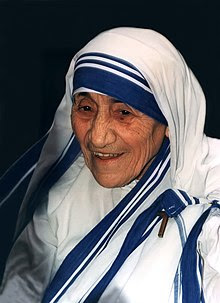
    In the name of the Father, and of the Son, and of the Holy Spirit.  Amen.  St. Theresa of Calcutta (aka Mother Theresa) was known for her work among the poorest of the poor in India.  Through reading her biography, and hearing the testimony of priests who worked with her, I learned of so many stories of Mother (as they simply called her) seeing people in the streets and loving and caring for them.  There were stories of how she would find a dying person who had been placed literally in the gutters, just left alone to die.  Sometimes there would already be maggots eating away at sores on the bodies, but Mother would pick them up, carry them to her priory, and clean them up and care for them. 
    I had a chance to work with the Missionaries of Charity when I was studying abroad in Rome.  They had a house at San Gregorio not far from the Circus Maximus and the Colosseum.  We didn’t provide medical care, but we helped prep the food that they would be served, and mopped the floors and cleaned up.  Whenever I smell overly ripe fruit or vegetables (which we had to clean before we served it), my mind often goes back to those days.  I am ashamed to say that my charity, my love of Christ for others, was not often present, and I did the work only because I was required to do so.  That is a part of my soul that still deeply needs conversion.
    As we hear about our Lord healing the leper and the centurion’s slave in today’s Gospel, we probably sanitize this story in our mind.  We know leprosy was bad, and very contagious.  And we know that the Romans were hated by most Jews, not only because of their political oppression, but because they had symbols of their pagan religion everywhere.  But do we appreciate how outcast those two groups were at the time of Christ?
    Perhaps our country came somewhat closer to understanding the shame and the isolation of a leper as we muddled our way (often in a less than virtuous manner) through the early days of the COVID pandemic.  So many, myself included at times, especially at the beginning, would be so nervous about a person coughing.  There were still other viruses present, and yet how quickly we could assume that the other person had COVID, and if (especially in the beginning) we even looked at them we might get it too, and be under house arrest for 14 days!  But even that doesn’t really get to an understanding of leprosy.  A leper’s flesh was literally rotting away.  He or she was likely covered with cloths to hide some of those sores, but those cloths were probably not cleaned that often.  Though no one had deodorant in those days (though the rich had perfumes), leper colonies were often in horrible, inhospitable places, where personal hygiene was even lower than the average standard of that time.  Perhaps maggots also were in the flesh of those who had leprosy, just like some of the untouchables for whom Mother Theresa cared.
    But the Savior didn’t shrink back.  I doubt He covered His nose, or turned away.  No, from what we hear and from my own estimation, our Lord stretched out His hand, touched the man, and healed Him.  Christ saw, not a leper, but a child of God who needed to be made whole and healed from a disease that cut one off from practically every good and wholesome part of human existence. 
    When it comes to the Romans, we do have some people that we tend to ostracize.  These days it tends to be the Russians and Chinese.  Around September 11th it was Arabs.  But to get a closer sense of the animosity, we’d probably want to think back to the way we treated Russians in the 1950s.  While I was not alive, certainly the stories about how we, as Americans, were afraid of Russian spies infiltrating our government (which perhaps they did, in some ways).  So we ostracized and persecuted anyone we thought might be connected to the Russian communists.  Better dead than Red, we would say.
    And yet, as this Roman, this hated figure came to our Lord seeking a healing for the centurion’s slave, again, Christ didn’t pull back, or say that He had no times for Romans.  The request was made for healing, our Lord offered to go, but then the Roman demonstrated faith that no such visit was necessary; as long as our Lord said it would happen, it would happen.  I’m not sure we can fully appreciate just how revolutionary and rebellious that action was, not to mention when the Savior said that many foreigners would recline with Abraham and Isaac and Jacob, but many children of the kingdom would be outside, wailing and grinding their teeth. 
    The basic requirement for healing was faith, and as long as one had faith, our Lord was not ashamed to help that person.  It didn’t matter whether your were ritually unclean, or diseased, or even a soldier of an oppressing pagan regime.  God would act if the faith was present.
    From whom do we still make sure we keep six feet away (or farther)?  Whom do we ostracize?  How many opportunities for conversion do we miss out on because we treat the other as someone not worthy of our time or attention?  In what ways are deep conversions lost because we’re not willing to approach the other?  Our Lord didn’t say that leprosy was no big deal, but He restored that leper to wholeness, not just physically, but in terms of community and right worship.  Our Lord didn’t say that Roman oppression and the treatment of the Jews was just, but He healed the slave of the centurion.  There was a centurion at the foot of the cross, who exclaimed, “Truly, this was the Son of God!”  Perhaps it was the same centurion, whom we now refer to as St. Longinus.  Perhaps that healing was the first step in that soldier rejecting pagan gods and believing in the true Son of God, Jesus Christ.
    I won’t stand before you today and say that I’ve got it all together, and willingly reach out to our modern “untouchables.”  I would be a hypocrite to say that there are not people whom I keep at a distance, of whose conversion I could be an instrument if I would put aside my own fears and stereotypes.  But I’m working at it, and I hope you will, too.  Because no matter who the person is, or what the person has done, that person, without a doubt, needs the Father, and the Son, and the Holy Spirit.  Amen.  

10 January 2022

Connected to God

 Feast of the Baptism of the Lord
    I greatly appreciate all of your prayers, emails, messages, posts, and offers to help when I was in quarantine due to COVID.  It is a beautiful thing to have a parish family come together in prayer and assistance when another member of the family is struggling.  I know that we have some parishioners who are still going through COVID, some with very strong strains, so let’s make sure that we’re keeping them in prayer and doing what we can to help them, as well.
    I was very happy that my case of COVID was very mild, and I never lost my sense of taste.  The hardest part for me, though, was being on my own, without the usual face-to-face contact with the outside world.  I was well-stocked with food, but a few parishioners dropped off food after a reception at St. Matthew for Fr. Jeff’s Mass of Thanksgiving, or a funeral luncheon that took place at St. Pius X.  It was a beautiful thing even just to see their faces through a door or window.  You would think, living on my own, that I would be used to alone time.  But most of my vocation is dealing with others, and having personal contact with others, which is something of which I was deprived, for the health and safety of others, during my time of quarantine.

    As we celebrate the Baptism of the Lord, we look to our own baptisms, quite naturally.  Do you know the date of your baptism?  Do you know where you were baptized?  Baptism washes us clean of original sin, and makes us sons and daughters in the Son of God, which also makes us members of the Church.  By baptism, we are connected to God by a bond which not even death can sever.  By baptism, we are sealed as belonging to God, and will be baptized no matter where we go after death.  
    But we are connected to God through Baptism.  And so, even in the midst of our physical separation from others, we are always connected to God, and, therefore, always connected to everyone else connected to God.  Because of baptism, God carries us in His arms, like a shepherd, and can feed us, not by dropping off food at our front door, but with His love and His grace, which is truly His life.
    This is part of the “kindness and generous love of God our savior,” that St. Paul talks about in the second reading from his letter to Titus.  And it is, “Not because of any righteous deeds we had done but because of his mercy.”  God does not need us.  God lacks nothing without us, or without any part of His Creation.  And yet He chooses to connect us to Himself through baptism and shower His love, His grace, His truth, His life down upon us so that we can truly be happy, so that we might be “a people as his own.”
    And if we are God’s people, then our response to such a love is “to reject godless ways and worldly desires and to live temperately, justly, and devoutly in this age, as we await the blessed hope, the appearance of the glory of our…savior Jesus Christ.”  If God has held nothing back from us, not even His Only-Begotten Son, then what can we hold back from God?  If, when we were baptized, the Holy Spirit came upon us and made us adopted sons and daughters in the “beloved Son” of God, then our response is to do our best to live in a way that shows that we belong to God.  
    I talk a lot about sharing the Gospel with others, and we need to.  Words matter.  Words about Jesus matter.  Others need to hear the Gospel, and withholding that from them is not acting in accord with who we are as children of God, who want others to have the same connection to God that we have through baptism.  
    At the same time, people should know that we are Catholic by the way that we live our life.  What we say, how we drive, how we treat people, where we spend our money: all of that should show that we are connected to God.  That’s one of the things that has always attracted people to Catholicism throughout the centuries.  The early Romans saw how women and children, and slaves were not treated as property by Catholics, but brothers and sisters.  Barbarians noted the peace that Catholics had even in the midst of great trials and sufferings.  Pagans would see how Catholics would care for the poor, without expecting anything in return.  And even in our recent times, we can think about how much difference St. Theresa of Calcutta made by caring for those who were untouchables, those whom society had thrown off as garbage.      Through baptism we are connected to God, not as slaves, but as adopted children.  Through baptism, God claims us as His own.  Let’s make it our aim to strengthen those bonds each day through prayer, and let others see, by what we say and do, that we belong, that we are connected, to God.